Inception Style: The Three-Piece Suit, the Waistcoat and the Tie Bar
The short answer: Arthur's suits read as controlled because a buttoned waistcoat holds one unbroken line from collar to waist, and a tie bar stops the only loose part of the outfit from moving. Neither is expensive. Both are the kind of detail nobody names and everybody registers.
Christopher Nolan's 2010 film dresses each character to a different silhouette — Cobb rumpled, Eames flamboyant, Saito precise and expensive. Arthur, the point man, gets the tightest line in the film, costumed by Jeffrey Kurland in three-piece suits in browns and greys. He is also the character whose job is to plan and to hold the plan together. The wardrobe says that before the dialogue does.
A two-piece loses its line the moment you unbutton it
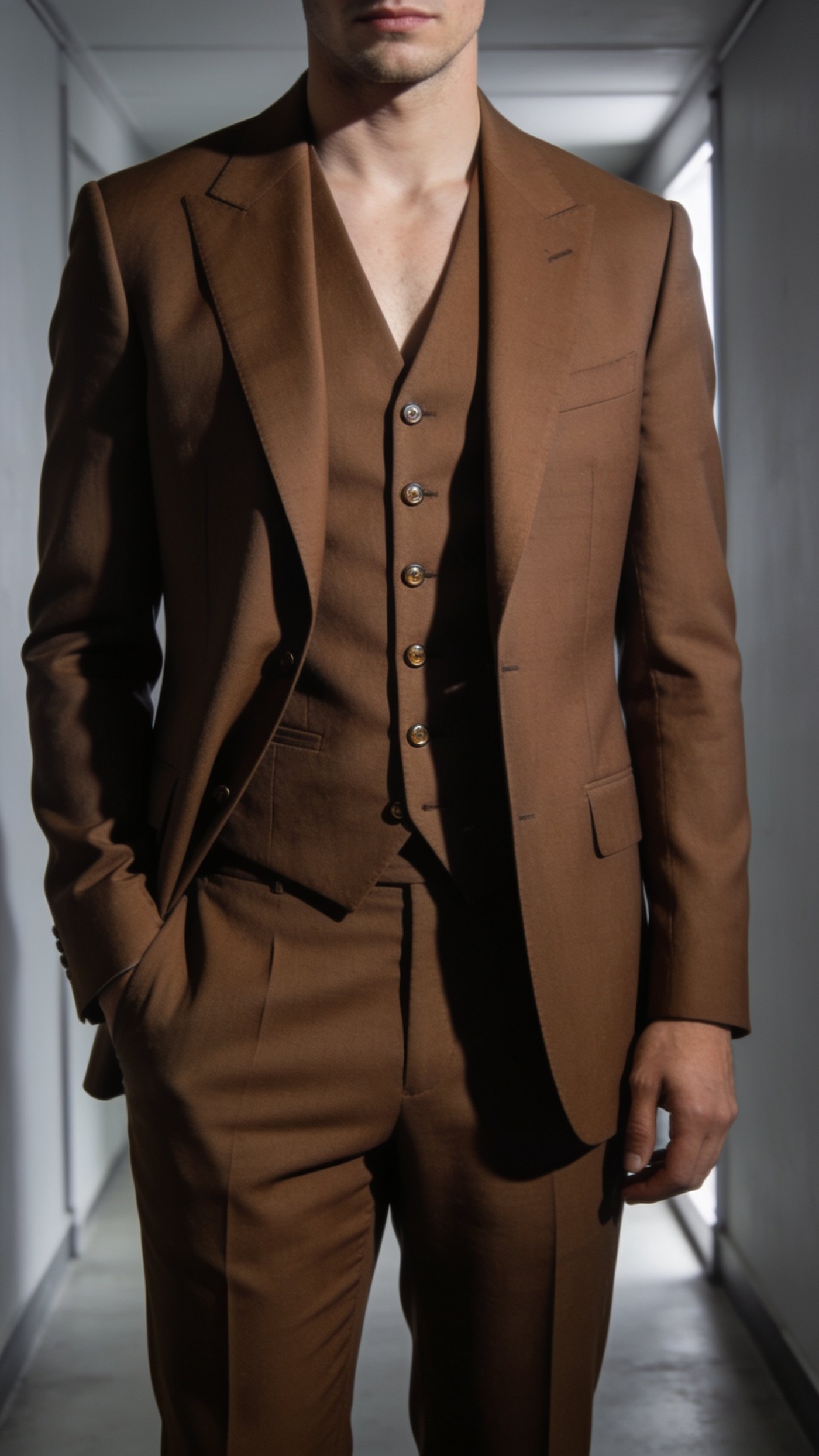
Watch any man in an open two-piece suit jacket. The front edges hang loose, the shirt shows in a wide vertical band, and the whole torso reads as two panels flapping either side of a gap. Buttoned, the jacket is fine. Unbuttoned — which is most of the time, because you unbutton to sit — it collapses.
The waistcoat solves exactly this. It fills the gap with a fitted layer that follows the body, so the eye travels from collar to waist without interruption whether the jacket is open or closed. That continuity is what people read as sharpness. It is not about formality, and it is certainly not about being old-fashioned; it is about closing a hole in the outfit.
The rules that matter:
- The waistcoat must be snug. A loose waistcoat is worse than none, because it adds bulk without a line.
- It should cover the trouser waistband completely. A strip of shirt showing beneath it undoes the whole effect.
- Leave the bottom button open. The pattern is cut to sit correctly that way.
- Match the cloth exactly if it is part of a suit. A contrasting waistcoat is a different, louder outfit.
The waistcoat also fixes the shirt
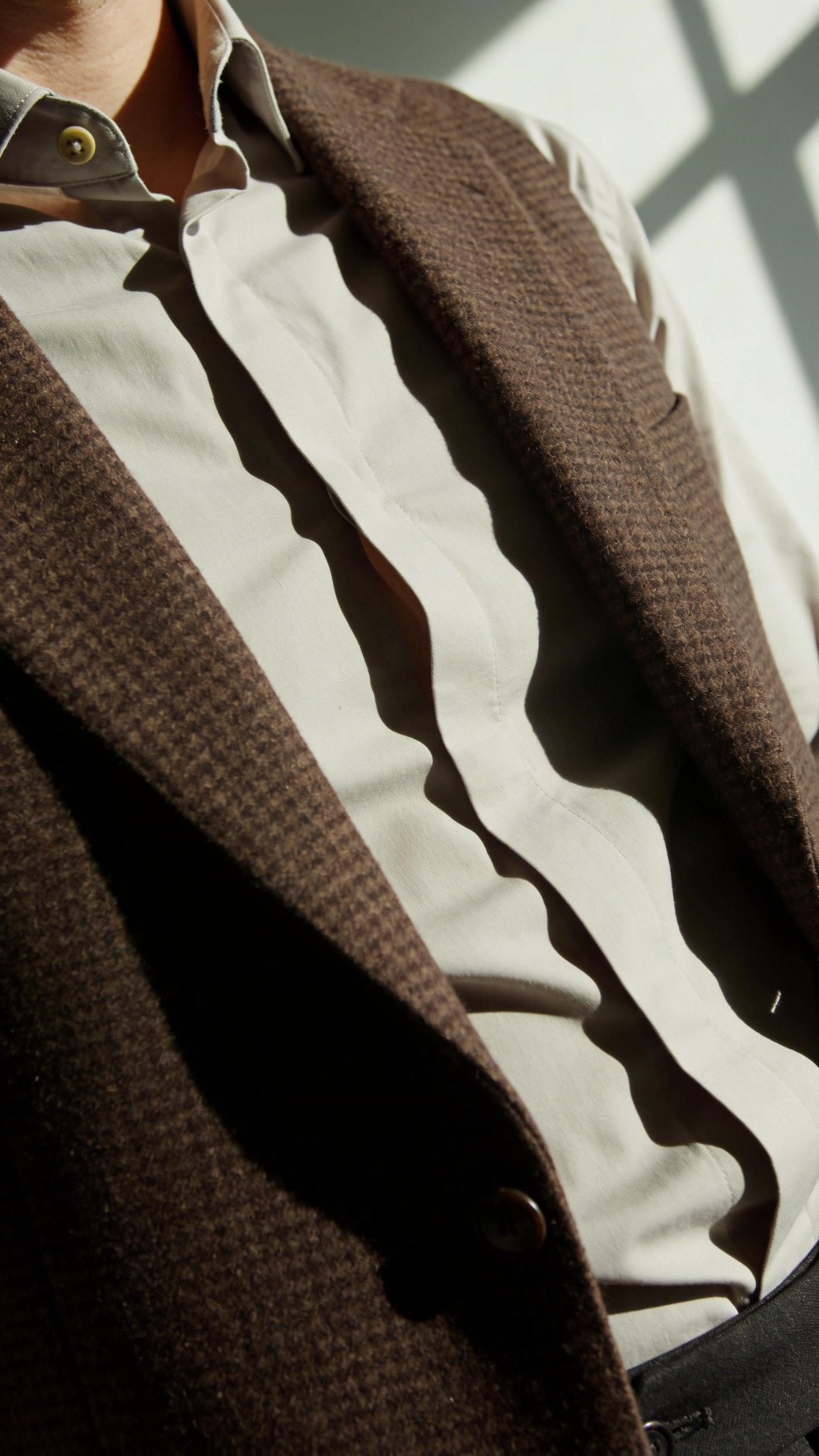
There is a second, more practical benefit that nobody mentions. A shirt tucked into trousers with nothing over it will bunch at the waist within an hour of ordinary movement — sitting, reaching, leaning. It is unavoidable; the fabric has to go somewhere.
A waistcoat presses that excess flat and holds it there. Which is why men in three-piece suits look composed at the end of a long day and men in two-piece suits do not. On screen this matters even more, because film lights every crease.
If you own one suit and want it to do more, having a waistcoat made in the same cloth is usually cheaper than a second suit and changes the outfit more.
A tie bar pins the last loose thing
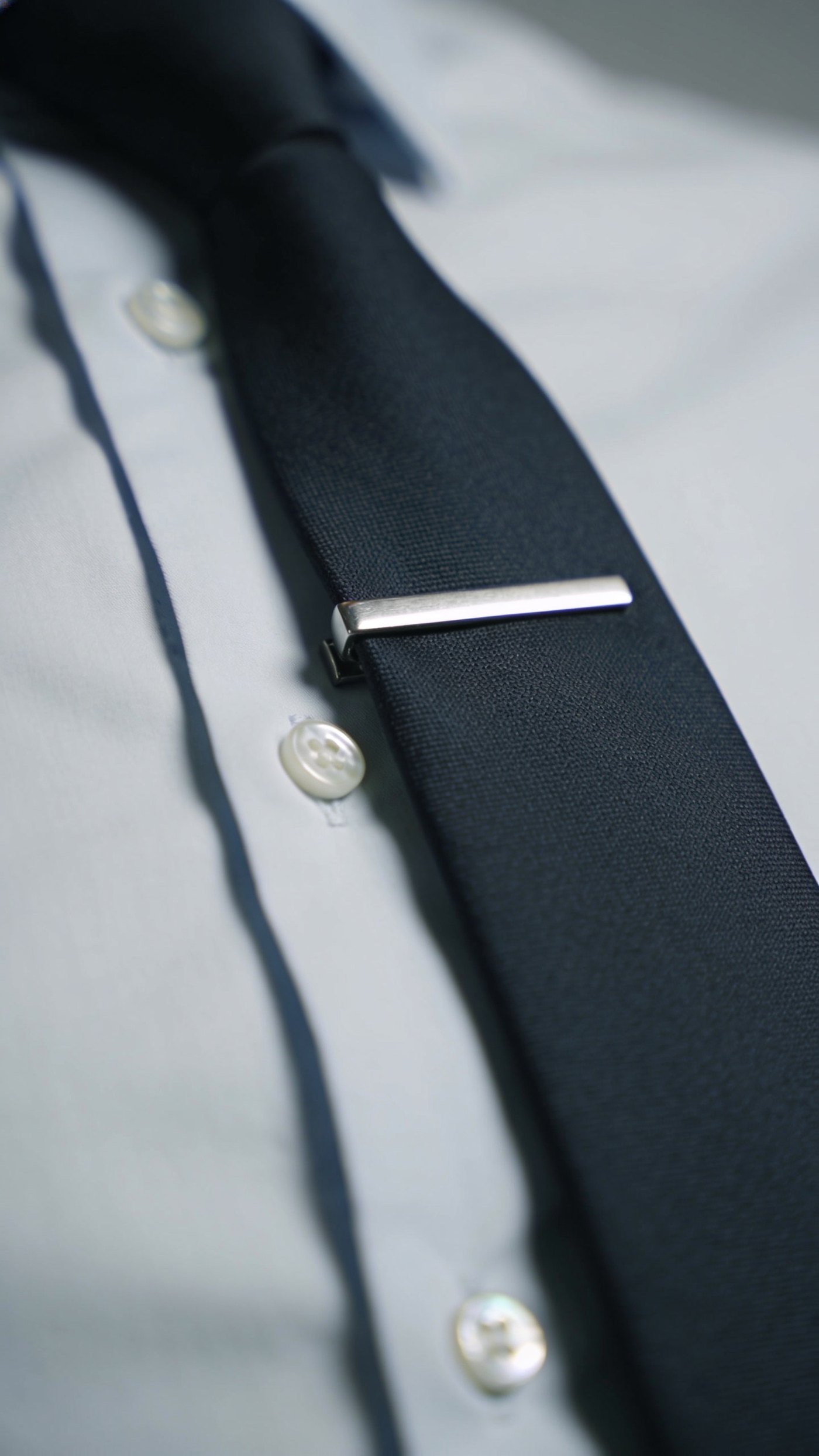
Everything else in a tailored outfit is fixed in place. The tie is not — it hangs free, swings when you move, and lifts away from the shirt when you lean forward. A tie bar is the small metal clip that ends that.
Worn properly it is almost invisible, which is the point. It is not jewellery. It is a fastener that happens to be visible, and the reason it reads as precise rather than fussy is that it solves a problem you can see being solved.
How to wear one:
- Between the third and fourth shirt buttons. Higher looks nervous, lower looks like a brooch.
- Narrower than the tie. It should never reach the edges — roughly three quarters of the tie width.
- Clip the tie to the shirt placket, not just to itself. A bar clipped only to the tie does nothing.
- Plain silver or gold. Novelty tie bars defeat the purpose entirely.
Quiet is a choice, not a default
The reason this outfit is worth studying is that it is the least showy in the film and the most precise. There is no pattern, no contrast, no accessory doing anything decorative. The brown is warm but muted. The tie is narrow and plain. Everything is there to hold something else in place.
That is a different idea of dressing well from the one most films sell. It says the goal is not to be looked at but to be unimpeachable when someone does look — and that the way to get there is a series of small mechanical decisions rather than one big gesture.
If you take one thing from this: buy the tie bar. It costs almost nothing, it fixes a visible problem, and it will make every tie you already own sit better for the next twenty years.
Frequently asked
Is a three-piece suit too formal for the office?
Not in a muted colour. A grey or brown three-piece with a plain shirt and a quiet tie is no more formal than a two-piece with a good tie — it just holds its shape better through the day.
Should the bottom waistcoat button be left undone?
Yes. Waistcoats are cut to sit correctly with the bottom button open, and buttoning it pulls the hem out of shape when you sit.
Can I wear a waistcoat without the matching jacket?
With odd trousers and a shirt, yes, as a deliberate casual look. With the matching suit trousers and no jacket it reads as a uniform — waiter, not point man.
Where exactly does a tie bar go?
Between the third and fourth buttons of the shirt, clipped through both the tie and the shirt placket, and narrower than the tie itself.
What colour suit should I buy first for this look?
Mid-grey. It carries the three-piece line without reading as costume, works in every season, and takes any shirt and tie you already own. Brown is the better second suit, not the first.