The Godfather Style: Peak Lapels, Turn-Ups and the Pocket Square
The short answer: a peak lapel points upward and widens the chest where a notch lapel stops flat, a turn-up adds weight at the ankle so the trouser hangs instead of drifting, and a white linen square closes the jacket the way a full stop closes a sentence. None of the three is loud. All three are decisions, and the quiet man in the chair is made entirely of decisions.
Francis Ford Coppola's 1972 film, costumed by Anna Hill Johnstone, moves Al Pacino's Michael Corleone from an army uniform to the darkest suit in the room across three hours. The wardrobe says what the script withholds. Nobody in that family dresses to be noticed; they dress so that the person across the table understands the arrangement before anyone speaks. The period helps, because men's tailoring in the late 1940s was cut with real breadth through the chest and real weight in the cloth, and the film uses both.
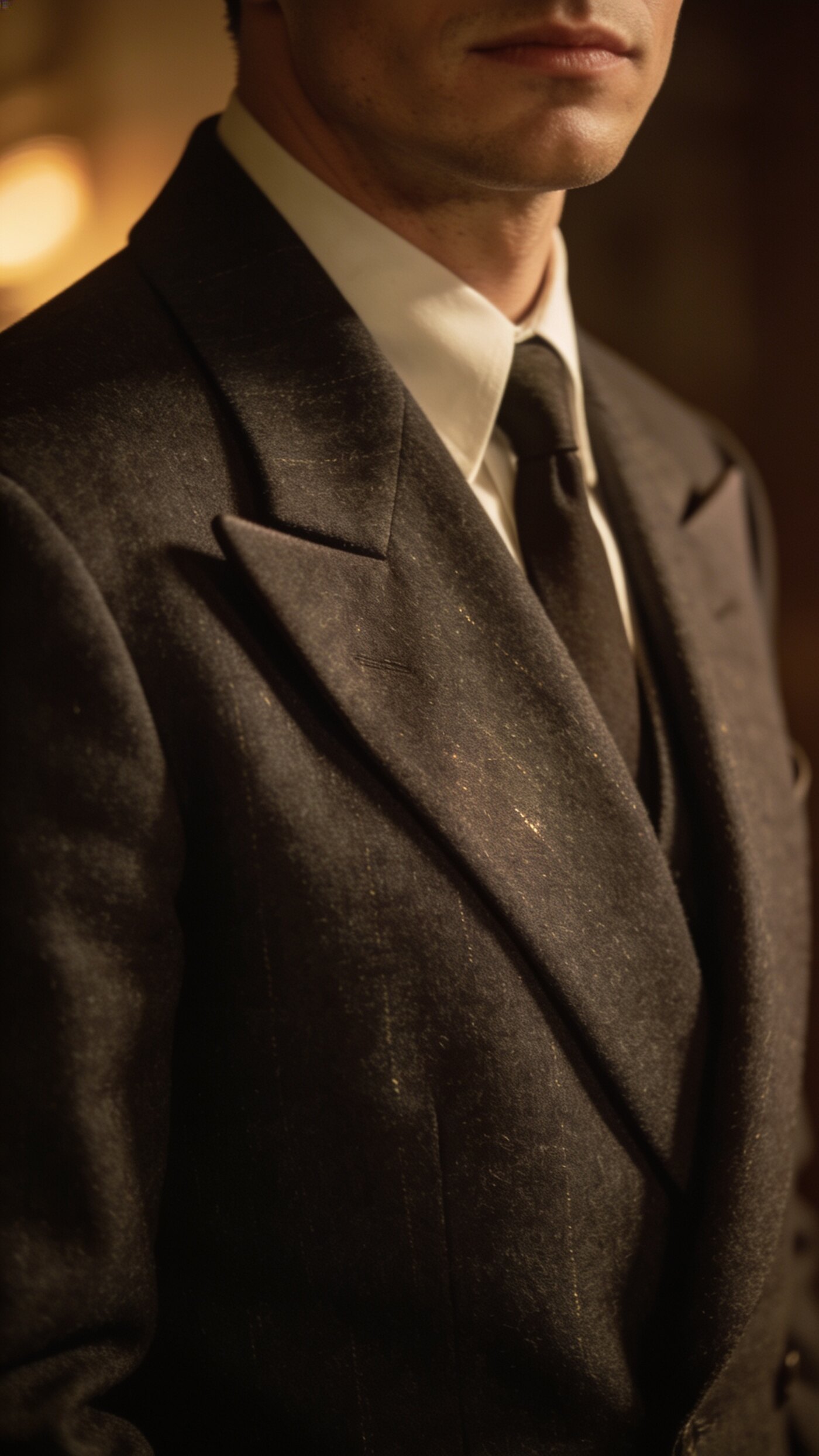
A peak lapel lifts, a notch lapel stops
Hold the two side by side and the difference is one angle. A notch lapel has a small wedge cut out where the collar meets the lapel, so the line arrives at the gap and ends there. It is the default on almost every suit sold, it is correct everywhere, and it does nothing in particular.
A peak lapel has no gap. The lapel continues past the join and finishes in a point that aims up and out toward the shoulder. Your eye follows that point, so the chest reads as wider and the shoulder line reads as higher, and the whole jacket sits up rather than settling down. This is why a peak lapel was standard on a double breasted jacket and on formal wear long before it became a style choice: those are the garments that are supposed to look imposing.
What to have done:
- Width in proportion to your chest, not to the year. A broad man can carry a broad lapel; a narrow one with a wide lapel looks borrowed.
- The point should reach about two thirds of the way across the shoulder seam and stop. A peak that touches the sleevehead looks like a costume.
- The gorge, which is the seam where lapel meets collar, sits higher on a peak than on a notch. Have your tailor keep it high. A low gorge drops the whole front of the jacket.
- Dark cloth first. Charcoal, navy or a quiet grey. A peak lapel is already doing something, and a pattern underneath it starts a second argument.
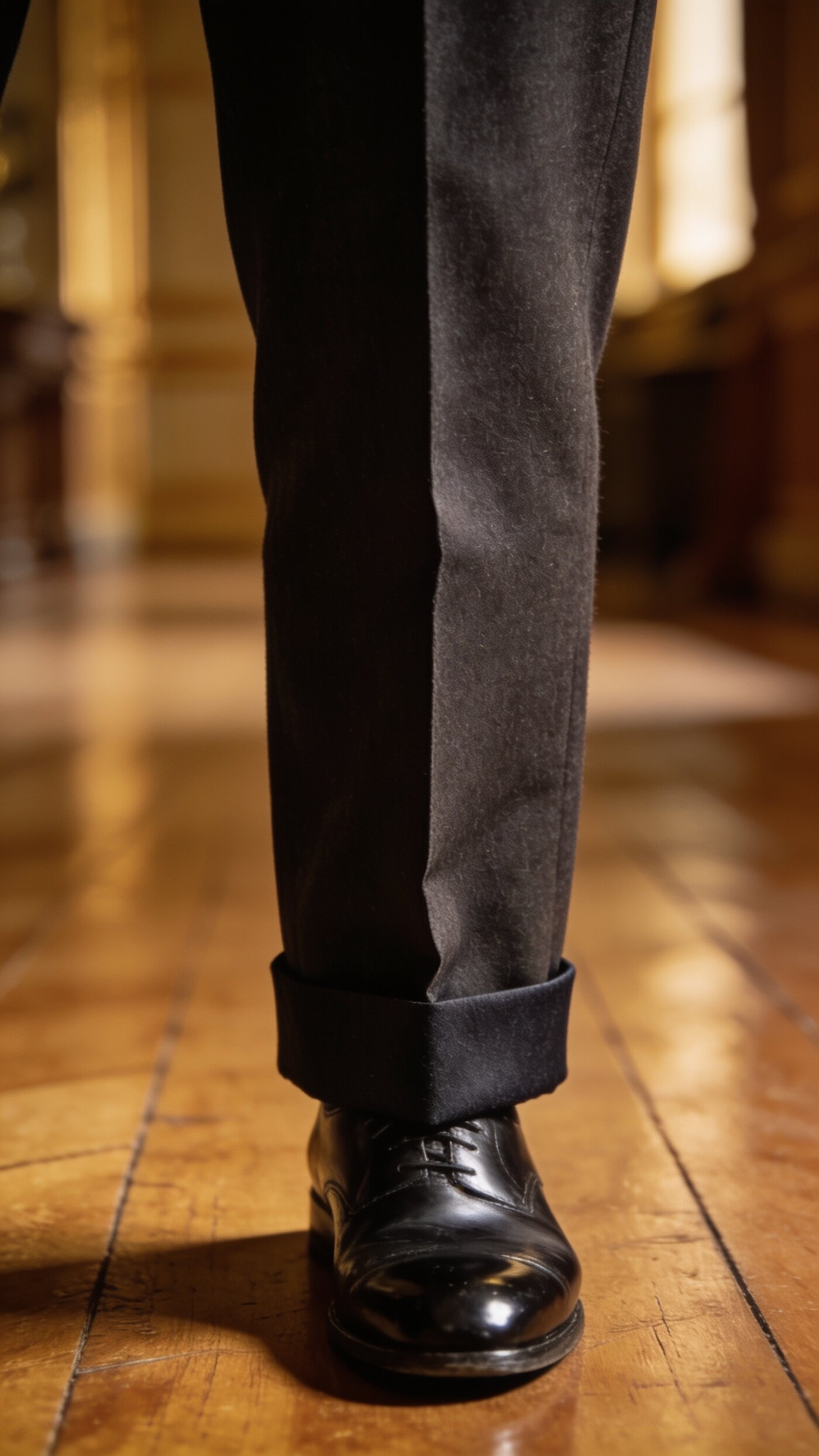
A turn-up gives the trouser somewhere to land
A plain hem is lighter, and that is exactly its problem. With nothing at the bottom, a soft trouser swings with the leg and the break at the shoe is never in the same place twice. On flannel or a heavy worsted it starts to look as though the trouser is not quite finished.
A turn-up, which Americans call a cuff, folds the cloth back on itself and doubles it for an inch and a half. That little band of extra weight holds the leg line down so the crease stays where the presser put it and the break at the shoe stays put with it. It also gives the eye a horizontal line to stop on, which shortens the leg slightly, so it rewards the tall more than the short.
What to have done:
- Depth of 4 to 4.5 cm on most men. Under 3.5 cm it looks accidental; over 5 cm it starts to look fancy dress.
- Keep it for flannel, tweed and heavier worsteds, and for anything pleated. Leave linen and summer cotton plain, where the cloth has no weight to settle.
- One soft break at the shoe and no more. A turn-up resting on a pile of fabric defeats the purpose.
- Never on formal trousers. Black tie and morning dress are always plain hemmed, and the film is careful about that too.
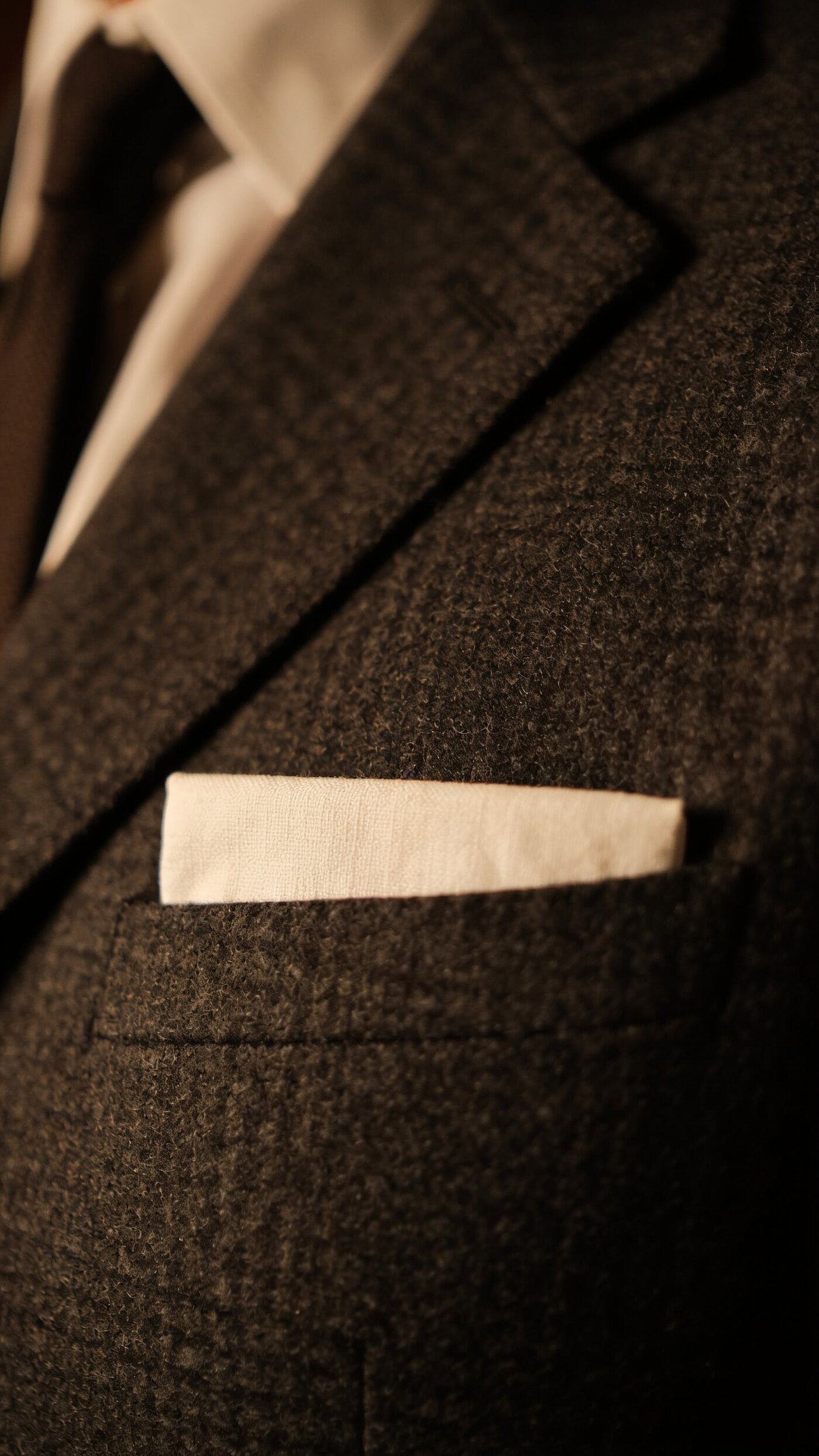
An empty breast pocket says nothing at all
Most men leave the breast pocket flat because they were never told what it is for. The result is a jacket with a slot cut into the chest and nothing in it, and the eye reads that slot as an unfinished detail rather than as restraint.
A white linen square costs very little and does one job: it puts a small block of light high on the chest, next to the face, where it lifts the whole outfit by an inch. It is not jewellery and it is not a flourish. On a dark suit it is closer to punctuation.
What to buy, and how to fold it:
- White linen, hand rolled edge, about 40 cm square. Start and possibly end there. It works with every suit you own.
- A flat presidential fold, which is one straight edge showing about one centimetre above the pocket. This is the Corleone version and it is the one that never looks like a try hard.
- Keep it slightly proud of the pocket, never stuffed. If it is standing up on its own, it is too much cloth.
- Silk later, if ever, and never matched to the tie. A square that matches the tie is a set, and a set tells everyone you bought it as one.
Wide, heavy, certain
Put the three together on one dark suit and the man wearing it stops needing to explain himself. The chest is broad because the lapel sends the eye upward. The trouser is still because the turn-up weighs it. The chest has one point of light on it because the pocket is not empty. Nothing is bright, nothing is new, nothing is fast.
That is the whole mechanism behind a wardrobe people still read as powerful more than fifty years after the film was made. Power in that film is never expensive looking. It is correct, and it is settled, and it is in no hurry.
If you take one thing from this: have the next dark suit you buy cut with a peak lapel and hemmed with a turn-up, and keep a white linen square in the breast pocket from the day it arrives. Three choices, one suit, and none of them will date.
Frequently asked
Is a peak lapel too formal for the office?
No. On a charcoal or navy single breasted suit it reads as well cut, not as dressed up. It is the shiny cloth and the wide shoulder that make a suit look formal, not the lapel shape.
Can a short man wear turn-ups?
Yes, but keep them shallow, around 3.5 cm, and keep the trouser break minimal. The horizontal line does shorten the leg, so give it as little to work with as possible.
Does a pocket square have to be white?
No, but your first one should be. White linen goes with every suit, every shirt and every tie, and it never looks like it is trying.
Can I have turn-ups added to a trouser that is already hemmed?
Only if there is enough cloth left inside the hem, which means roughly 6 cm of spare. Ask the tailor before you buy, because many ready made trousers are cut without it.
What suits should not have a peak lapel?
Anything already busy. A loud check, a strong stripe or a textured summer cloth is doing enough on its own, and a notch lapel keeps it calm.