The Thomas Crown Affair Style: One Inch of Cuff, One Break, One Colour
The short answer: a rich man never looks busy, and the clothes are how that is done. One inch of shirt cuff showing past the jacket sleeve says the jacket was made for the arm inside it, a single soft fold where the trouser meets the shoe says the same about the leg, and one colour worn at two depths removes every edge the eye could trip over. None of the three is expensive. All three are measurements.
John McTiernan's 1999 remake puts Pierce Brosnan in Milanese tailoring by Gianni Campagna, dressed by costume designer Kate Harrington, and the film is unusually honest about why. Crown is a man who steals a painting on a Saturday because his week left him unoccupied. He cannot look like he is trying at anything, including his clothes. So the wardrobe is built entirely out of fit, and fit is the one thing money genuinely buys.
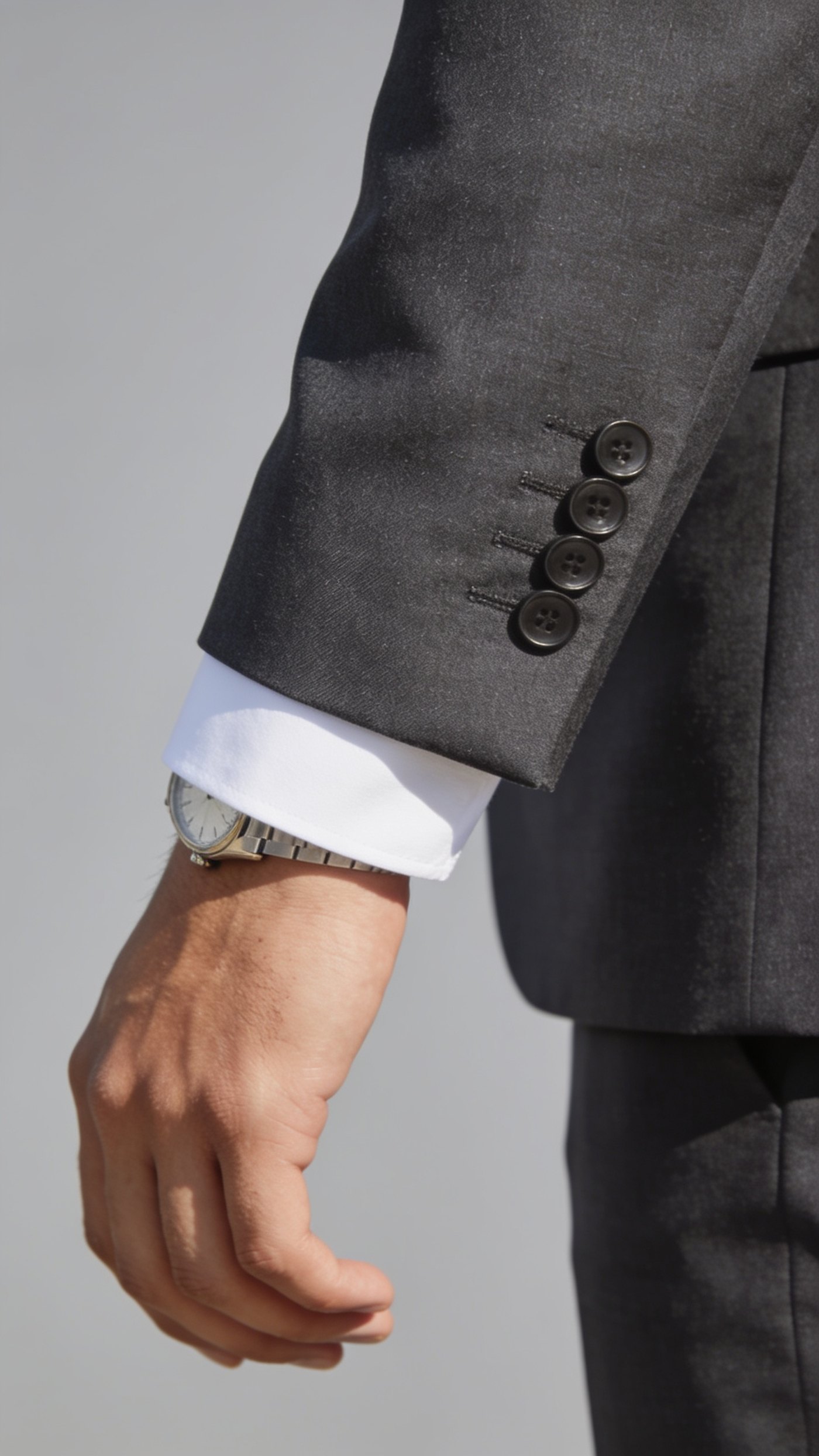
One inch of cuff tells you the jacket was measured
Watch any man in an off the rack jacket from behind as he reaches for something. The sleeve runs down over the wrist, swallows the shirt, and stops somewhere on the back of the hand. The shirt underneath might be beautiful. Nobody will ever see it.
A jacket sleeve is supposed to end above the wrist bone so that roughly one inch, give or take a quarter, of shirt cuff stays visible while the arm hangs. The effect is not decorative. It puts a bright horizontal line at the end of a dark sleeve, which tells the eye where the arm ends, and it quietly proves that somebody measured the arm. A sleeve that covers the cuff reads as borrowed even when the suit cost a fortune.
What to ask for:
- Jacket sleeve ending at the wrist bone, with one inch of shirt beyond it.
- Shirt sleeve long enough to reach the base of the thumb when the arm is straight.
- Have the jacket sleeve shortened from the cuff if the buttons allow it, from the shoulder if they do not. Either is a normal alteration.
- Check it standing still with the arms down, not with the arms held out. Held out, every sleeve looks short.
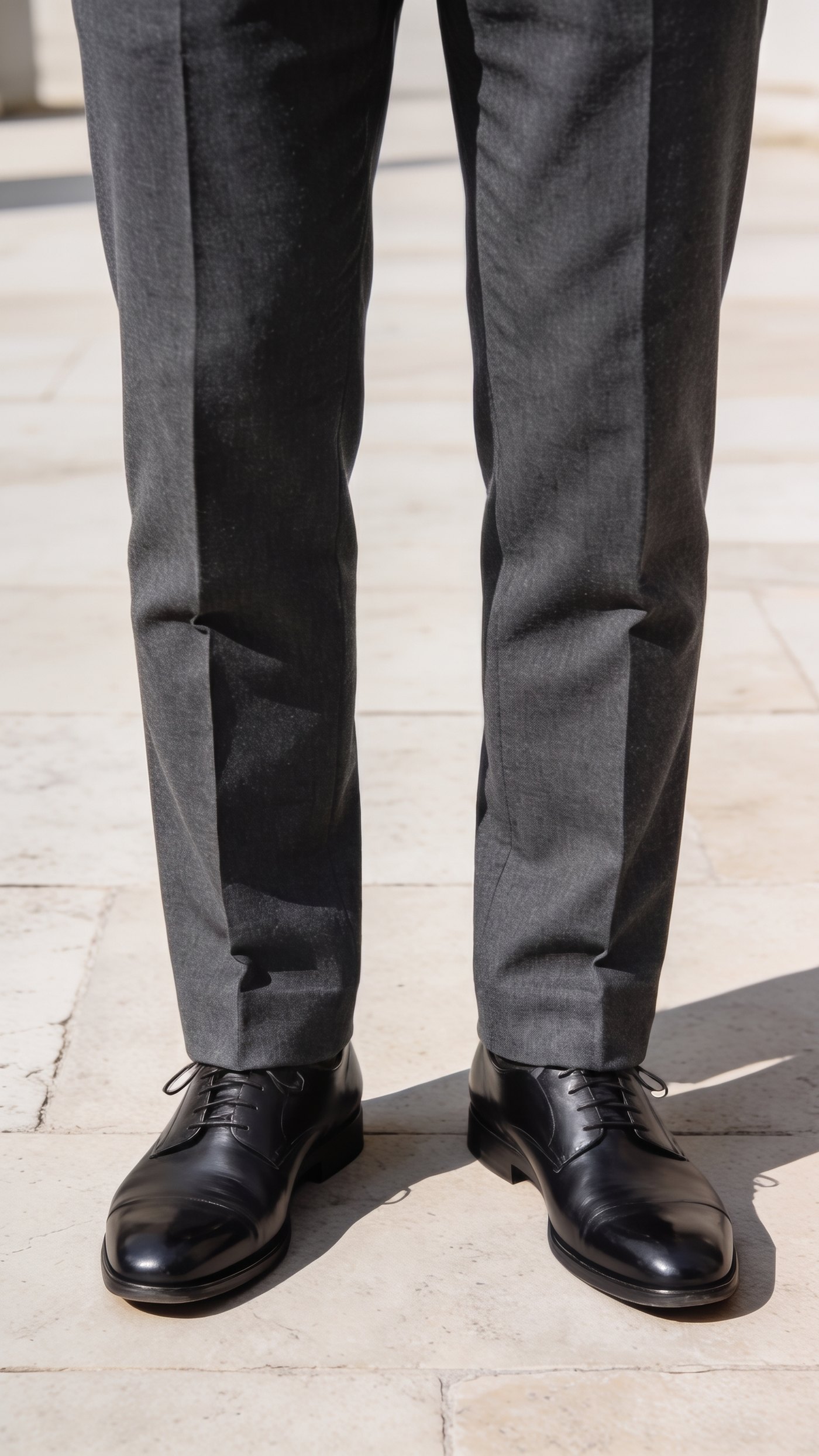
A single break is the whole rule for trousers
The bottom of the trouser is where most good suits fall apart. Too long and the cloth stacks on the shoe in two or three folds, which reads as a man wearing someone else's trousers. Too short and the leg line stops early and the shoe looks orphaned.
The target is one fold. The hem should rest on the top of the shoe with just enough length to put a single soft crease across the front of the leg, and nothing more. One break keeps the vertical line from waist to floor unbroken while still covering the top of the shoe when you walk. It is a difference of about a centimetre of length, and it changes how the whole suit reads.
What to tell the tailor:
- One soft break at the front, hem just touching the top of the shoe.
- Bring the shoes you will actually wear with the suit to the fitting. A centimetre of heel moves the hem.
- A slight slant, lower at the back than the front, keeps the hem off the floor behind.
- No turn ups on a suit you want to look quiet. They add a horizontal band exactly where you were trying to keep the line going.
One colour at two depths, so there are no edges
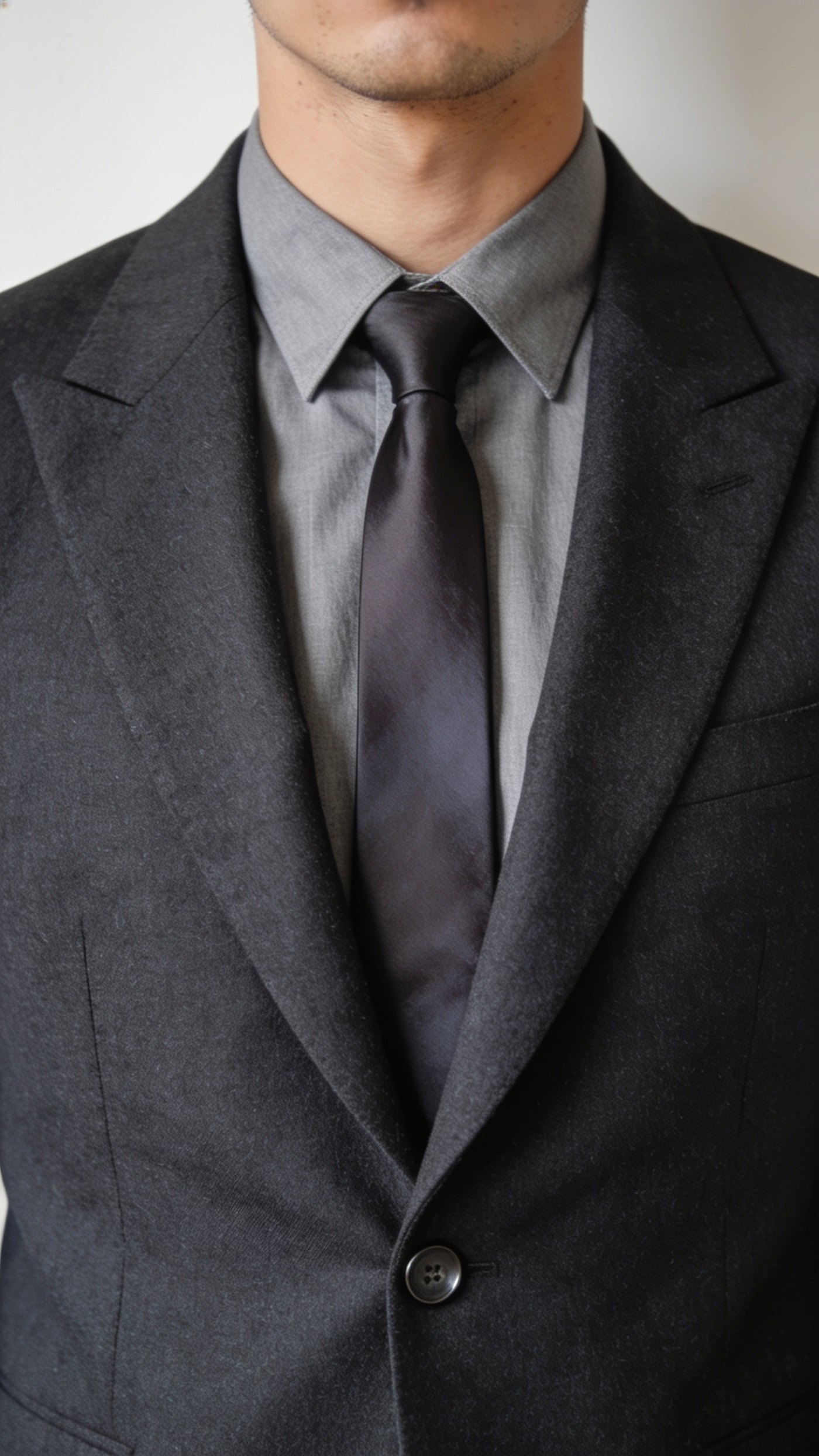
The third thing is the one people notice least and copy least. Crown dresses tonally: charcoal on charcoal, navy on navy, grey shirt under a grey jacket, tie a shade deeper than the shirt. There is no contrast anywhere on the torso.
The mechanism is simple. Every hard colour boundary is a line, and every line is a place where the eye stops and measures. A white shirt and a dark suit put a bright wedge in the middle of the chest; a patterned tie against a striped shirt puts a second argument on top of it. Remove the boundaries and the torso reads as one continuous shape, which is what we are actually describing when we call someone's clothes calm.
How to build it:
- Pick one colour family and stay inside it: shirt one or two shades lighter than the jacket, tie one or two shades deeper than the shirt.
- Keep the textures different even though the colours match. A twill tie against a poplin shirt gives the outfit depth without contrast.
- Grey, navy and brown all do this well. Black does not, because black has no shades.
- Nothing patterned, or one pattern at most. A tonal outfit with three patterns in it is just a quiet mess.
Easy, exact, unbothered
Put the three together and nothing on the man is approximate. The sleeve stops where the arm does, the trouser stops where the shoe does, the colours never argue. There is nothing left for an observer to find, and that absence is what the film sells as wealth.
What is useful about this wardrobe is that two of the three cost nothing. Shortening a sleeve and hemming a trouser are the cheapest alterations a tailor performs, and together they do more for a suit than the next five hundred pounds of cloth will. The tonal habit is free.
If you take one thing from this: get the sleeves of every jacket you own shortened to show an inch of cuff. It is one afternoon and it changes every photograph of you taken from now on.
Frequently asked
How much shirt cuff should show exactly?
About one inch, with anything from half an inch to an inch and a quarter looking correct. The only real error is zero.
Is a single break right for every trouser?
For suits and odd trousers, yes. Casual trousers and jeans are usually better with no break at all, which is a different look and a deliberate one.
Does a tonal outfit work in an office?
It works better than contrast in most offices, because it reads as composed rather than formal. A navy jacket, a pale blue shirt and a navy tie is a tonal outfit that nobody will even register as a choice.
Can I wear a white shirt and still dress tonally?
Yes, but the white becomes the brightest thing in the outfit, so the rest has to stay quiet. A white shirt with a tie one shade off the jacket is the easiest version.
What about turn ups, are they wrong?
Not wrong, just louder. They suit a heavier cloth and a wider leg. On the kind of suit described here they interrupt the line you spent the whole fitting protecting.