"The Bear Style: Loopwheel Tee, Work Pants and Clogs"

The short answer: a loopwheel tee is a white t-shirt knitted in a slow circular loop on machines that mostly stopped being built before the war, which is why it hangs instead of clinging; work pants are plain black cotton cut wide enough to kneel in, which is why they read as clothing rather than as an outfit; and a clog with a heel strap is a shoe chosen for standing on a tile floor for fourteen hours. None of it is tailoring. All of it is a decision made once and never revisited.
FX's kitchen series ran five seasons and finished in June, and across all of them Carmy Berzatto wore essentially one thing. Costume designers Cristina Spiridakis and then Courtney Wheeler built that one thing deliberately rather than by default, and Wheeler has described what walked into the first fitting: a white t-shirt, black work pants, and a pair of Birkenstocks. Where our last episode dressed an heir for an Oxford quad, this one dresses a chef for a service he is already late for. The register is opposite and the principle is identical: the clothes are ordinary, and the wearing is not.
A white t-shirt is the hardest thing to get right
Most white t-shirts fail in the same place. The cotton is thin, the jersey is knitted flat and fast under tension, and the moment it meets a body it clings and goes grey at the shoulders. It is the cheapest thing in the wardrobe and it looks it within a month.
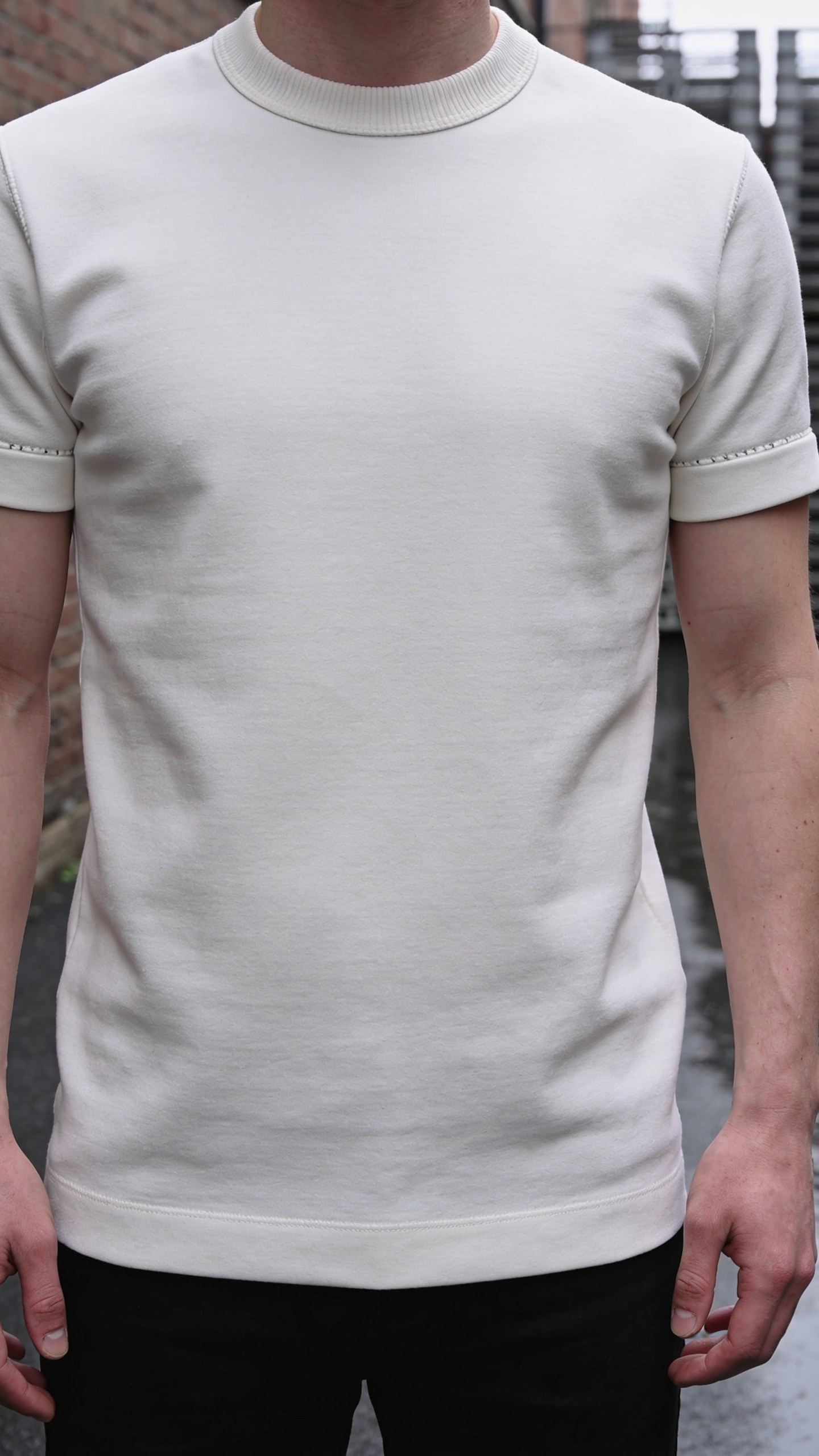
A loopwheel tee is knitted differently. The fabric comes off a circular machine that turns slowly and lets the yarn fall under its own weight, with no tension pulling it tight, so the tube of cloth is dense and relaxed at the same time. There is no side seam, because there was never a flat piece to sew. It is slow work: one of these machines produces a fraction of what a modern knitter does in the same hour, which is why almost nobody runs them.
Carmy's is a Merz b. Schwanen 215, made in Germany on exactly those machines, a 7.2oz two-thread organic cotton in a classic fit. Wheeler found it by walking into Self Edge in New York, asking which t-shirt was actually good, and then buying the store's entire stock. She sent Jeremy Allen White's measurements to the brand's founders and had the shirts altered to him. That is the part worth copying: the shirt was chosen once, then fitted, then bought in quantity.
What to look for:
- Weight you can feel. Around 7oz and up. If it folds like paper it will wear like paper.
- No side seams. A tubular body is the signature of circular knitting and the reason the shirt does not twist after washing.
- A collar band that holds. The ribbing should spring back; a collar that waves after three washes was never going to last.
- A fit through the shoulder and chest with room at the waist. Slim white tees crease across the stomach every time you sit.
- Buy more than one. This only works as a uniform, and a uniform needs replacements that look identical.
Work pants are the half of the outfit nobody photographs
Below the waist, nothing fashionable happens. That is the whole idea, and it is the part most people get wrong when they copy this look, because they pair the good t-shirt with something narrow and pressed and end up dressed for an office.
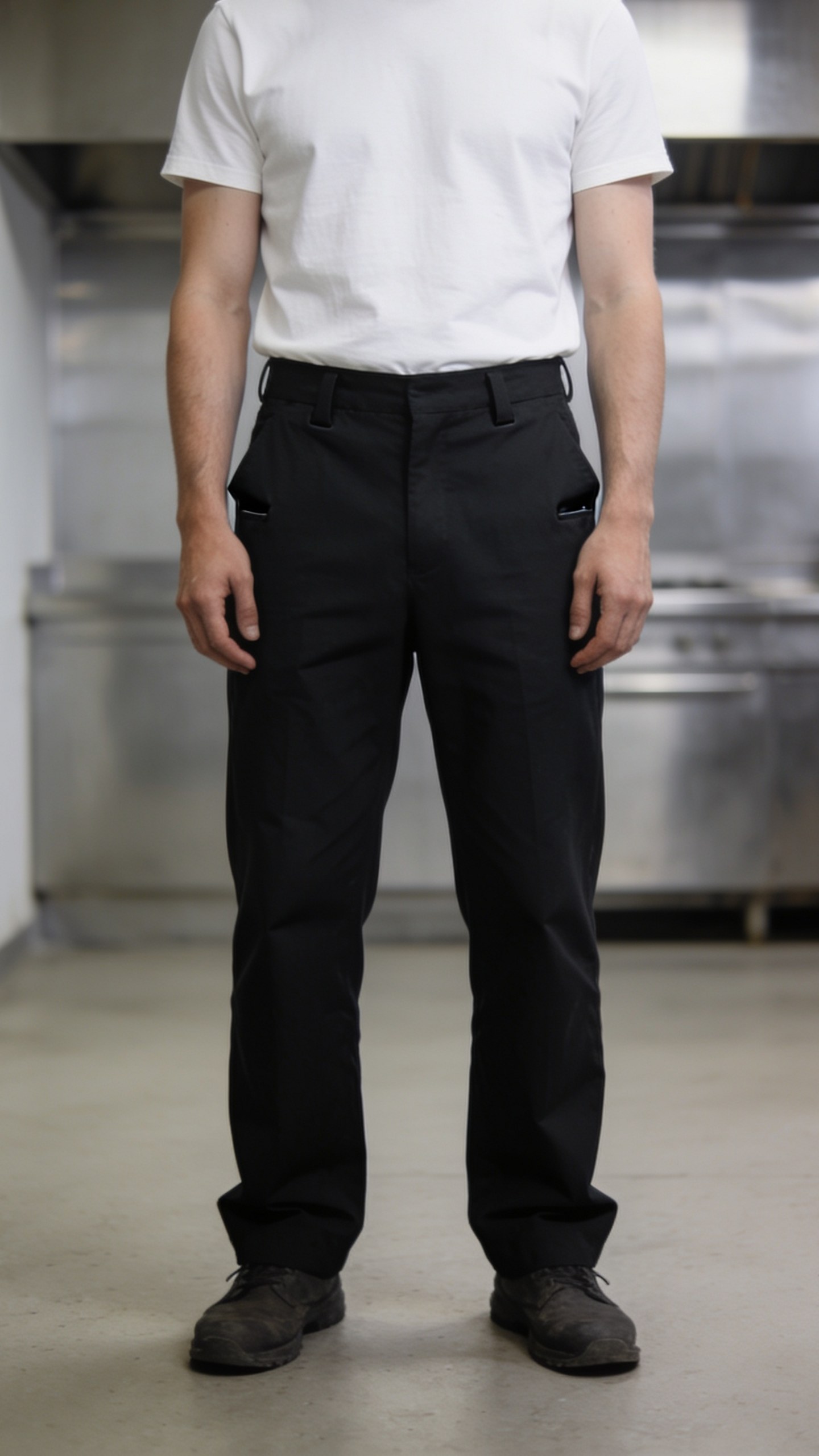
The pants are plain black cotton work pants: a straight, roomy leg, a flat front, pockets built to be used, and a surface that has gone soft from washing rather than from any finish applied at the factory. They do not taper. They break on the shoe instead of stopping above it. Bought several at a time and worn in rotation, they reach the state the look depends on, which is the state of having been owned for a while.
We are not naming a brand here. Two are widely repeated online and the costume team has never confirmed either, so the honest description stops at black cotton work pants. The silhouette is what you are buying, not the label on the back pocket.
What to look for:
- Mid-weight cotton twill or duck, not stretch, and not a technical blend. It should crease and keep the crease.
- A straight leg with real room through the thigh and knee. If you cannot crouch in them they are the wrong trousers.
- A flat front and a plain waistband. Pleats and details both pull the eye down, and the eye is supposed to stay up.
- Length that touches the shoe. A cropped work pant turns a working garment into a styling choice.
- Black, and then keep buying black. The point is that nobody can tell which pair you have on.
Clogs are a working shoe that happens to look good
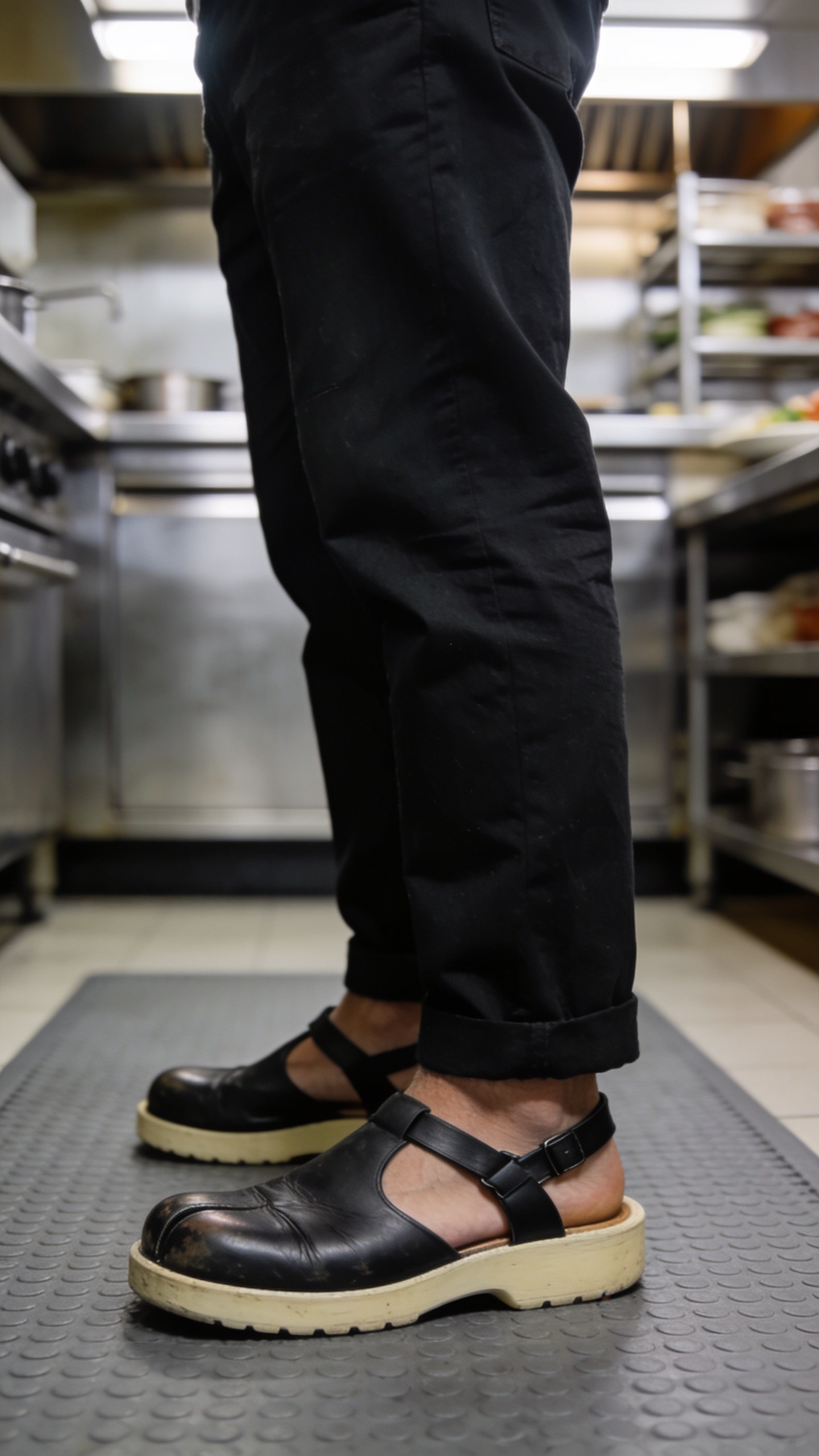
The street shoes come off at the kitchen door. On the floor, Carmy wears a black leather clog with a strap at the heel and a rubber outsole, the Birkenstock Tokio, which Sydney wears too. It is not a fashion object in the show. It is a shoe for a person who is on a hard floor all day and needs to get in and out of it without sitting down.
That is also why it works outside a kitchen. The shape is wide at the toe and closed over the instep, the footbed is contoured, and the heel strap stops the whole thing flapping when you walk, which is the single failure of every backless clog. Worn with the wide black pant, it reads as deliberate rather than as a slipper that escaped.
The street pair matters too, as an example of how specific this wardrobe is. The production started with Air Force 1s and changed them to all-white Nike Cortez, now discontinued, because the older, flatter shoe suited the character better. Same colour, same idea, different decade, and the change was made on purpose.
What to look for:
- A heel strap. Backless clogs are for standing still, not walking.
- Leather with a closed toe box, and a rubber outsole with actual grip.
- A footbed that is shaped, not flat. This is a shoe for hours, not for a photograph.
- Black with black trousers. The shoe should end the leg line, not interrupt it.
- Socks or no socks are both correct here, which is rare, and is a function of the shoe being a work tool.
Three things, bought on purpose, and never changed
What makes this wardrobe copyable is not the Merz tee or the Birkenstocks. It is that there are three items and no fourth. Every morning Carmy makes no decisions, because the decisions were made once, in a fitting room, by people who tried the alternatives and then stopped.
A detail that says how seriously the show took this: the production bought everything itself, from vintage shops or direct from the brands, with no product placement anywhere in the frame. One pair of 1950s Levi's was bought from a Chicago vintage store for a serious amount of money, and on screen you see roughly the waistband. That is the budget of a department that cares more about what the clothes mean than about what the camera can show.
Two things commonly attributed to Carmy are not his. The beanie is Marcus's, not his, and he wears no watch and no rings. The absence is part of the costume: there is nothing on him that was chosen to be noticed.
If you want the look, do not shop for it item by item. Pick one white t-shirt that is genuinely well made, one black trouser you can work in, one shoe you can stand in, and then buy each of them again.