The Man from U.N.C.L.E. Style: Windowpane, Three Piece and French Cuffs
The short answer: a windowpane check draws big, open squares across a suit and frames the chest the way plain cloth never can; a waistcoat closes the gap between jacket and trouser so the suit reads finished from every angle, which is the whole argument for a three piece; and a french cuff with silver links replaces the plastic button nobody chose with a piece of jewellery somebody did. Three decisions, all of them visible from across a room, all of them saying the same thing: this man dresses on purpose.
Guy Ritchie's 2015 film sends a CIA agent who used to be a professional thief through 1963 Rome, and the wardrobe treats his vanity as character, not decoration. Costume designer Joanna Johnston had Henry Cavill's Napoleon Solo tailored for real: bespoke suits from Timothy Everest's London operation, cut by Fred Nieddu, in cloth Johnston sourced herself, down to Crockett & Jones shoes. Her stated reference point was Steve McQueen in The Thomas Crown Affair, another immaculate thief, and it shows. Where our last episode dressed a man to own English countryside, this one dresses a man to walk into any hotel lobby in Europe and be taken for the richest guest in it.
Windowpane frames the confidence
A plain suit in a strong colour already says plenty. But plain cloth has nowhere for the eye to rest: at ten paces it reads as a block, and the man inside it borrows all his presence from the cut alone.
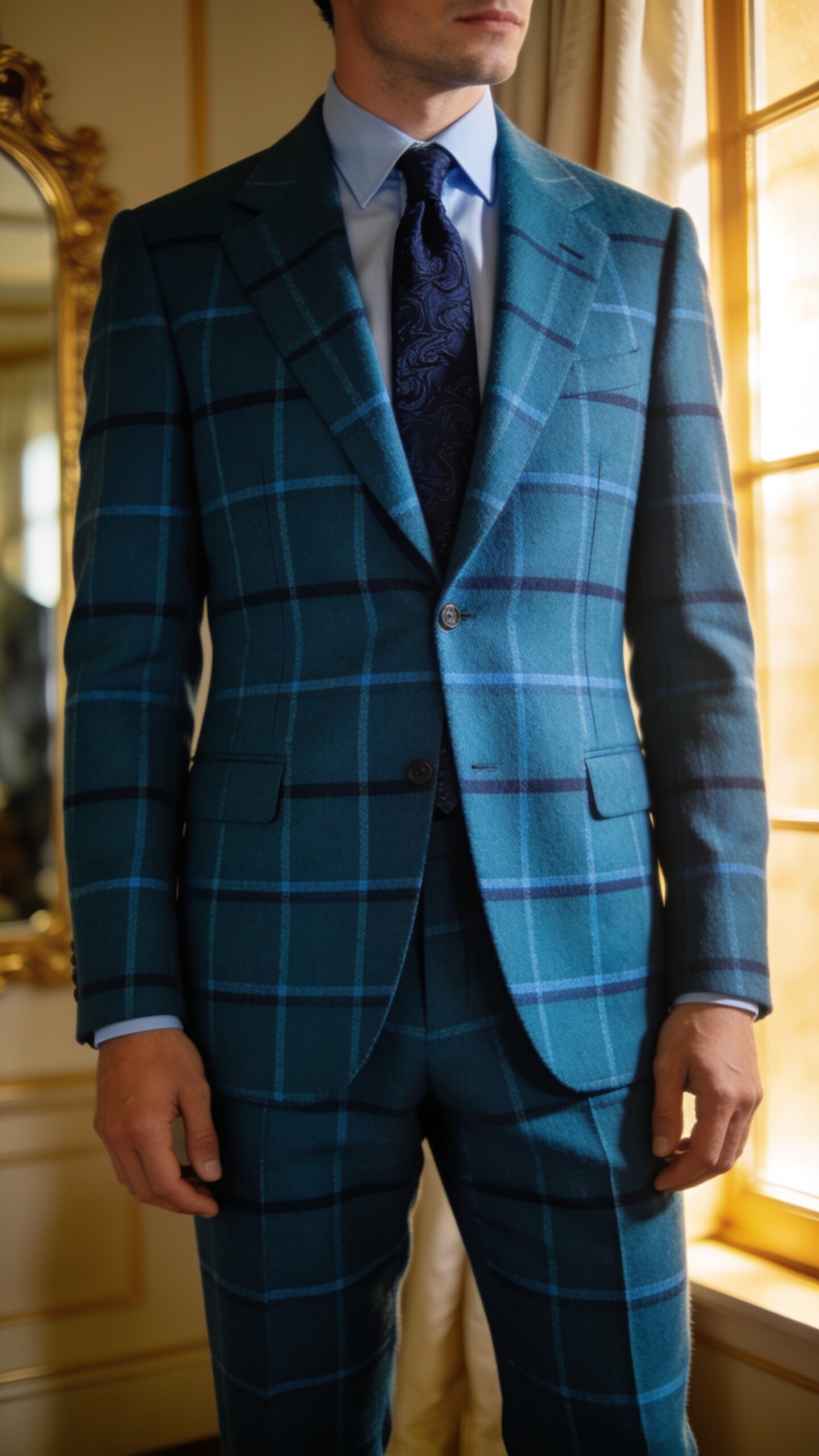
A windowpane check fixes that with geometry. Thin lines cross at wide intervals and draw big, open squares across the cloth, so the chest reads as a drawn picture rather than a painted wall. Solo's signature suit does it in teal blue wool with the grid picked out in light blue and navy, a combination Everest's own records describe simply as a teal check suit, and the effect on screen is exactly what the pattern promises: tall, confident and unmistakably expensive. A windowpane only works when it is matched properly at the seams, which is why it photographs like money; it is the check that is hardest to fake cheaply.
What to look for:
- Big, open squares. The whole point is air between the lines; a tight grid becomes a business check and disappears.
- One or two line colours drawn from the rest of the outfit, on a ground strong enough to carry them.
- Pattern matched at the shoulder seams and pockets. On a windowpane every mismatch is legible at a distance.
- Soft, matte wool. The grid supplies the interest; shiny cloth turns it loud.
- If the suit is patterned, keep the shirt quiet and the tie small in scale.
A waistcoat closes it into a three piece
A two piece suit does the job until the jacket opens. Then the shirt billows into view, the tie swings free, the trouser top shows its hardware, and the whole middle of the figure reads as backstage.
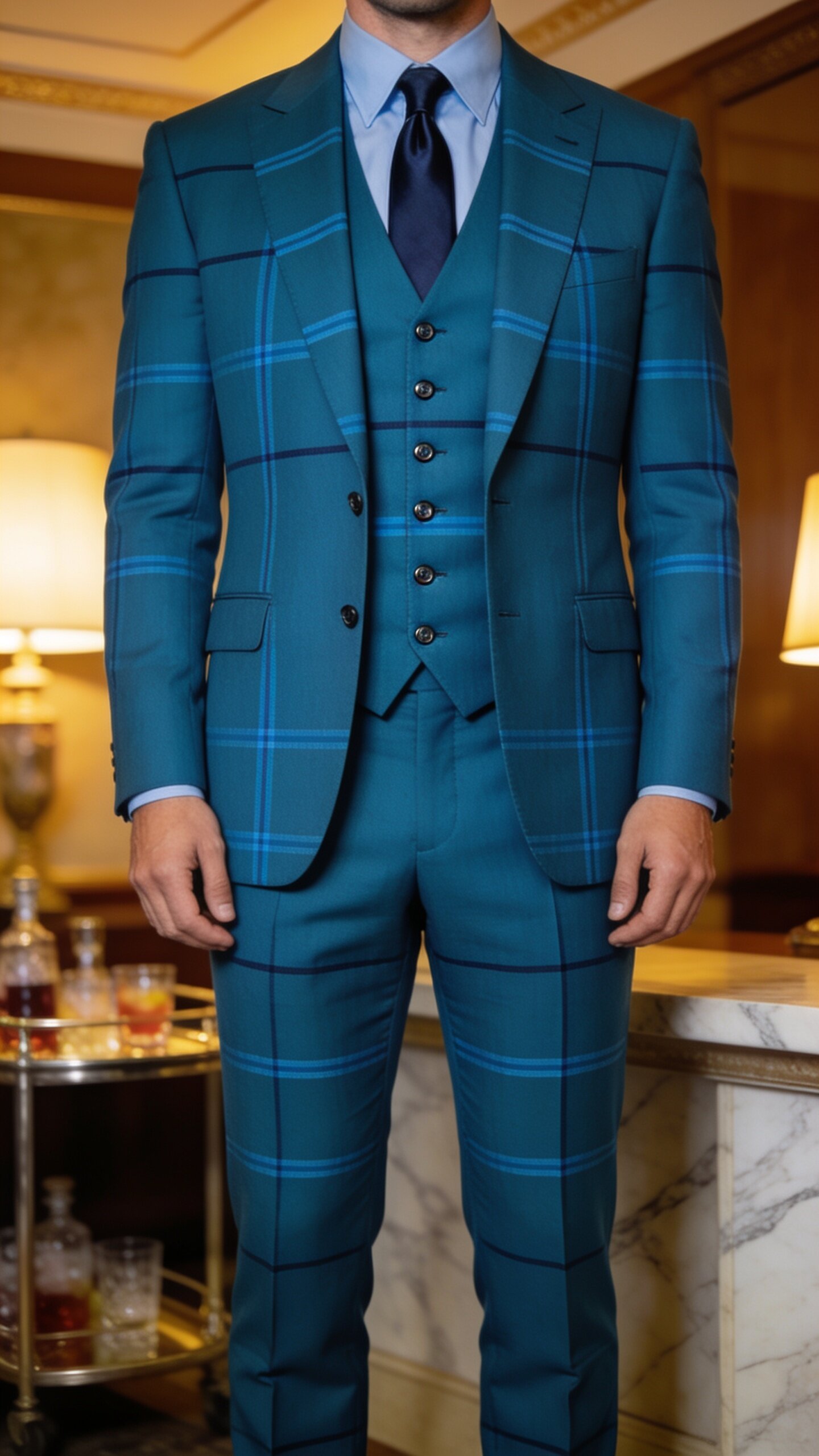
The waistcoat closes that gap. A buttoned panel runs from tie to trouser top, so the suit stays a suit whether the jacket is open, closed or over a chair, which for a man who moves as much as Solo does is most of the time. His version is the full commitment: a matching five button waistcoat completing a single breasted, three button coat, with flat front trousers below and a brocade satin back hiding where only he will see it. That last detail is the character in one line: finish even the part nobody is shown.
What to look for:
- Cut from the same cloth as the suit. A contrasting waistcoat is a different, louder sentence.
- High enough to show just a triangle of shirt and most of the tie; low cut waistcoats read as costume.
- Long enough to cover the trouser waistband with the jacket open. The gap it exists to close must actually close.
- Trim through the body. A waistcoat that wrinkles horizontally is too tight; one that bows away is too big.
- Leave the bottom button undone. It is the one convention everyone in the room can check.
French cuffs sign the deal in silver
An ordinary shirt closes its cuff with a plastic button, chosen by the factory, noticed by no one. It is the default, and it reads as the default.
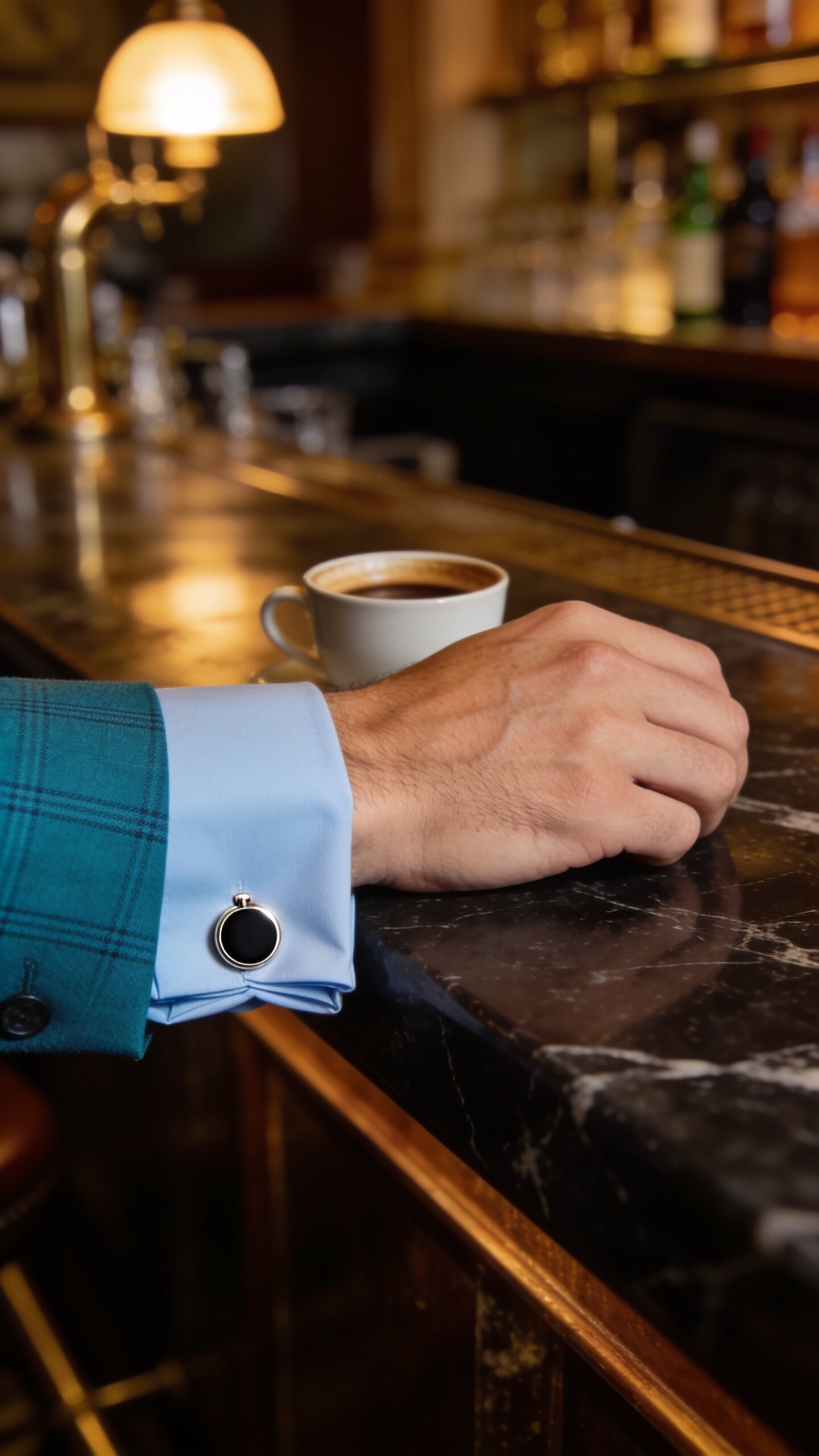
A french cuff is the alternative with a history: the cuff folds back double and closes with links, which turns the four inches of shirt that show beyond a jacket sleeve into a place for jewellery. Solo's shirts run pale blue with narrow point collars and double cuffs, closed with black faced silver links, so that every handshake, every passed glass and every signature arrives with a flash of silver at the wrist. It is the smallest of the three moves on this page and the most personal; cloth can be issued, but a cuff link was bought.
What to look for:
- Double cuffs on a shirt with some formality already in it; a french cuff on a soft casual shirt argues with itself.
- Links in one metal, kept consistent with watch and belt buckle. Silver with cool colours, gold with warm.
- A dark face, onyx or enamel, reads as the quiet classic; novelty shapes spend the dividend.
- The cuff should show half an inch beyond the jacket sleeve. Links nobody can see are links nobody has.
- Knots of silk cord are the casual, inexpensive entry; wear them until losing one stops hurting.
Drawn, finished, signed
Put the three together and the logic runs in one direction. The windowpane draws the frame, the waistcoat finishes the picture inside it, and the french cuff signs the result at the wrist. Nothing in the outfit is accidental, which is precisely the effect: a wardrobe where every element is visibly chosen tells the room the man makes choices, and in 1963 Rome, as at most other times and places, the room believes clothes before it believes anything else.
The film plays Solo's vanity for comedy and never once lets it fail him. That is the honest lesson of the episode: dressing deliberately is not a disguise on top of competence, it is the first exhibit of it.
If you take one thing from this: start with the french cuffs. A double cuff shirt and one pair of plain silver links cost less than any decent suit alteration, they work under the tailoring you already own, and they move an outfit from issued to chosen the moment your hands come out of your pockets.
Frequently asked
Is a windowpane suit office safe?
In most offices, yes, if the ground colour is sober and the grid is subtle: navy with a tonal overcheck passes almost anywhere. The teal and sky version on this page is the holiday grade of the pattern; treat it as the ceiling, not the entry point.
Can I wear the waistcoat without the jacket?
You can, and it reads instantly more casual, bartender rather than banker. The three piece's trick works in the other direction too: the waistcoat exists to keep you finished when the jacket comes off, and that remains its best argument.
Are french cuffs too formal for daily wear?
They sit one notch above button cuffs, not ten. Under a suit or a blazer they are simply correct; with an open collar and no jacket they start to look like a shirt missing its occasion. If you wear tailoring most days, double cuffs earn their keep.
Do cuff links have to match my watch?
Match the metal, not the brand. Silver links beside a steel watch read as one decision; mixing silver and gold at the same wrist reads as two accidents. Black faced links are the diplomatic option because they defer to everything.
Three pieces in summer?
Choose the cloth before the layer count. A three piece in high twist, open weave wool wears cooler than a two piece in heavy flannel. The waistcoat adds one thin layer over the core; in exchange the jacket can come off anywhere and leave you dressed, which in summer is the better half of the bargain.