The Talented Mr. Ripley Style: Linen, Knit Polos and Borrowed Class
The short answer: Ripley's summer wardrobe works because every piece is soft, pale and slightly loose, and none of it is trying. Linen instead of synthetic, a knit polo instead of a t-shirt, heavy round spectacles instead of invisible frames. That is the whole formula, and it costs less than one bad suit.
Anthony Minghella's 1999 film is usually remembered for the Mediterranean light and the murder. Look at the clothes and it becomes a different kind of story: a man who cannot afford the life he wants learns to dress like the people who can, and the dressing is what makes it believable. Dickie Greenleaf's wardrobe is inherited and careless. Tom Ripley's is studied. He is the one paying attention, which is exactly why his clothes are worth copying.
Linen is a climate decision, not a style one
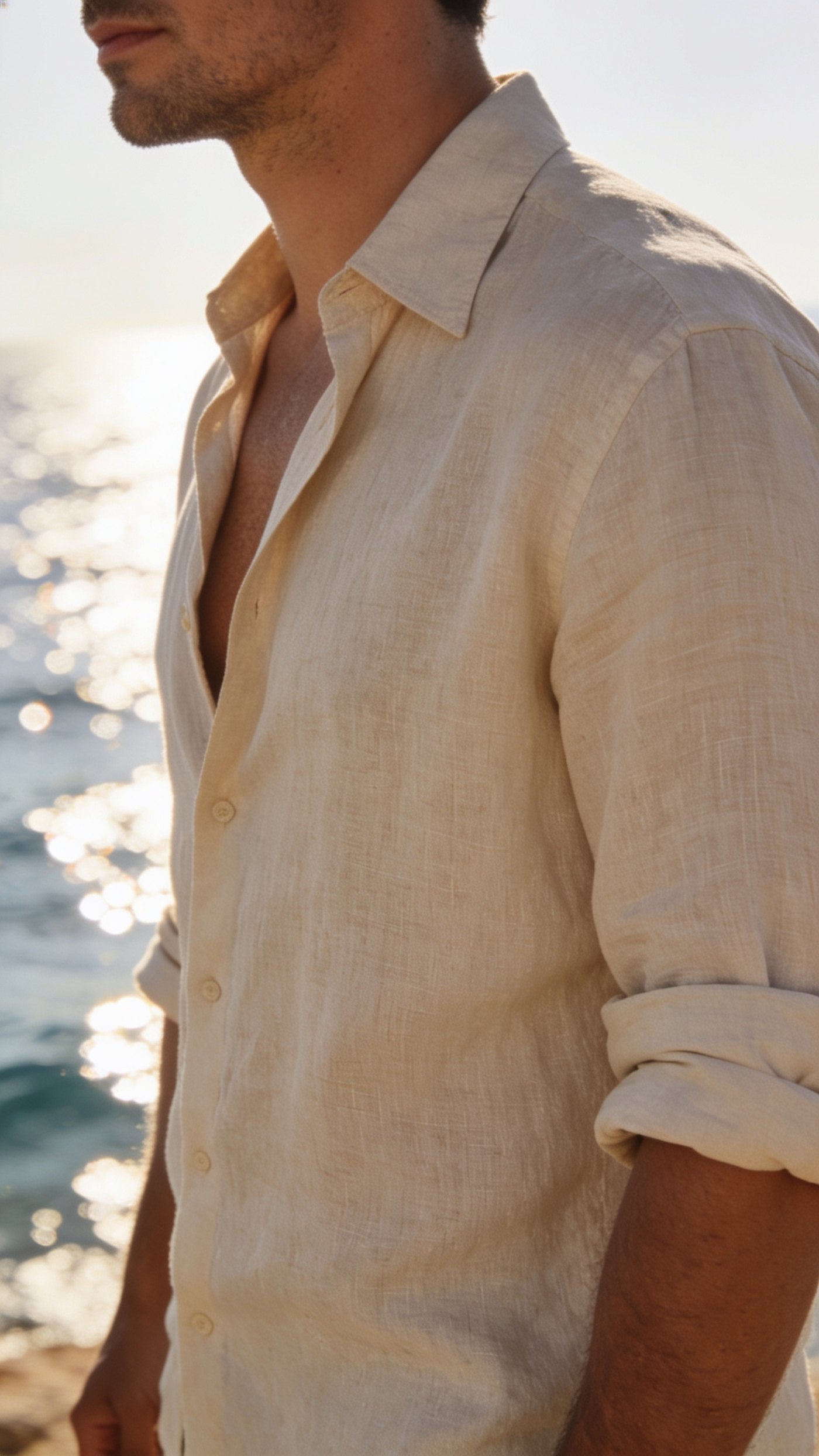
The first thing Ripley gets right is the cloth. Not the colour, not the cut. The cloth.
Linen is spun from flax, and the fibre is hollow enough to move air and absorb moisture without feeling wet. Put a synthetic shirt on in thirty degrees and it does the opposite: it holds the heat against you and then shows you exactly where. Everyone has seen that shirt at a summer wedding. It photographs badly, it clings, and it makes the wearer look like he is enduring the day.
The trade is wrinkles. Linen creases the moment you sit down, and it will never look pressed for more than ten minutes. That is the point. The crease is the evidence that the cloth is honest, and it reads as ease rather than sloppiness because the colour and the fit are calm.
What to look for:
- Mid-weight linen, roughly 180 to 220 grams. Lighter than that goes transparent; heavier stops breathing.
- Oatmeal, sand, chalk or pale blue. Bright white linen is unforgiving in photographs and yellows with washing.
- A camp collar or a soft point collar with no fusing. A stiff interlined collar on a linen shirt is a contradiction.
- Sleeves you can roll twice and leave. Not rolled to the bicep.
The knit polo is the piece most men are missing
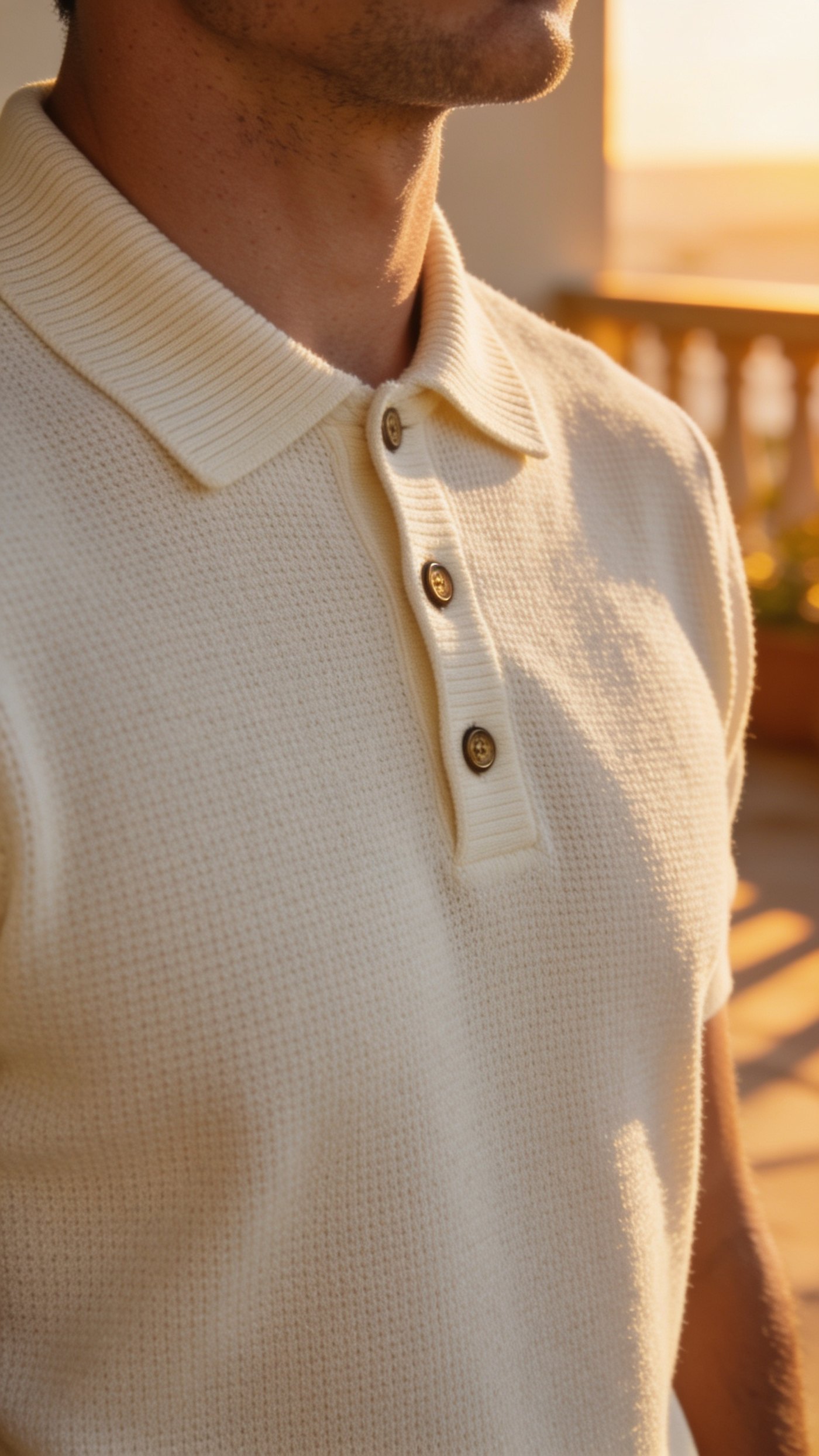
A polo shirt in jersey cotton is a sports garment. It is fine, and it will always look like what it is. A knit polo is a different object: it is a piece of knitwear with a collar, usually in fine cotton, silk-cotton or merino, and it holds a shape that jersey cannot.
The difference shows up in one place — the collar. A jersey polo collar flops open and sits flat on the chest. A knit polo collar is ribbed, so it stands slightly against the neck and frames the face the way a shirt collar does. That single centimetre of structure is why a knit polo can go under a jacket and a regular polo cannot.
This is also the easiest upgrade in summer menswear. It costs less than a decent shirt, it needs no tie, and it solves the problem of what to wear under a linen jacket when a shirt feels like too much.
How to wear it:
- Cream, navy, olive or tobacco. Save the loud colours for knitwear you wear alone.
- Three buttons at most, and leave the top one open. Two open is a different film.
- Untucked only if the hem sits at mid-fly. Anything longer needs tucking.
- Under an unstructured jacket, not a suit jacket. The formality has to match.
Heavy spectacles give you a face
Ripley's glasses are not a disguise, although the film lets you think so. They are the one hard line in an outfit made entirely of soft cloth, and they do what a strong frame always does: they give the face a structure the clothes cannot provide.
Thin wire and rimless frames are designed to disappear. That is a reasonable goal if you do not want your glasses noticed, but it means giving up the only accessory a man wears on his face every day. A round or panto frame in thick acetate does the opposite — it draws a boundary around the eyes, balances a long face and adds weight above a pale summer outfit that would otherwise float away.
If you are choosing a frame for the first time:
- Match the frame width to your face width. The hinges should sit at the outer edge of your temples, not beyond them.
- Round frames soften a square jaw. Square frames add structure to a round face. This rule is old because it works.
- Dark tortoiseshell is easier to live with than black. It reads warm against skin instead of cutting against it.
- Acetate, not metal, if you want the frame to register at all.

The whole outfit, assembled
Put the three together and you have the summer uniform the film is actually selling: an oatmeal linen shirt, a cream knit polo for the evenings, pale trousers with a real waistband, and a frame with enough weight to hold the top of the composition. Add leather sandals or unlined loafers, no socks, and stop there.
What makes it work is restraint in the colour range. Everything Ripley wears sits within two or three steps of each other on a sand-to-cream scale, which is why the outfits never look assembled even though they clearly are. When every piece is quiet, the fit and the cloth are the only things left to notice — and those are the two things he gets right.
There is a lesson buried in the plot as well. Ripley learns the codes faster than the people born into them, because he is the only one studying. Dressing well has never been about money. It is about noticing which details carry meaning, and then being disciplined enough to use only those.
Frequently asked
Is linen too wrinkled for the office?
For a formal office, yes on its own. A linen and wool blend, usually around seventy-thirty, keeps most of the breathability and drops most of the creasing. Pure linen belongs to weekends, holidays and summer evenings.
What is the difference between a knit polo and a regular polo?
A regular polo is knitted jersey, a fabric with stretch and no structure, so the collar lies flat. A knit polo is a proper knitted garment with a ribbed collar that stands against the neck, which lets it work under a jacket.
Can I wear a knit polo with a suit?
With a soft unstructured suit in linen, cotton or hopsack, yes. With a formal worsted business suit, no — the textures fight each other, and the open neck undercuts the formality of the cloth.
What frame shape should I choose?
Match the frame to the width of your face first, then use shape to balance it: round frames soften a square jaw, squarer frames add definition to a round face. Thickness matters more than shape, though — a thin frame disappears whatever its outline.
How do I stop pale trousers from looking cheap?
Weight and waistband. Cream flannel, heavy cotton drill or linen with real substance hangs straight; thin poplin clings and shines. A proper waistband that sits at the natural waist does more for the line than any amount of tailoring below the knee.