Layer Cake Style: The Slim Suit, the Knit Tie and the Crew Neck
The short answer: a suit cut close to the body looks decided rather than inherited, a knit tie kills the shine that gives a cheap outfit away, and a fine crew neck under a jacket says what a collar and tie cannot. The man in this film never gives his name. The cut finishes the sentence for him.
Matthew Vaughn's 2004 debut gives Daniel Craig a character credited only as XXXX, a London drug dealer who dresses like a man in corporate finance because that is how he thinks of himself. Costume designer Stephanie Collie put him in close cut dark suits, knitted ties and fine gauge knitwear, and the film came out two years before Craig was cast as Bond. Watch it now and you can see the whole later wardrobe already assembled.
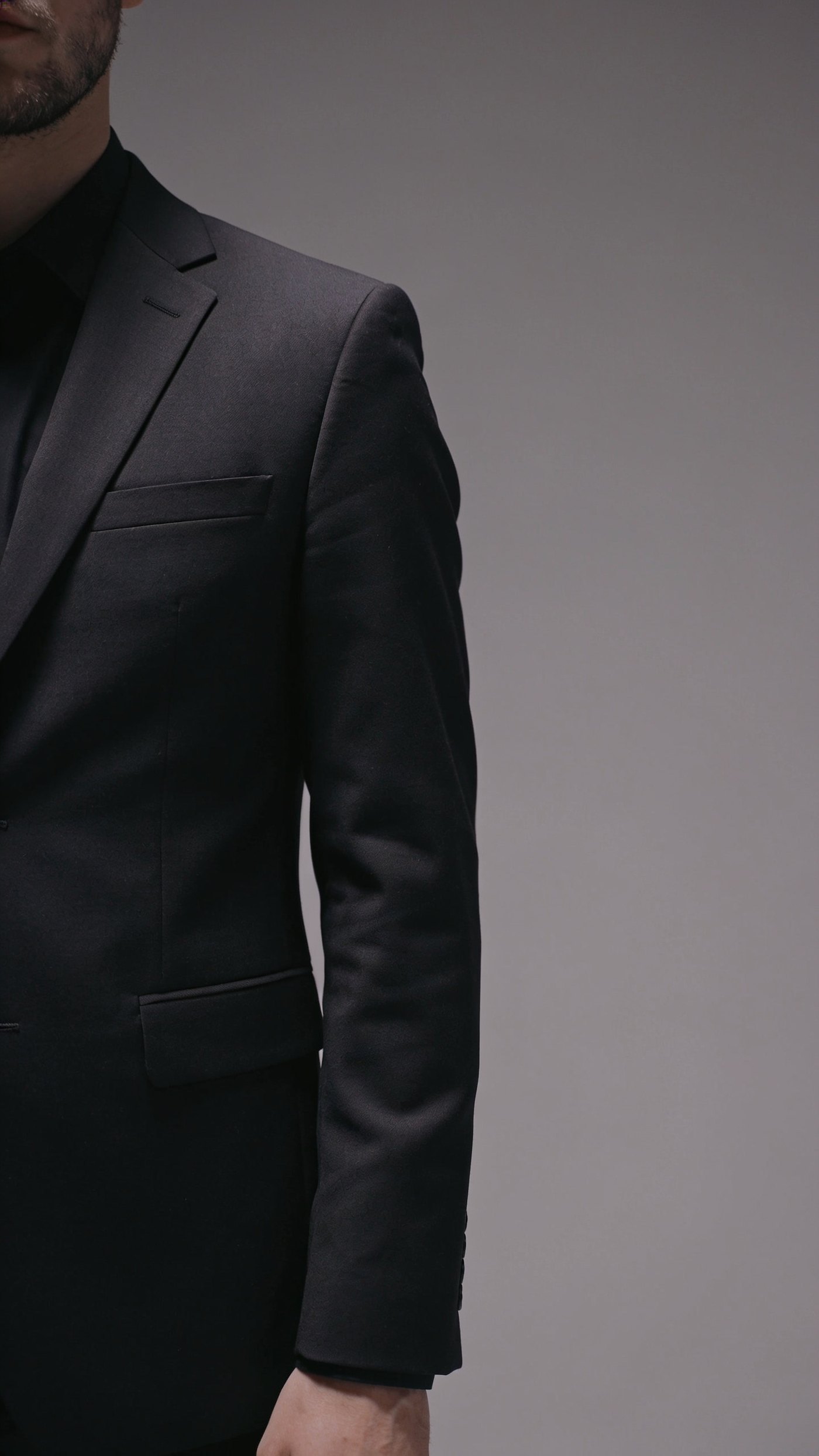
A loose suit looks borrowed, a slim one looks chosen
Most men own at least one suit that is a size too generous, usually because it was bought for comfort or bought years ago. The signs are always the same: the shoulder seam hangs past the bone, the sleeve has room to rotate on the arm, and the jacket skirt stands away from the hip instead of following it. The cloth might be excellent. The suit still looks like it belongs to somebody else.
Close cutting is not about tightness, and the squeezed version with the pulling button is its own mistake. It is about the jacket following the three places the body actually has a shape: the shoulder, the chest and the waist. Take the slack out of those three and the suit reads as a decision. That is why a modest suit altered properly outperforms an expensive one left as it came.
What to have done:
- Shoulder seam ending on the bone. This is the one measurement a tailor cannot fix cheaply, so buy for the shoulders and alter everything else.
- Waist suppressed enough that the jacket closes without strain and still shows a shape when buttoned.
- Sleeve narrowed to follow the arm, ending above the wrist bone.
- Trousers taken in through the thigh, with a clean line to the hem and no excess at the seat.
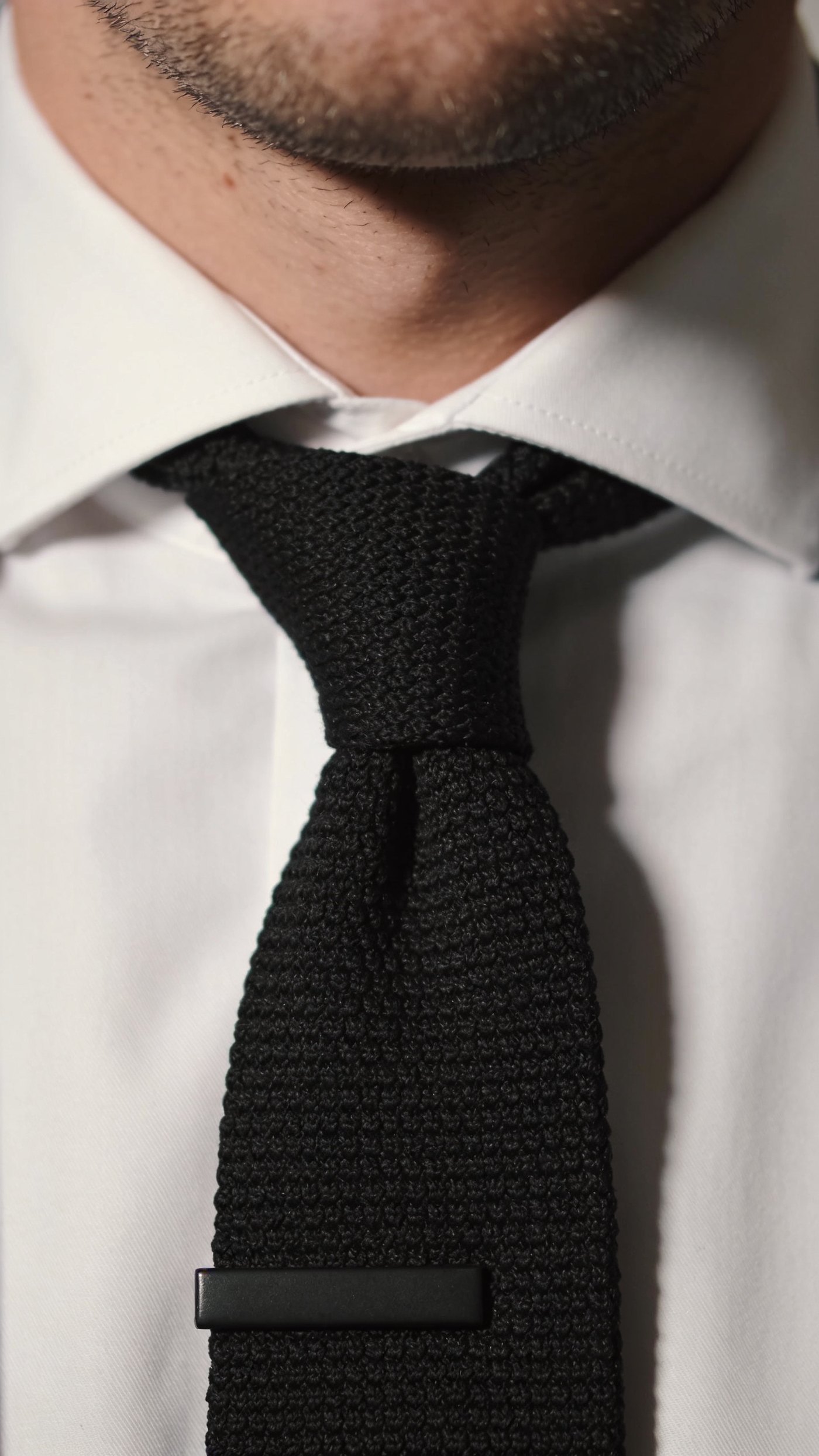
A knit tie ends flat, which is why it looks expensive
Shine is the thing that gives a tie away. A cheap satin finish throws a hard highlight down the centre of the blade, and under office lighting or a camera flash that highlight is the first thing anyone sees. It is also the reason a perfectly good suit can look synthetic from across a room.
A knitted tie has no flat surface to shine from. It is knitted rather than cut from woven cloth, so the face is a matte texture that scatters light instead of reflecting it, and it ends in a square blade rather than a point. Both of those are useful. The matte face sits quietly against any cloth, and the flat end stops the tie from drawing a long arrow down the body.
How to wear one:
- Silk knit for a dressier version, wool or cotton knit for a softer one. All three are matte.
- Narrow by nature, usually around six to seven centimetres, which suits a slim lapel and nothing wider.
- A four in hand knot. A knitted tie is thick and a Windsor turns the knot into a fist.
- Tip at the waistband as usual. The square end makes a short tie more obvious, not less.
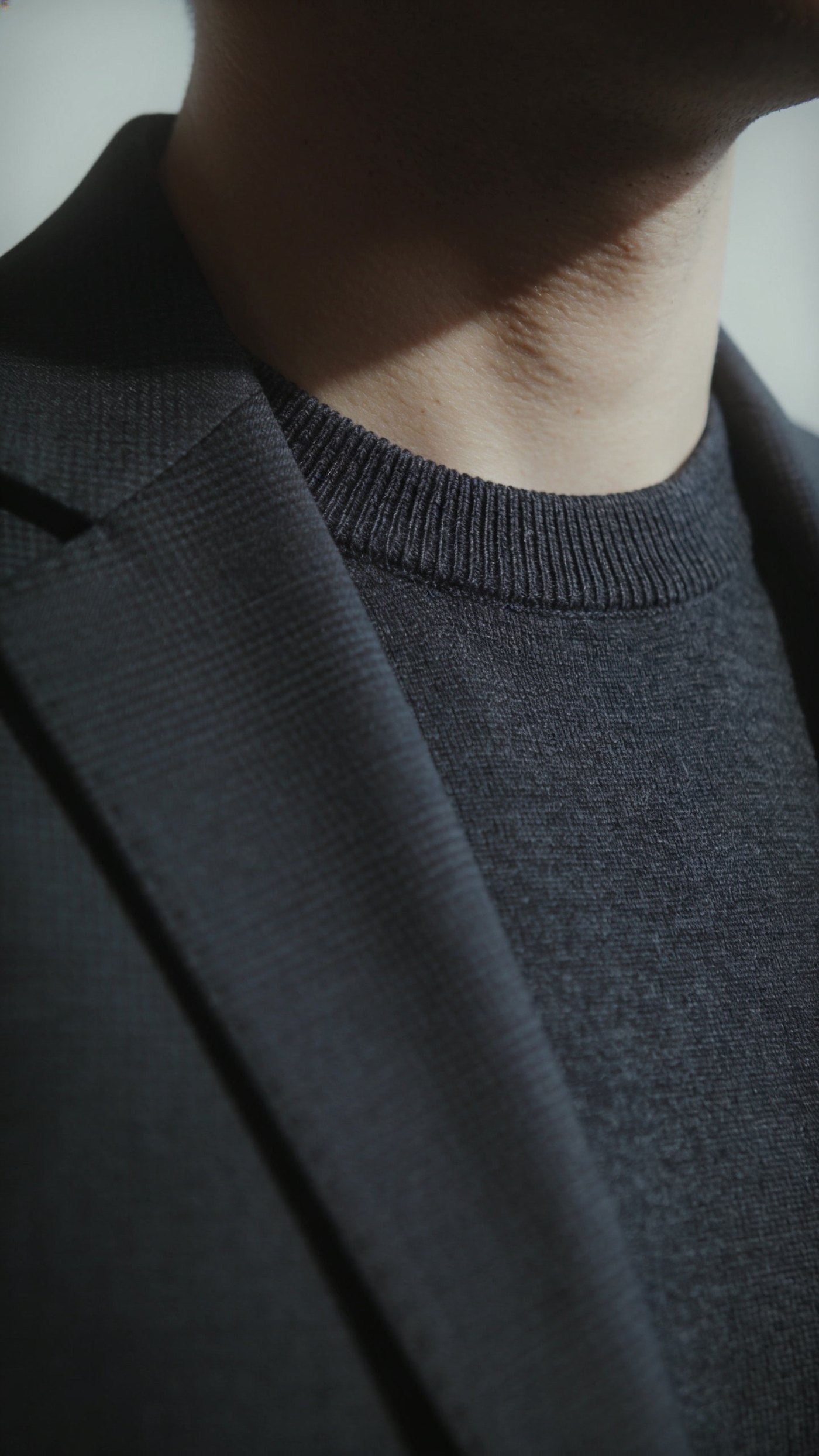
A crew neck under a jacket lets the suit speak
A stiff collar with no tie is the most common evening mistake in menswear. The collar was interlined to stand under a knot; without one it gapes, the top button area collapses, and the whole outfit reads as a man who took something off rather than a man who put something on.
A fine gauge crew neck solves it by removing the collar from the argument. The neckline is a clean curve across the collarbone, the jacket lapel frames it, and the eye runs straight from the shoulder to the face with nothing half finished in between. It is also warmer and more comfortable than a shirt, which is a reasonable thing to want from your clothes.
What to look for:
- Fine gauge merino, cashmere or a merino silk blend. Anything chunky turns the jacket into a coat.
- A neckline that sits on the collarbone, not at the base of the throat and not scooped.
- Dark and plain: navy, charcoal, black, bottle green. A pattern under a jacket is one thing too many.
- Worn with nothing underneath, or with a plain vest that does not show. A shirt collar poking out defeats the point.
Slim, matte, deliberate
Put the three together and there is nothing accidental left on the man. The suit follows the body, nothing shines, and the neckline is finished without a knot. It is a wardrobe built entirely out of subtraction: take away the slack, take away the gloss, take away the collar, and what is left reads as intent.
It is worth noticing how cheap this look is to reach. A knitted tie costs less than a woven one. A fine merino crew neck costs less than a good shirt. The alterations cost a fraction of a new suit. The only expensive thing in the outfit is the decision to have it altered at all.
If you take one thing from this: take a suit you already own to a tailor and have the waist and sleeves brought in. It is the single largest improvement available to most men's wardrobes, and it is already in the wardrobe.
Frequently asked
How slim is too slim?
If the button pulls into an X shape when fastened, or the trouser shows the shape of your knee, it is too slim. The jacket should close cleanly and the leg should hang straight.
Is a knitted tie too casual for business?
A silk knit in a dark colour is business appropriate in most places. Wool and cotton knits are better with odd jackets than with a formal suit.
Can I wear a crew neck with a tie?
No. The two solve the same problem and together they look like a mistake. A collar and tie, or a crew neck. Not both.
What about a roll neck instead?
A roll neck does the same job with more presence, and it suits a bigger jacket. The crew neck is the quieter option and works better under a close cut suit.
Does this work with a black suit?
It works better than most things with a black suit, because the matte tie and the knit remove the shine that makes black look like formalwear.