Heat Style: A Charcoal Suit, Tonal Dressing and a Spread Collar
The short answer: black is not the stealth colour, charcoal is, because a dead black suit loses every detail under a street lamp while charcoal keeps its weave and sinks into the dark; a front kept in one close register reads as a single quiet surface instead of a flare of contrast; and a collar cut wide leaves air around the tie knot where a short point crowds it from both sides. Three decisions, and each one is a subtraction.
Michael Mann's 1995 film puts Robert De Niro in Los Angeles at night as Neil McCauley, a professional thief whose whole life is built to be walked away from in thirty seconds, and the tailoring follows the same rule. Costume designer Deborah L. Scott keeps him in grey suits from the first scene to the last, four of them across the film, worn with white shirts, and Mann has said on his commentary that the greys were chosen to help McCauley blend into a crowd and draw no attention. The bank job is done in a charcoal wool suit with a fine grey pinstripe. Nothing he wears asks to be remembered, and that is the entire point of it.
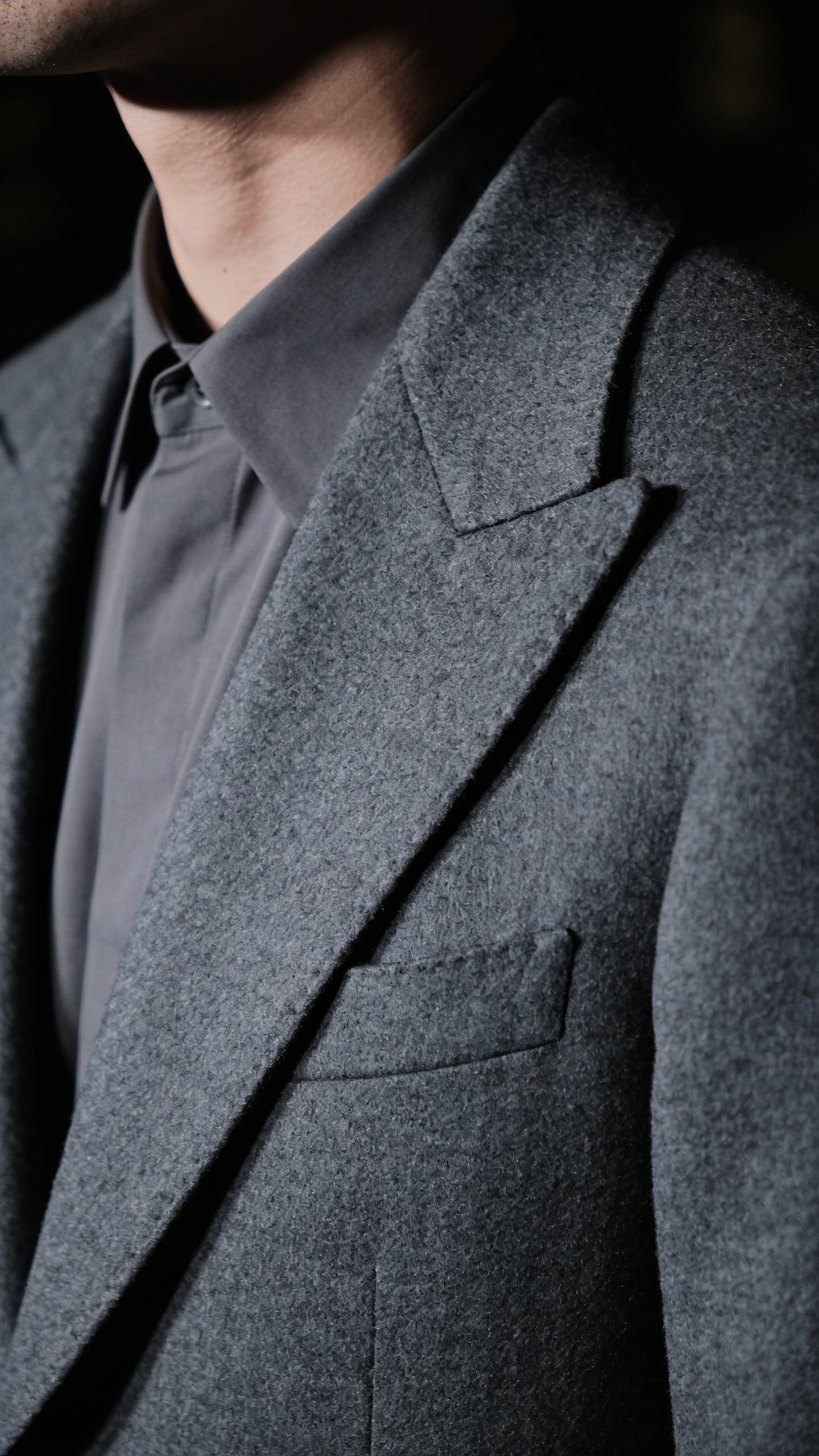
Charcoal keeps what black throws away
Black sounds like the obvious choice for a man who works at night, and on camera it fails immediately. Dead black cloth swallows its own weave, goes flat under artificial light, and reads as one hard silhouette: a funeral shape moving through a crowd of ordinary greys. It is the most noticeable quiet colour there is.
Charcoal does the opposite job. It is dark enough to recede, but it keeps its texture and its depth under a street lamp, it sits inside the range of colours a city actually wears, and it photographs as a man rather than a shape. McCauley's suits live in this register for the whole film, and the lesson transfers directly to civilian life: charcoal is the dark suit that works in daylight, under office lighting and at night, which black never quite does.
What to look for:
- True charcoal, a deep grey with visible weave, not black. Hold it next to black cloth and you should see the difference at arm's length.
- Wool with a dry, matte finish. Sheen is the enemy of quiet; a shiny dark suit is a spotlight.
- A fine pinstripe is period correct for the film's working suit, but the plain charcoal is the more useful first buy.
- Mid grey is the daytime sibling. The film's whole wardrobe lives between those two values.
- Fit over everything. The quietest colour in the world is loud when the shoulders do not fit.
Keep the values close, and what the film actually wears
Our reel for this episode calls McCauley's shirt tonal, and a sharp eyed viewer corrected us: in the film his own shirts are white, made by Anto with long pointed spread collars, and the light blue striped shirt late in the story is one he borrows from Dr. Bob after the bank job. The grey on grey impression that everyone remembers is Michael Mann's night photography at work, compressing a white shirt and a grey suit into one quiet surface. The viewer was right, and the record here should say so.
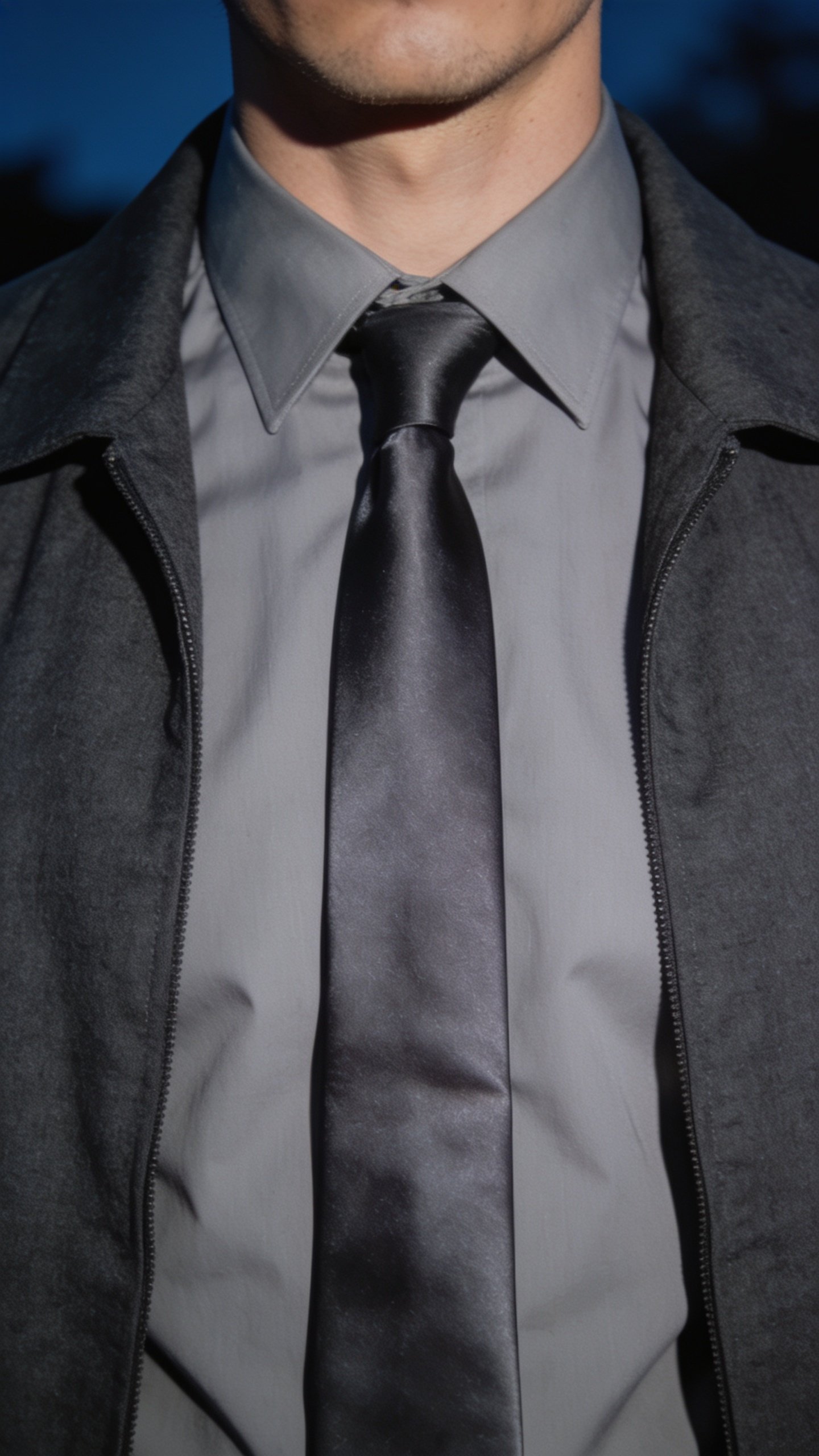
The street lesson survives the correction, because what the lighting does in the film is exactly what tonal dressing does in person: keep the values close and the front reads as one calm plane instead of a bright flare with a dark frame around it. A white shirt under office light behaves itself; the same shirt under a night street lamp is the brightest object in the frame. If your evening calls for not being the brightest object in the frame, bring the shirt closer to the suit: light grey, grey blue, soft blue, anything that narrows the gap without matching it exactly.
What to look for:
- Values close, not identical. Shirt one or two steps lighter than the suit reads composed; an exact match reads like a costume.
- Grey, grey blue and muted blue shirts are the working range over charcoal and mid grey.
- Keep the tie, if any, inside the same register. One family of colour, three depths.
- White stays the right answer for daytime and for any room where you want crispness. This is a dial, not a rule.
- Pattern kills the effect. Tonal dressing is about unbroken surfaces, so keep the cloths plain.
A spread collar leaves air around the knot
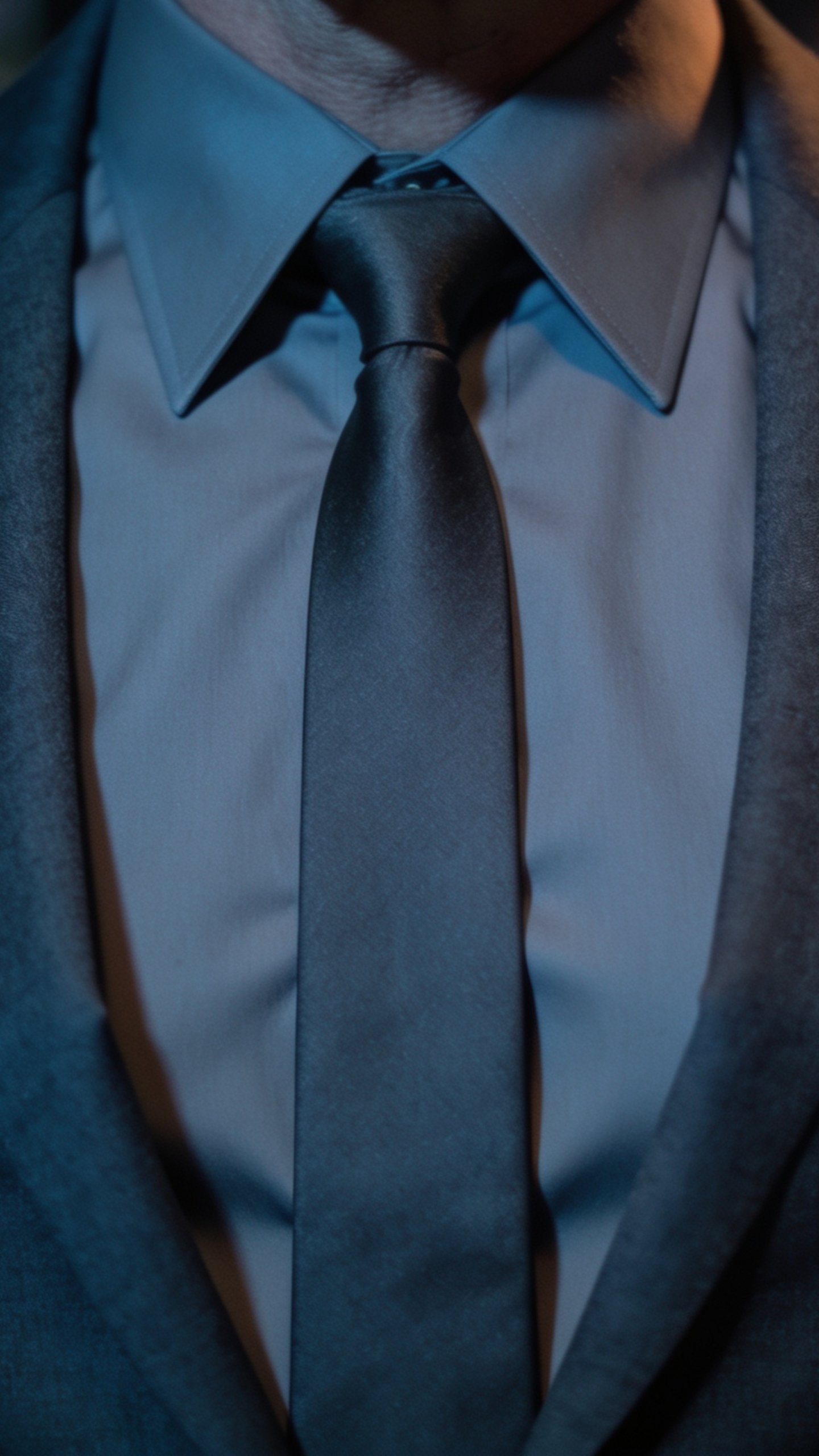
A small point collar was designed for narrow ties and narrow times, and under a modern knot it crowds. The two points press in from both sides, the knot bulges between them, and the whole arrangement looks borrowed from a smaller man.
A spread collar opens the angle between the points and leaves clear space either side of the knot. The knot sits framed instead of squeezed, the collar line follows the jacket's lapel line instead of fighting it, and the face above it gets a wider, steadier base. McCauley's shirts carry long pointed spread collars, generous ones, and even worn open without a tie, as he mostly wears them, the spread keeps its architecture instead of collapsing inward.
What to look for:
- A medium spread first. The extreme cutaway is a statement collar, which is the opposite of this wardrobe.
- Collar points long enough to stay under the jacket's lapels. Points that curl free undo the whole effect.
- With a tie, a four in hand or small half Windsor. The spread gives the knot room; it does not demand a bigger one.
- Worn open, look for a collar with enough body to stand on its own. Flimsy collars fold and look tired by noon.
- Collar band height matched to your neck. A tall band on a short neck chokes; a low band on a long neck floats.
Low, even, unseen
Put the three together and you get the film's actual thesis: a uniform engineered for disappearing. The charcoal recedes without going flat, the close values keep the front from flaring, the spread collar keeps the one point of structure around the face calm, and the man inside can cross a hotel lobby without a single head turning.
That is also why this wardrobe translates so cleanly out of the movie. Most men do not need to vanish from a crime scene, but almost every man benefits from clothes that read as composed rather than loud: the same three moves produce a presence that is felt without being pointed at.
If you take one thing from this: buy the charcoal suit before the black one. It does everything black promises, in more rooms, under more lights, and it will still be the right call in twenty years.
Frequently asked
Is charcoal formal enough for black tie occasions?
No, and it is not trying to be. Black tie is its own uniform with its own rules. Charcoal is the top of the everyday range: weddings, funerals, boardrooms and courtrooms, everything short of a dress code that names the colour.
Does tonal dressing make you look washed out?
Only if the values sit too close to your skin. Keep the contrast between your face and the collar line, and let the suit and shirt do the merging below it. Men with high contrast colouring can close the gap further than men without.
The film's shirts are white. Why recommend tonal shirts at all?
Because the lesson the film teaches on screen, one quiet surface instead of a flare, is real and usable even though the wardrobe underneath it is white. We say so above. Wear white when you want crispness, close the values when you want quiet.
Can I wear a spread collar without a tie?
Yes, and the film mostly does. The spread needs enough collar body to stand open without collapsing, so look for a firm band and points with some weight. It reads more deliberate than a soft button down worn open.
What shoes belong under this?
Plain black or very dark brown, round toed, matte. A cap toe oxford for the suit, a plain derby for the softer days. Anything with contrast stitching or a sheen is volunteering information, which is the one thing this wardrobe never does.