The Great Gatsby Style: Can a Man Wear a Pink Suit? Yes, Like This
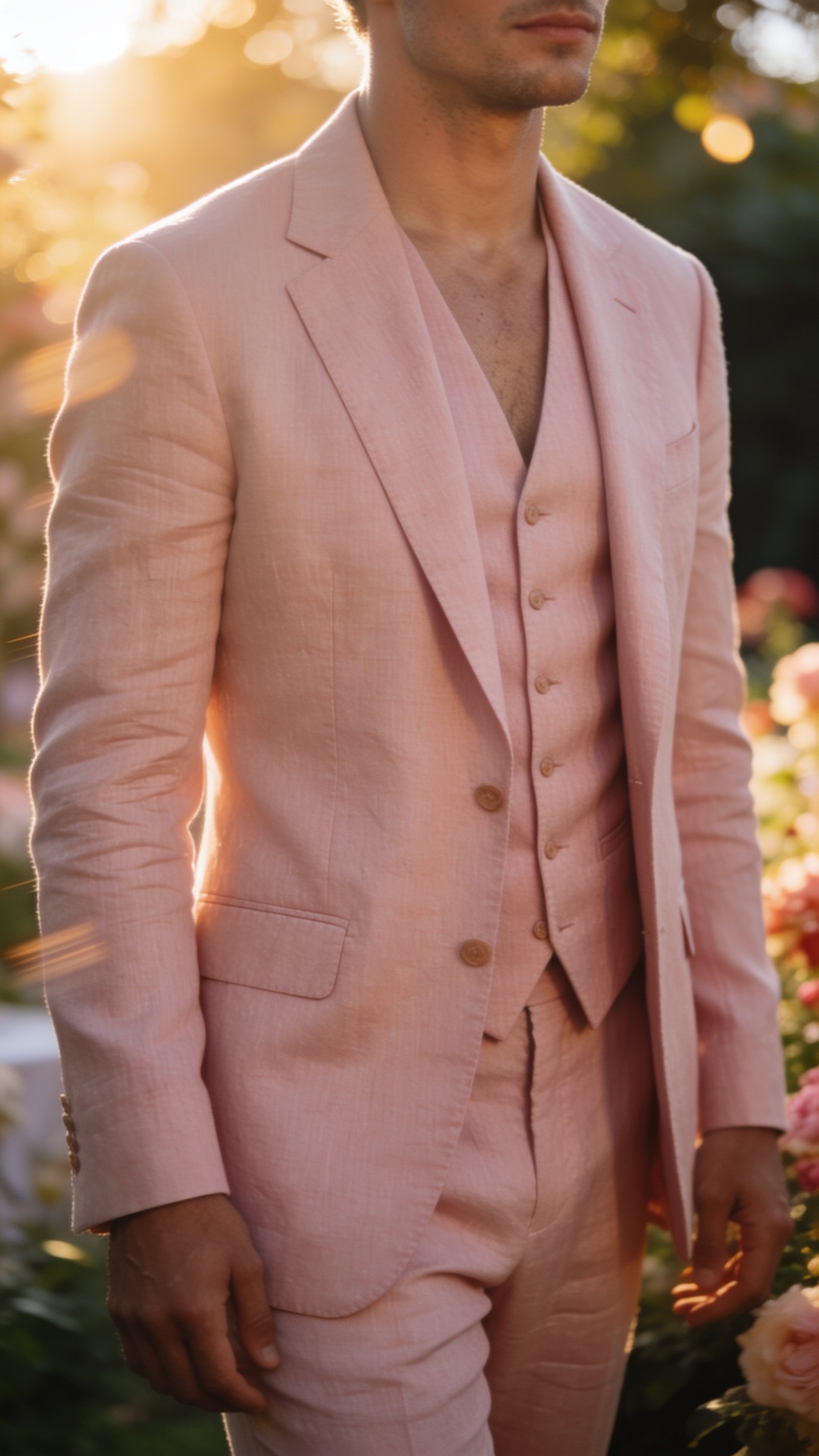
The short answer: yes, but only in summer, only in a dusty rose rather than a bright pink, and only in a cloth light enough to look like a seasonal choice instead of a statement. Below that threshold it reads as fancy dress, which is exactly what Tom Buchanan says about it in the novel.
The pink suit is the most argued-about outfit in menswear cinema, and the argument is older than the film. Fitzgerald put it in the 1925 book as a class marker — a man who bought his taste rather than inherited it. Baz Luhrmann's 2013 film, costumed by Catherine Martin with Brooks Brothers, keeps the meaning and makes the suit genuinely beautiful, which complicates the joke. Both things are true: it is a tell, and it works.
Pink is a summer neutral, not a colour statement
Here is the part people miss. In a 1920s summer wardrobe, pale pink sat beside cream, sand, pale blue and grey as one of the ordinary warm-weather colours. It was not loud. It became loud later, when men's tailoring collapsed into navy, charcoal and black and anything else started to look like a costume.
That history is the whole argument for wearing it. A dusty rose linen or cotton suit in July is doing the same job as a cream one — reflecting heat, sitting quietly against skin, reading as a season rather than a mood. A magenta suit in February is doing something else entirely.
The line between the two is tone and cloth:
- Dusty rose, clay, salmon-grey. Anything with a little brown or grey in it. Not fuchsia, not candy.
- Linen, cotton, or a high-twist wool with visible texture. Smooth worsted in pink turns plastic in photographs.
- Summer only. The colour needs strong daylight to look natural.
- One pink thing at a time. The suit or the shirt, never both.
The club collar does the real work
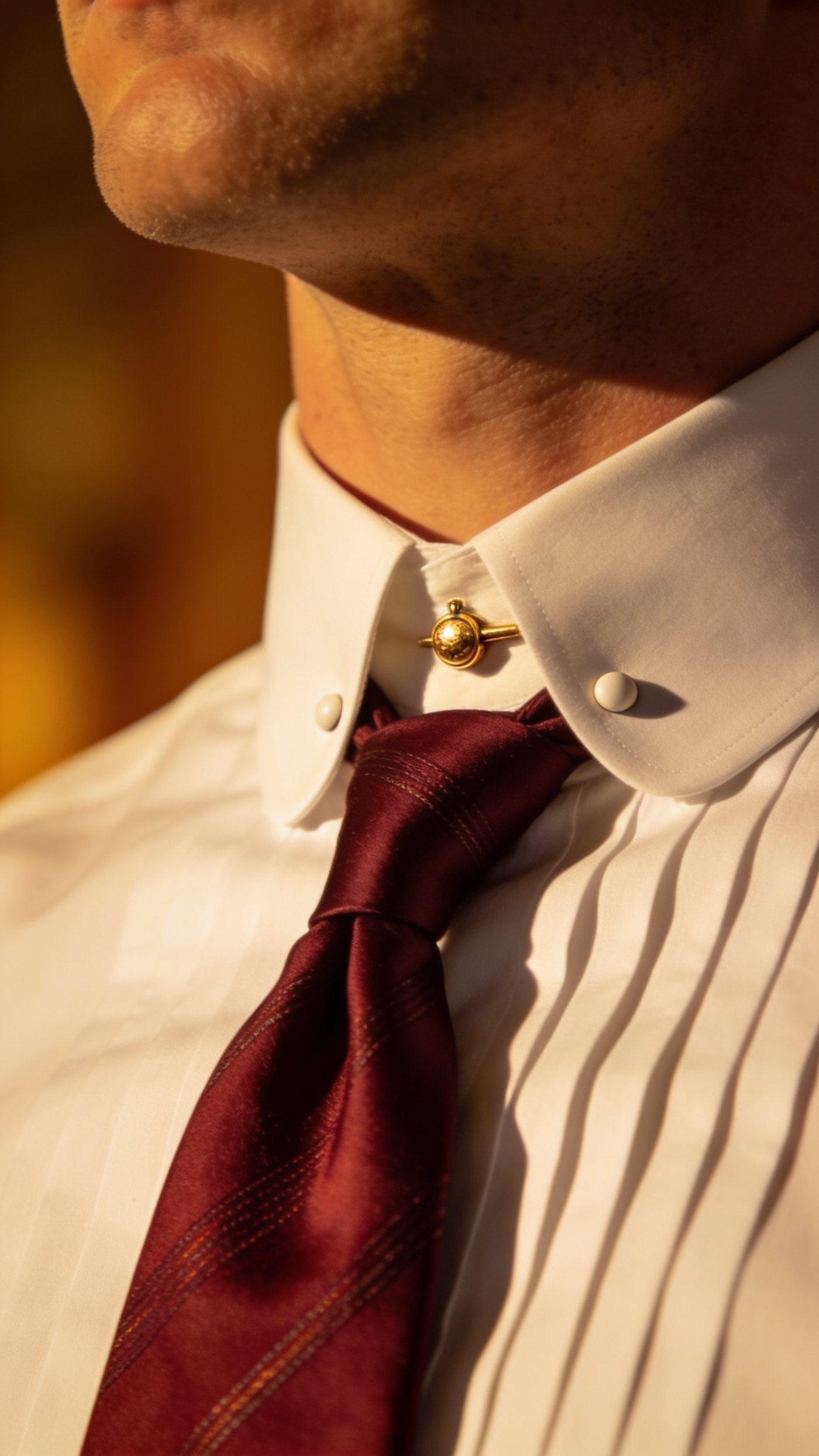
Look at the film's close-ups and the collar is doing more than the colour. A club collar — small, rounded points, often held by a gold pin under the tie knot — pulls the eye up to the face and holds the tie knot high and forward. That is why period photographs look composed in a way modern ones do not.
The mechanics are simple. A pin under the knot pushes the knot out a few millimetres, so it stands proud instead of collapsing into the collar gap. Rounded points are shorter than modern points, so the whole assembly sits compactly under the chin instead of spreading toward the shoulders. On camera that reads as precision.
It is also the single most period-correct thing in the film that still works today, because it changes nothing about the rest of the outfit. A club collar shirt with a plain navy suit is a quiet, slightly formal choice that most people cannot name but everyone notices.
Notes on wearing one:
- Always with a tie. An open club collar looks unfinished — the shape exists to frame a knot.
- A collar pin or a collar bar, not both with a tab collar. Pick one mechanism.
- White or pale blue. Contrast collars are a separate, much louder decision.
- A smaller tie knot. A four-in-hand, not a half Windsor.
Cream flannel is what makes the bottom half work
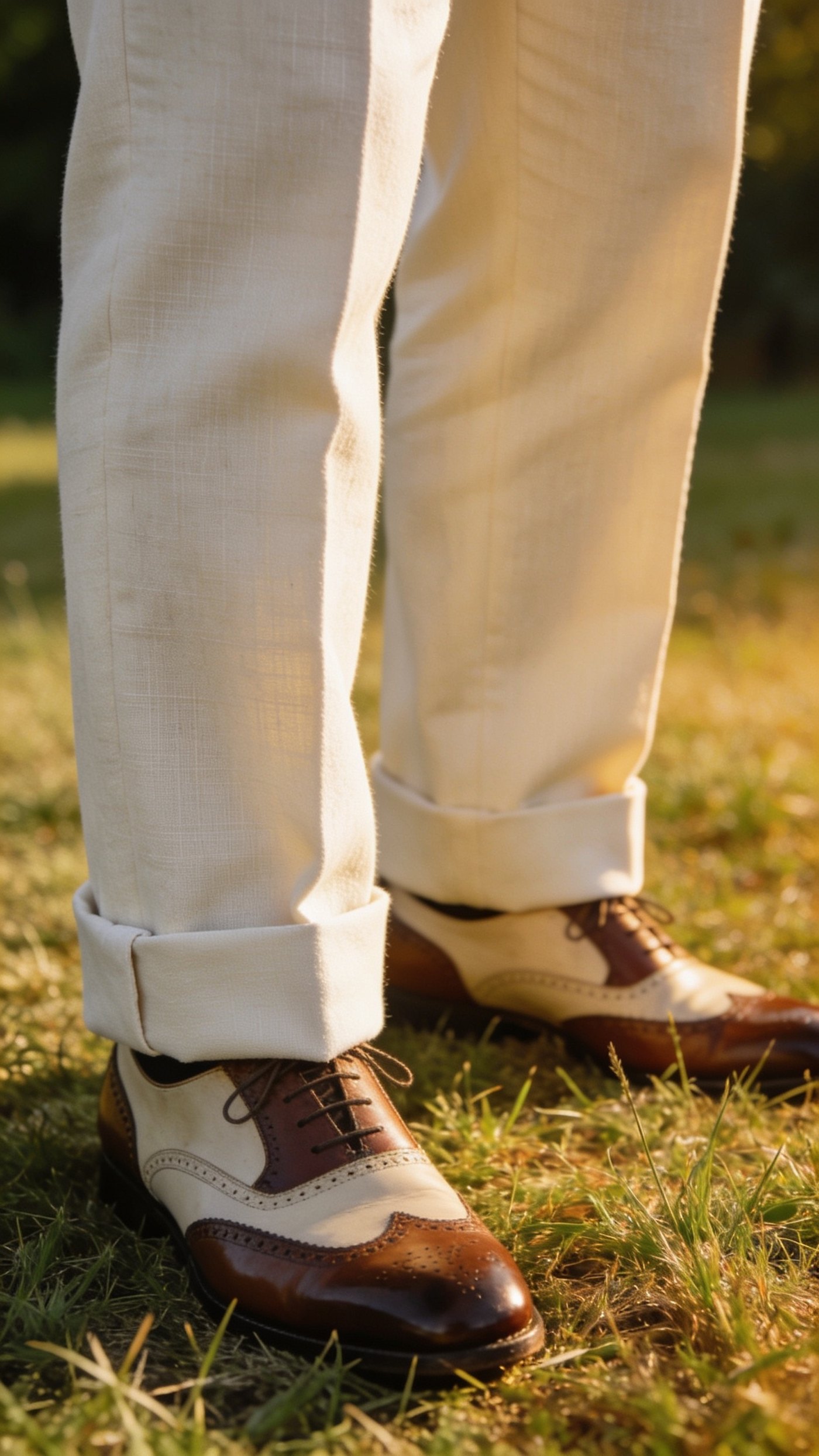
The third piece is the one nobody argues about and everybody forgets: wide cream wool flannel trousers with a turned-up cuff.
Flannel is wool that has been brushed to raise a soft nap, which gives it weight and a matte surface. That weight is what makes the trouser hang in a straight column from the waist instead of clinging to the leg. Thin polyester does the opposite — it catches on the knee, shines under light, and puddles over the shoe. On screen the difference is visible from across a lawn.
The turned-up cuff is not decoration either. It adds a little weight at the hem, which helps the trouser break cleanly over the shoe and swing properly when you walk.
What to look for:
- Wool flannel around 300 to 340 grams for summer, heavier for autumn. Cotton drill is the budget substitute.
- Cream, oatmeal or stone. Bright white is a different, harder outfit.
- A cuff of four to four and a half centimetres, and a single break at the shoe.
- A real waistband at the natural waist. Low-rise cream trousers lose the whole effect.
If the pink is too much
Most men reading this will not buy a pink suit, and that is a reasonable decision. The useful part of this look survives without it.
Take the club collar and the cream flannel, put them with a navy or olive summer jacket, and you have the same silhouette and the same period precision with none of the risk. The outfit still reads as considered, because the two pieces doing the structural work are still there. The pink was never the engine; it was the thing people remembered.
That is also the honest reading of the character. Gatsby's wardrobe is immaculate and slightly too deliberate, and the story is about a man who built a whole evening to be seen in it by one person. Dressing for one specific pair of eyes is a very human thing to do. Just make sure the cloth and the collar are right, because those are the parts that will still look correct in a photograph a hundred years from now.
Frequently asked
Can a man wear a pink suit to a wedding?
As a guest in summer, yes, in a muted dusty rose and a textured cloth. Not as a groom unless the whole wedding is pitched that way, and never in a shiny worsted.
What is a club collar?
A shirt collar with small rounded points, usually worn with a collar pin under the tie knot. It was standard in the 1920s and pushes the knot forward so it sits higher and more precisely under the chin.
Do I need a collar pin?
No, but the collar was designed around one. Without a pin the knot sits flatter and you lose most of the effect that makes the collar worth choosing.
Is flannel too warm for summer?
Lightweight flannel around 300 grams is fine in dry heat and hangs far better than thin cotton. In humidity, switch to linen or a linen-wool blend in the same cream colour.
What shoes go with cream trousers?
Dark brown loafers or two-tone spectators for a period look. Avoid black — the contrast is too hard and drags the eye to the floor.