Good Will Hunting Style: The Peacoat, Flannel Shirt and Henley
The short answer: a navy peacoat is dense melton wool, so it blocks wind, holds its shape on the shoulder and reads as weight rather than as padding; a brushed flannel shirt has enough body to stand its own collar up all day; and a henley opens two buttons of space at the throat where a crewneck closes the face in. None of the three costs much, and together they are the smallest number of warm things a man can own.
Gus Van Sant's 1997 film, costumed by Beatrix Aruna Pasztor, is the rare case where the wardrobe has no suit in it at all. Will Hunting mops floors at MIT and solves the hallway proof on his way out, and the film dresses his world for a South Boston winter, not for a character arc. That is the lesson worth stealing: this is clothing bought to be warm, in the fewest possible pieces, and it still looks right almost thirty years later.
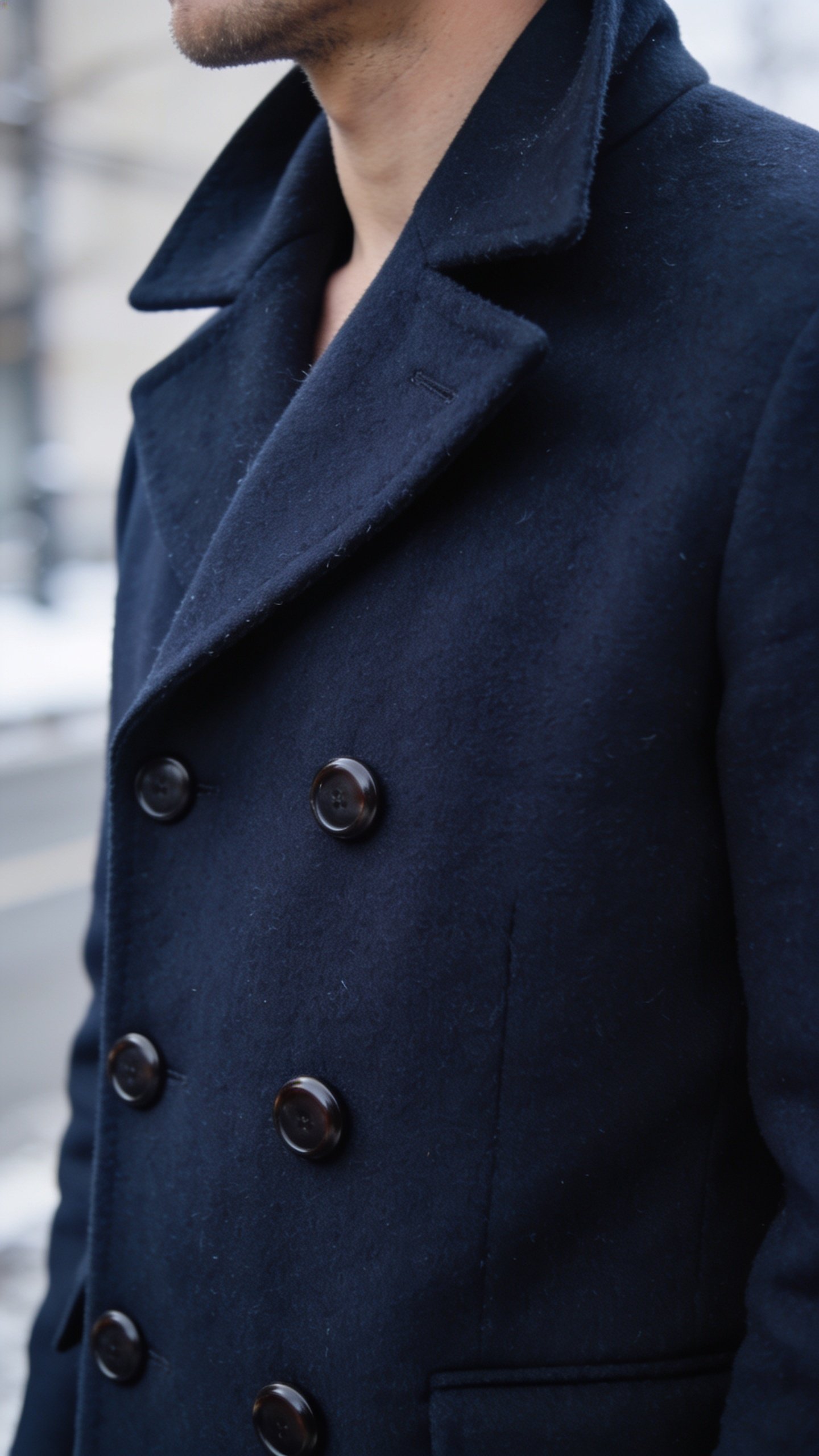
A peacoat reads like weight
A thin nylon shell is the default winter answer, and it fails twice. It catches light across the chest, so it reads as plastic the moment it is indoors. And it has no structure of its own, so the shoulder drops and the whole silhouette slumps the way the filling settles.
A peacoat is the opposite object. Melton is wool beaten dense until the weave closes, which is why navies issued it on open decks for two centuries. Wind does not pass through it, the collar stands up and stays up when you flip it, and the cloth has enough weight to hang straight from the shoulder instead of ballooning. A double row of buttons lets you close it high against the throat, and the length covers the seat without reaching the knee, so it works over anything that is not a suit.
What to look for:
- Navy, and dark navy at that. It is the traditional colour, it hides wear, and it goes over every casual thing you own.
- Melton wool at 24 ounces or more. Lift the coat on a hanger; if it feels light in the hand it will feel light in the wind.
- A collar that stands on its own when flipped. That collar is the point of the coat.
- Sleeves that end at the wrist bone with room for a knit underneath.
- Hip length. A peacoat that reaches the thigh is a different coat and loses the easy balance over jeans.
Flannel holds its shape
A worn tee is the layer most men default to, and by afternoon it has given up. The neckband stretches, the shoulder seam wanders, and the fabric lies flat against the body showing everything and structuring nothing.
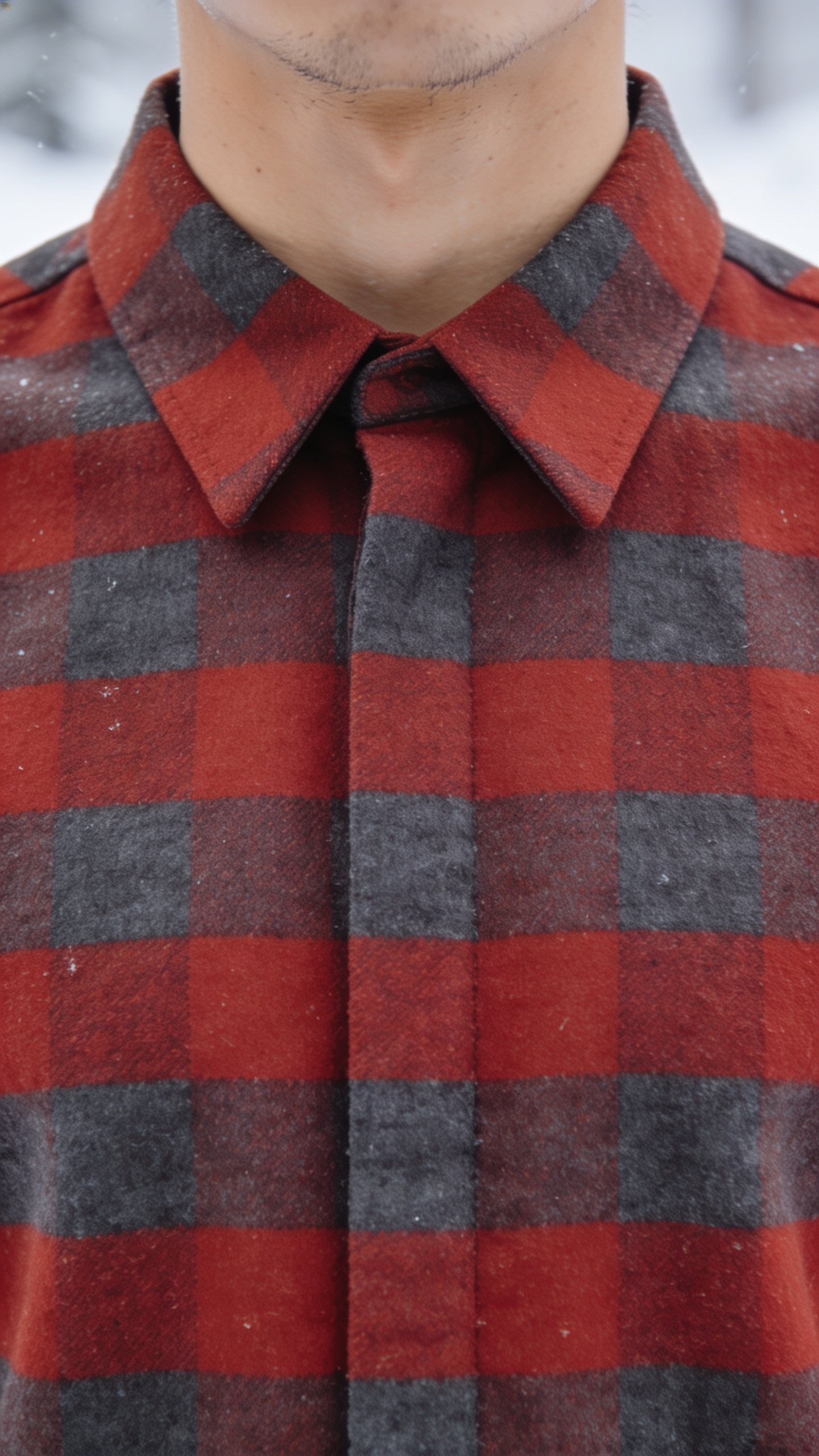
Brushed flannel is still just a cotton shirt, but the raised nap gives the cloth body. The collar stands away from the neck on its own, the placket sits flat, and the shirt holds a straight line from shoulder to hem instead of pooling. It also does quiet thermal work: the brushed surface traps a layer of air, which is why a flannel shirt feels a full season warmer than a poplin of the same weight.
What to look for:
- Brushed on both sides, not just printed with a plaid. Run a thumb across it; it should feel like felt, not like paper.
- Mid weight, around 6 to 8 ounces. Summer flannels exist and defeat the purpose.
- A collar with enough interlining to stand. If it collapses in the shop it will collapse at home.
- Muted plaids or solid colours. The louder the check, the faster it wears out its welcome.
- Room to layer over a henley without pulling at the buttons.
A henley opens the neck
A crewneck knit is warm and shapeless in equal measure. Worn on its own it closes the body off at the throat, one unbroken line from chin to chest, and the face sits on top of it like a lid on a jar.
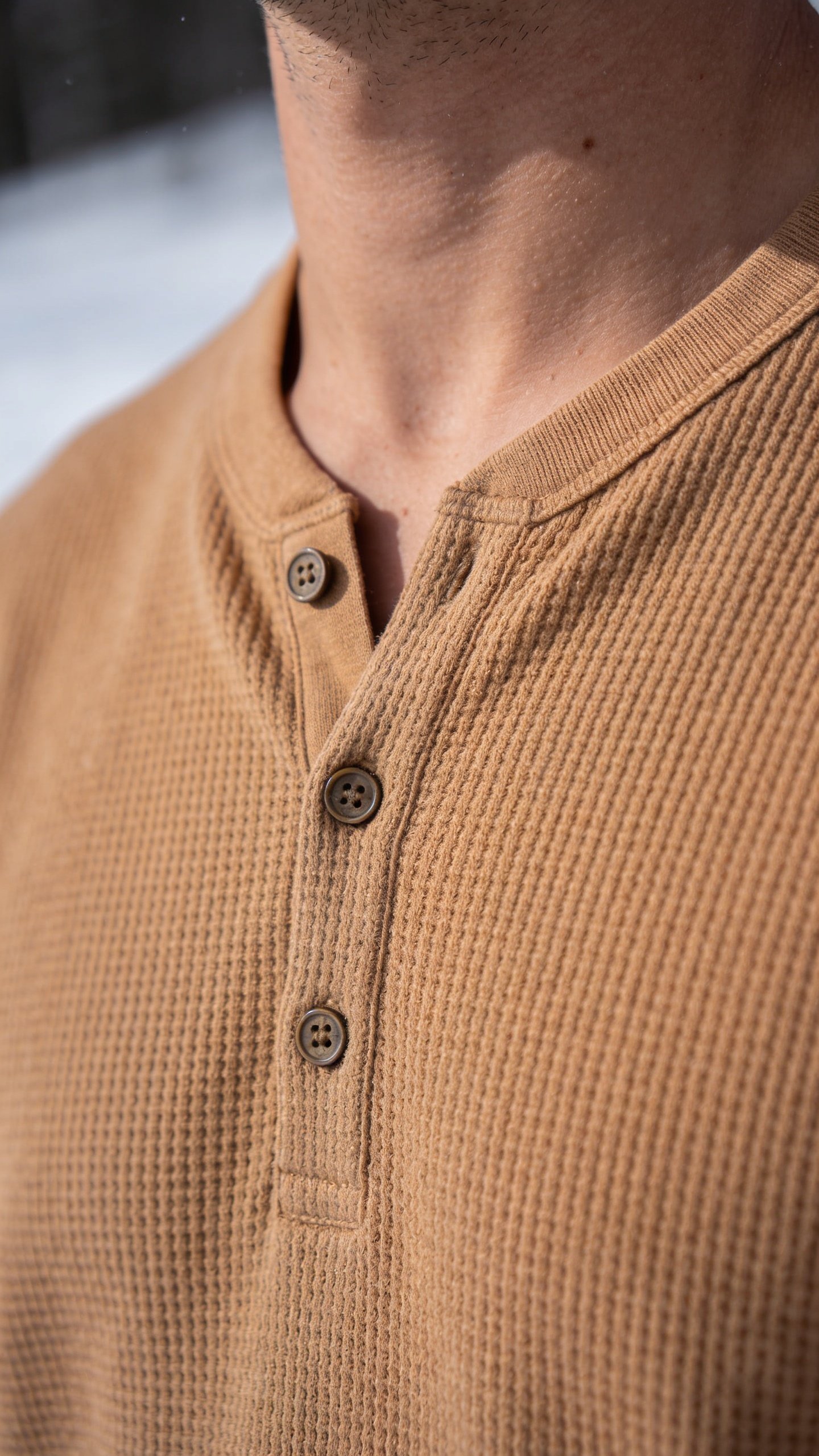
A henley is a crewneck with a short buttoned placket, and those two or three buttons change the whole frame. Open them and there is air at the throat, a visible collarbone, a vertical line where there was a wall. It layers cleanly because there is no collar to fight the shirt above it, and it looks deliberate on its own in a way an undershirt never does.
What to look for:
- Heavier jersey or waffle knit, not underwear weight. It should read as a shirt, not as a base layer.
- Three buttons rather than two. The placket needs enough length to actually open.
- A neckband that sits close without choking. Stretched out, a henley is done.
- White, grey, navy. This is a background garment and earns its keep by staying one.
- Long enough to stay tucked into nothing. A henley is worn loose, so the hem has to be cut straight.
Warm, plain, honest
Stack the three and the outfit does what expensive clothes are supposed to do, for a fraction of the money. The henley opens the throat, the flannel holds the middle in shape, the peacoat carries the weight and blocks the weather. Nothing shines, nothing is branded, and every piece can be replaced from an army surplus shop or a workwear rack.
The reason this wardrobe reads as honest is that each piece is bought for what it does. There is no garment in the stack whose job is to be seen. That is also why it photographs so well: texture instead of logos, weight instead of padding, and a silhouette that comes from cloth rather than from cut.
If you take one thing from this: buy the heaviest navy peacoat you can find second hand. Melton barely wears out, which means the used market is full of thirty year old coats with another thirty years in them.
Frequently asked
Is a peacoat warm enough for a real winter?
Over a flannel and a henley, comfortably into the low minus degrees. It blocks wind completely, which is most of what cold feels like in a city. For standing still in deep cold you want a longer coat or a layer of down underneath.
Can I wear a peacoat over a suit?
Not well. The body is cut trim and hip length, so a suit jacket bunches under it and shows below the hem. Over tailoring you want a topcoat that covers the jacket entirely.
Does flannel have to be plaid?
No. Solid flannels in grey, olive and navy do the same work and layer more quietly. The plaid is tradition, not function.
What goes under a henley?
Nothing visible. A plain tee in winter is fine, but keep its neckline lower than the henley's so it never shows at the throat, because the whole point of the placket is open space.
How should a peacoat fit through the shoulder?
Exactly on the bone, with just enough room to close over a knit. Melton has no stretch and the coat has real structure, so a shoulder that is wrong in the shop stays wrong forever.