
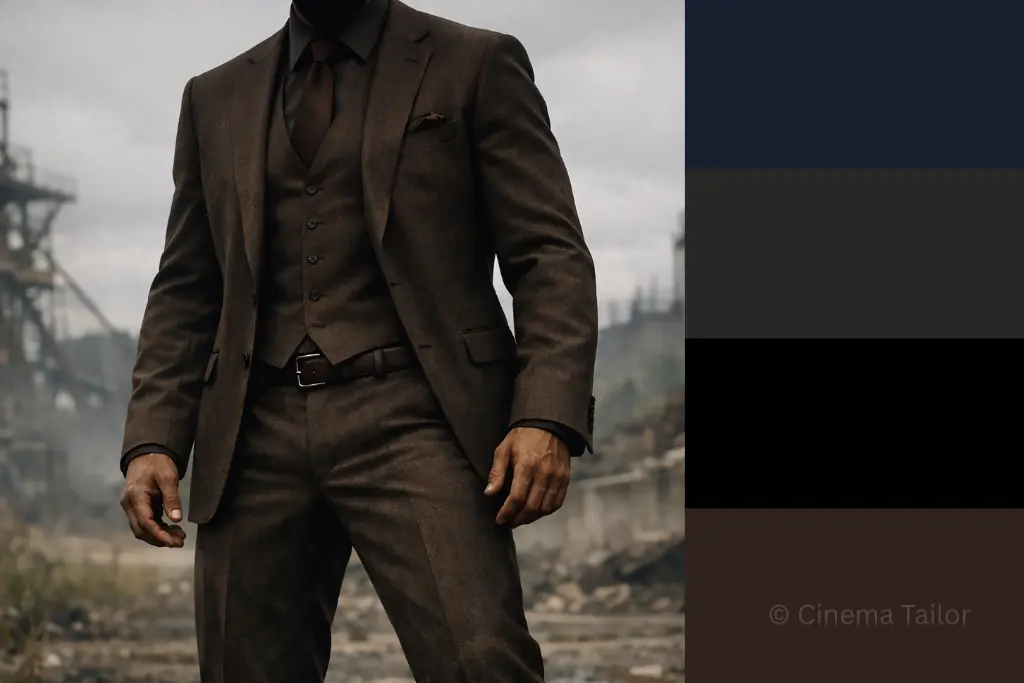
The Chromatic Code: Why Suit Color Psychology is the Ultimate Indicator of Status
In the competitive landscape of professional dominance, Suit Color Psychology serves as the invisible foundation of authority. Long before a single word is spoken, the colors we choose communicate a definitive narrative of power, control, and status. While tailoring and silhouette are crucial, it is color that strikes the primal brain first, establishing a hierarchy in any room.
In the world of cinema, the movie villain suit is the ultimate case study in this psychological warfare. True cinematic icons do not dress for trends; they utilize a restrained, almost ritualistic palette to stabilize their narrative environment and project an unshakeable sense of command.
This is not a matter of personal preference—it is a strategic application of Suit Color Psychology. Whether it is the absolute finality of Black, the institutional weight of Charcoal, or the deceptive trust of Navy, these choices are designed to absorb the energy of a space rather than reflect it. Understanding these “immutable laws” of color is not just for film analysis; it is a lethal indicator of power for any modern leader looking to master the art of status anatomy.
Tactical Application: The Suit Color Psychology of Dominance
To master the Suit Color Psychology of a movie villain suit, one must treat color as a technical system of sensory suppression. In high-stakes environments, these garments follow rigid chromatic rules designed to stabilize and project power. Below are the four pillars of visual control used by cinematic icons:
- Low Saturation (Emotional De-escalation): Removing vibrant tones eliminates emotional warmth, leaving only the cold logic of authority.
- Narrow Palette Range (Minimalist Precision): A restricted color scheme signals a mind that is disciplined, focused, and intolerant of chaos.
- Visual Compression (High-Density Silhouette): Reducing the contrast between the jacket, trousers, and shirt creates a singular, monolithic presence that is difficult to ignore.
- Atmospheric Repetition (The Illusion of Permanence): Wearing the same tones across every scene establishes an image of unshakeable stability.
In Suit Color Psychology, bright colors invite movement and high contrast invites interpretation. A predator requires neither. Their authority depends on visual containment. By absorbing the light in the room, the movie villain suit simplifies the psychological reading of the character, removing ambiguity and replacing it with a singular, terrifying fact: absolute dominance.
Color controls the room long before words ever do.
Black: The Finality of Power (The Godfather Logic)
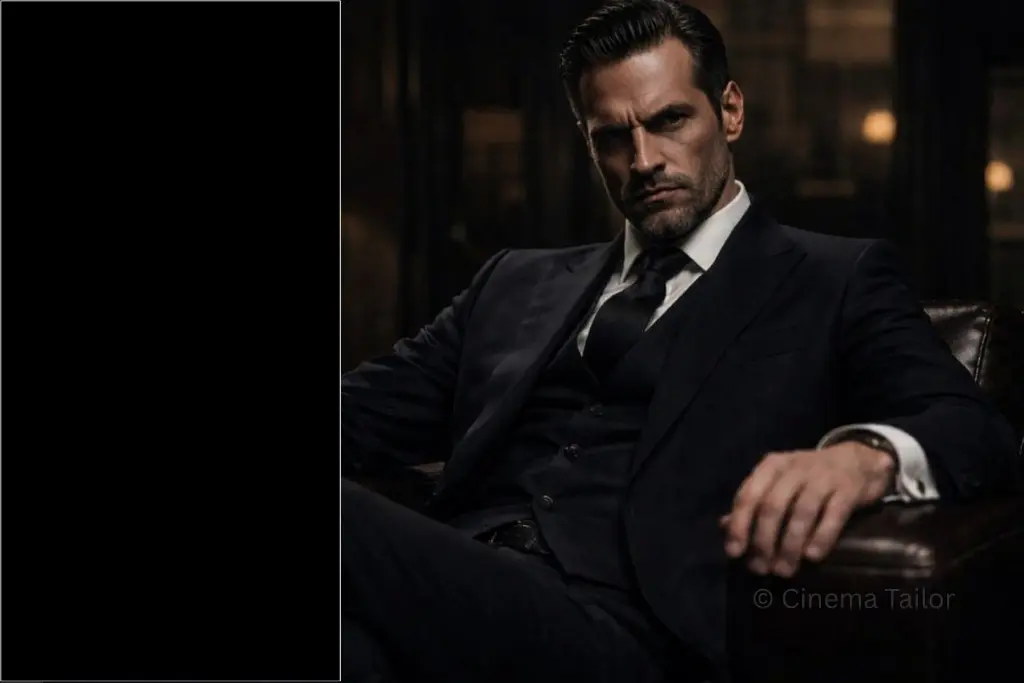
Case Study: The Godfather (1972) and John Wick: Chapter 4 (2023)
In Suit Color Psychology, Black is not just a color; it is the absence of negotiation. It represents the end of a conversation and the finality of a decision. When Michael Corleone wears black, he isn’t just dressing for a funeral—he is becoming the judge, jury, and executioner.
- Psychological Impact: Finality, Mystery, Absolute Authority.
- Business Application: Use it when the deal is closed and you are there to sign the final terms.
In The Godfather, Michael Corleone’s descent into cold-blooded villainy is charted through a deliberate reduction of color. In the beginning, we see him in lighter, textured tones. But as his soul hardens and his authority solidifies, his movie villain suit turns decisively black.
By the final act, black dominates the frame. The suit blends into the shadowed interiors, making Michael appear less like a man and more like a fixed, structural part of the darkness. Black here does not threaten. It concludes. It is the ultimate declaration that the time for negotiation has passed.
Similarly, in John Wick 4, the Marquis de Gramont utilizes black not as a color, but as a lack of light. His suits are so perfectly dark and shimmering that they create a visual vacuum. When he enters a room, the vibrant colors of the French court seem to fade, sucked into the black hole of his presence. This is the ultimate function of the black movie villain suit: to remind everyone that they are standing in a void where only the villain’s will exists.
Charcoal — Charcoal Grey: The Resilience of the Institution
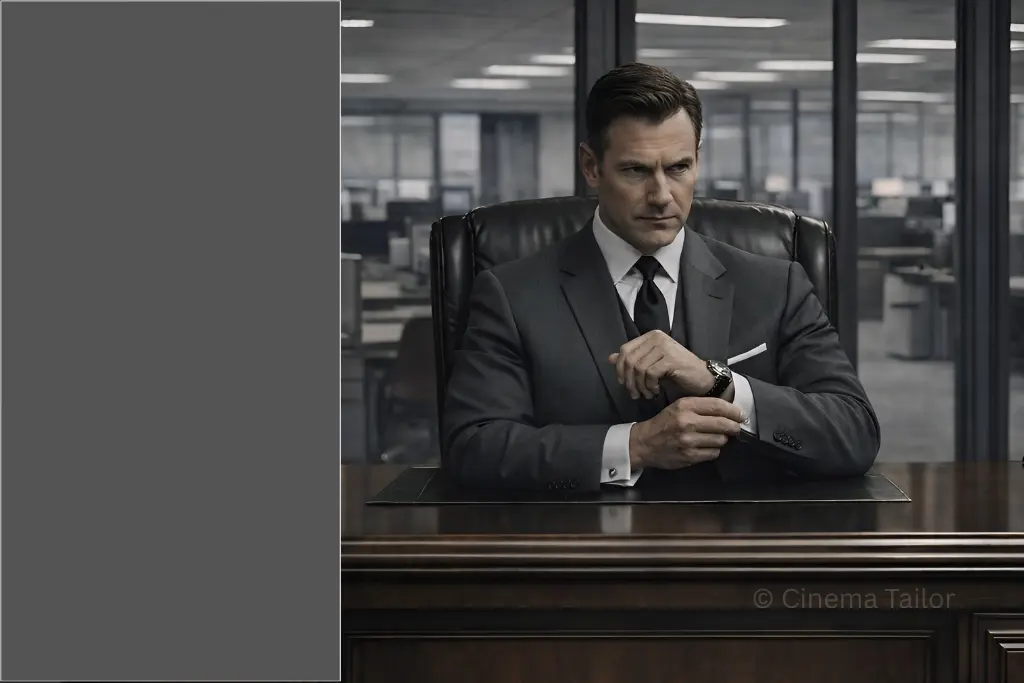
Case Study: Tinker Tailor Soldier Spy (2011) and Succession (2018-2023)
Charcoal is not the color of sudden dominance; it is the color of eternal continuity. It is the shade of the “Grey Eminence”—the power behind the throne that never fades.
In Tinker Tailor Soldier Spy, Bill Haydon represents a villainy that is embedded, not announced. His authority is not theatrical or violent—it is systemic. This is reflected in his charcoal-toned wardrobe. Haydon dissolves into the institutional grey of British intelligence. His movie villain suit avoids the finality of black and the individuality of color.
Charcoal removes personality without removing legitimacy. He does not look like an enemy; he looks like the system itself. This is mirrored in modern “corporate villains” like Logan Roy. These men don’t wear black to look like assassins; they wear charcoal to look like monuments. Charcoal preserves authority where black ends it. That preservation is the true threat.
Navy: The Illusion of Trust (The Alexander Pierce Strategy)
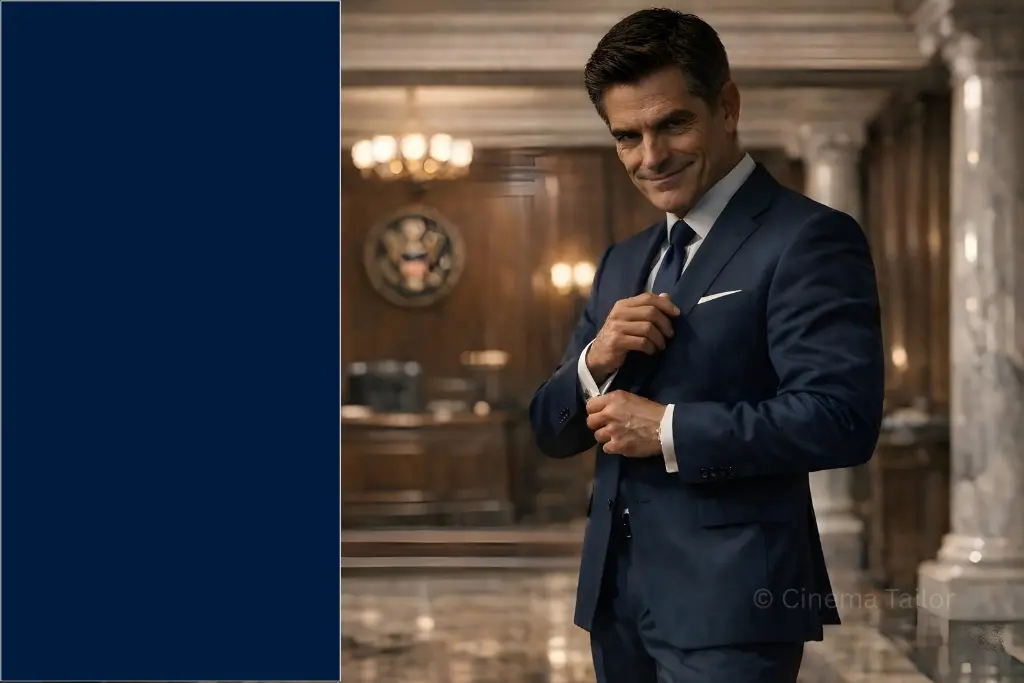
Case Study: Captain America: The Winter Soldier (2014)
Dark Navy is the most strategic color in Executive Power Dressing. It mimics the uniform of high-ranking officials to create an illusion of institutional trust and reliability. Alexander Pierce in Captain America: The Winter Soldier uses this color to mask his predatory nature under the guise of legal control.
- Psychological Impact: Trust, Professionalism, Systemic Control.
- Business Application: The ideal choice for first meetings or presentations where building ‘Initial Trust’ is the primary goal.
Alexander Pierce does not dress to intimidate; he dresses to reassure. His navy suits align him with government legitimacy and procedural trust. Navy signals that his authority is sanctioned and rational. Unlike black, which closes dialogue, navy prevents suspicion.
His clothing reinforces the illusion that power is neutral. In cinematic costuming, navy does not say “I control you.” It says, “This is simply how things are done.” By the time the mask falls, the system is already closed. The color has done its work.
Brown — The Old Authority of Land, Blood, and Primal Dominance
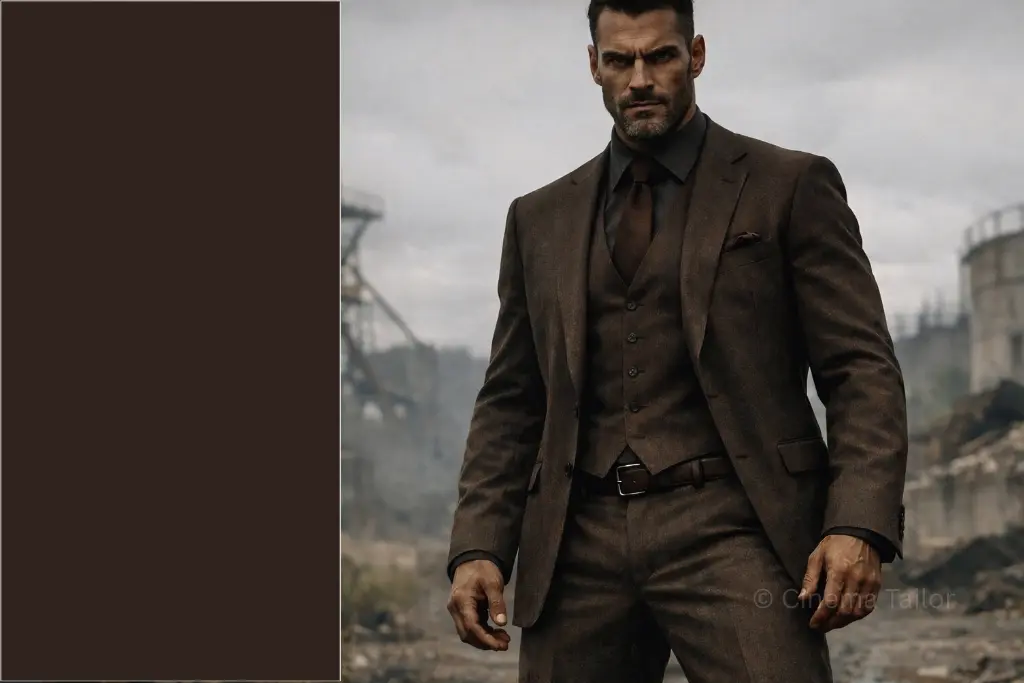
Case Study: There Will Be Blood (2007) and Hannibal (2013-2015)
Brown is the color of pre-modern power. It connects authority to the earth, to bloodlines, and to raw survival. In There Will Be Blood, Daniel Plainview’s earth-toned movie villain suit signals a dominance that predates modern institutions. He does not need the finality of black or the legitimacy of navy. Brown declares: “I was here before you, and I will be here after you.” It represents inherited, primal dominance.
Even in more refined settings, like the wardrobe of Hannibal Lecter, brown is used to signal a “predatory” nature that is natural rather than constructed. His plaid and earth-toned suits suggest a beast in a high-end cage. It is an authority that doesn’t rely on a badge or a bank account, but on the fact that he is higher on the food chain.
The Psychology of the Viewer: Why We Submit to the Palette
From a purely psychological perspective, the specific color choices in a movie villain suit trigger deep-seated biological and cognitive responses. In Suit Color Psychology, darker and lower-saturation tones are perceived as “weighted” and “stable.” When the human brain registers a character in a perfectly fitted charcoal or black suit, it automatically assigns the attribute of “permanence.” We perceive such individuals as immovable objects—both physically and metaphorically.
This perceived stability creates a sense of “Inevitability.” To understand this, we must look at the contrast in Suit Color Psychology:
- The Chaotic Palette: A villain like the Joker wears high-contrast, vibrant colors (purple, green, orange). This signals unpredictability, instability, and a lack of social restraint.
- The Monochromatic Palette: Conversely, a villain in a monochromatic movie villain suit is perceived as an “Unstoppable Force.” The deliberate lack of color creates a profound psychological distance. It strips away human warmth, making the character appear less like a man and more like an elemental force of nature. By mastering Suit Color Psychology, the cinematic predator ensures that the audience submits to their authority before they even commit a single act of aggression.
James’s Perspective: When Color Changed the Room
There was a time when I believed authority came from sharp contrast. I thought presence required noise. I experimented with bold ties and expressive textures, thinking they signaled confidence. I was wrong. The room responded with noise, but not with respect.
When I reduced my palette—moving from expressive tones to navy, and eventually to the absolute stillness of charcoal—the environment shifted. Conversations slowed when I entered. People began to wait for me to speak. Nothing about the suit was memorable, and that very absence created stability.
Cinema had already taught me what every movie villain suit quietly whispers: color controls the space before a man ever opens his mouth. At Cinema Tailor, we believe a man’s suit functions as visual armor. It is the geometry of power, and that power begins with the discipline of color.
This perspective aligns with Cinema Tailor’s long-standing philosophy that
a man’s suit functions as visual armor , shaping authority before words or actions take place.
Conclusion: Why Suit Color Psychology Is the Final Word in Power
In the high-stakes theater of status, style is often a distraction, but color is the ultimate definition. Cinema understands the mechanics of Suit Color Psychology better than the fleeting world of fashion ever will.
Iconic movie villains do not wear bespoke suits simply to be “stylish.” They wear them because their deliberate color palettes remove all uncertainty from their environment. Through the strategic use of Suit Color Psychology, they establish themselves as the only stable point in an unstable world.
A true master of status does not dress merely to be seen. He dresses to become a monument of authority—a goal that always begins with the calculated, lethal choice of color. If you wish to command respect before you even speak, start by mastering the Suit Color Psychology of the silent predator.

James is a UI software expert with over 20 years of experience in the IT industry.
He is the editor of Cinema Tailor, where he analyzes cinematic style and visual storytelling through a structured, system-level perspective.