
Introduction: The Intellectual Alpha and the Architecture of Privilege
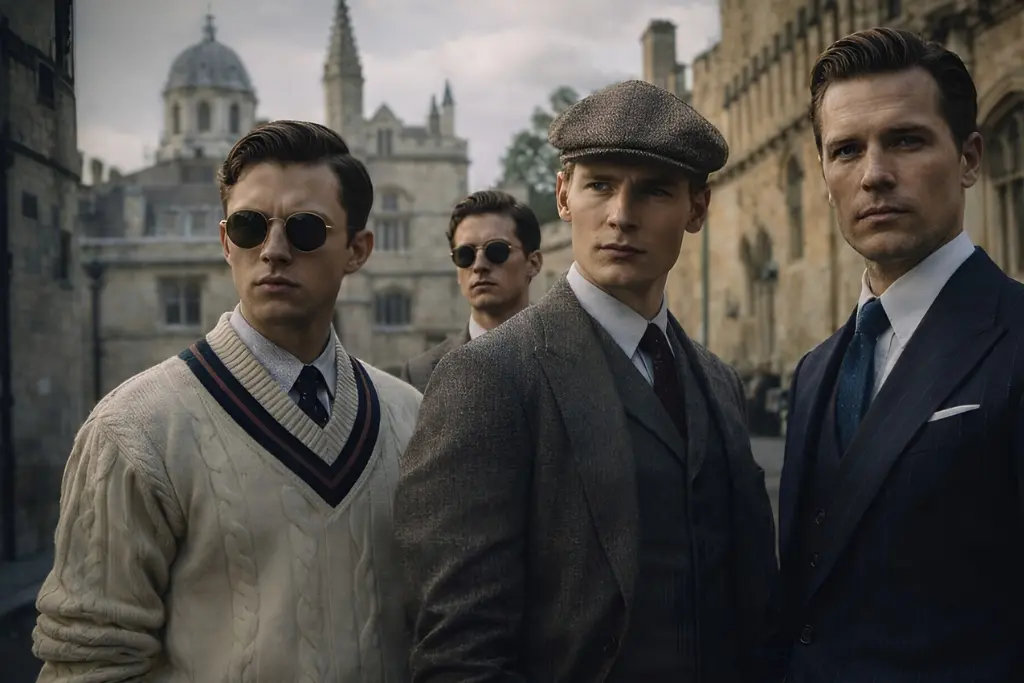
I didn’t begin studying Oxford Prep Style as a fashion category. It emerged gradually—through films, archival photographs, and repeated encounters with men whose authority felt effortless yet undeniable. What connected them was not trend awareness, but an intellectual gravity expressed through restraint.
In the volatile landscape of 2026, where digital aesthetics flicker and fade, the modern man is seeking a foundation built on something immutable. We find this grounding in the hallowed halls of Oxford University during the 1920s—a period where the pursuit of knowledge was matched only by a radical shift in masculine silhouette. This isn’t just “Preppy Style”; it is Oxford Prep Style, the definitive wardrobe of the Intellectual Alpha.
At Cinema Tailor, we believe that every garment is a narrative. To wear a cricket sweater or a pair of voluminous flannel trousers is to engage with a history of quiet power and loud rebellion. Today, we step inside the Ivory Tower, exploring how a rigid academic environment gave birth to a style that continues to command boardrooms and high-society spaces a century later.
Cinematic Soul: The Brooding Rebellion of ‘Kill Your Darlings’
To truly grasp the emotional weight of this aesthetic, one must look at the silver screen. In <Kill Your Darlings> (2013), starring Daniel Radcliffe and Dane DeHaan, we witness the American interpretation of the Oxford ethos. Although set in Columbia University, the film’s costume design is a love letter to the 1920s Oxford scholar.
Dane DeHaan’s character, Lucien Carr, embodies the “Scholar-Rebel.” His wardrobe—characterized by slightly oversized wool coats, rumpled button-downs, and a careless yet precise layering of textures—reflects an internal chaos governed by a sharp intellect. This cinematic connection is vital: it reminds us that Oxford Prep Style was never meant to be “neat.” It was meant to be earned through nights of frantic writing and philosophical debates in rain-slicked courtyards.
The Legend of the ‘Oxford Bags’: A Trousers Revolution
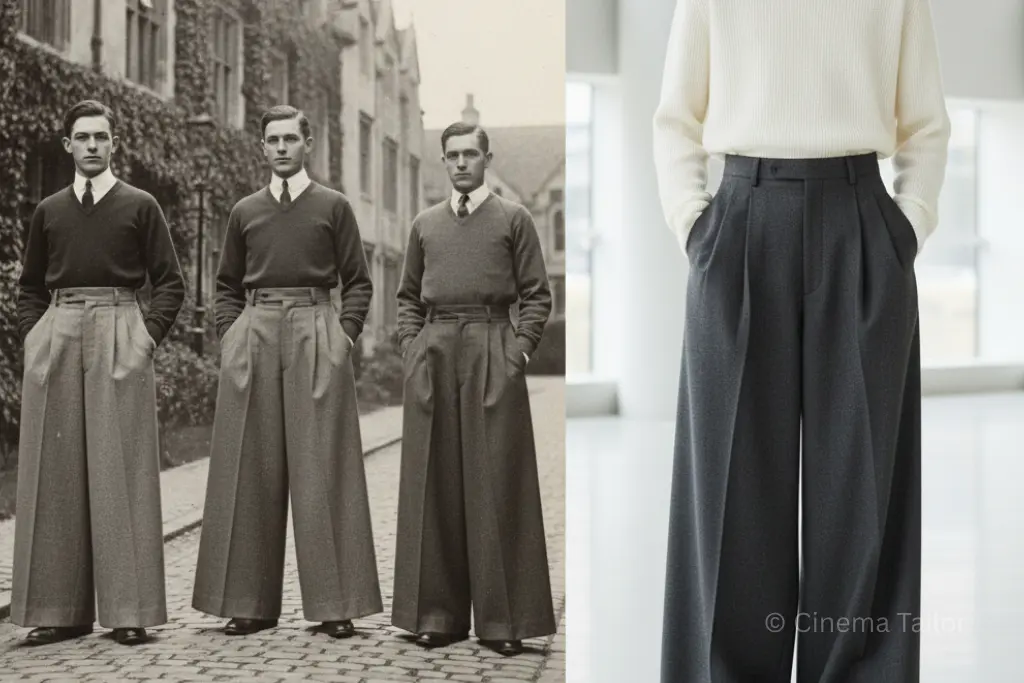
The crown jewel of this era’s sartorial defiance is undoubtedly the Oxford Bags. But why did they happen?
The Great Ban of 1924
In a move that would inadvertently change menswear forever, Oxford University authorities banned the wearing of “knickerbockers” (short trousers) in lectures. The students, possessing a wit as sharp as their shears, found a loophole. They commissioned tailors to create trousers with extraordinary widths—some reaching 40 inches at the hem—specifically designed to be worn over their banned knickerbockers.
The Silhouette of Defiance
These weren’t just trousers; they were a middle finger to the establishment. The flowing, architectural drape of the Oxford Bags created a sense of physical presence that was both effortless and intimidating. When you walk in wide-legged flannel, you aren’t just moving; you are occupying space with intent. In 2026, as we see a return to relaxed silhouettes, the Oxford Bags serve as the ultimate historical precedent for the “Intellectual Alpha” who refuses to be constrained by the “slim-fit” era of the past decade.
James’s Perspective
What strikes me about Oxford Bags is that their rebellion wasn’t chaotic—it was architectural. By exaggerating proportion rather than decoration, these students understood something modern menswear often forgets: true authority comes from how you occupy space, not how loudly you announce yourself.
Texture as Language: Tweed, Flannel, and the Cricket Sweater
In the Ivory Tower, fabric choice was a social and intellectual signifier. To master the Oxford Prep Style, one must understand the hierarchy of materials.
The Sacred Tweed
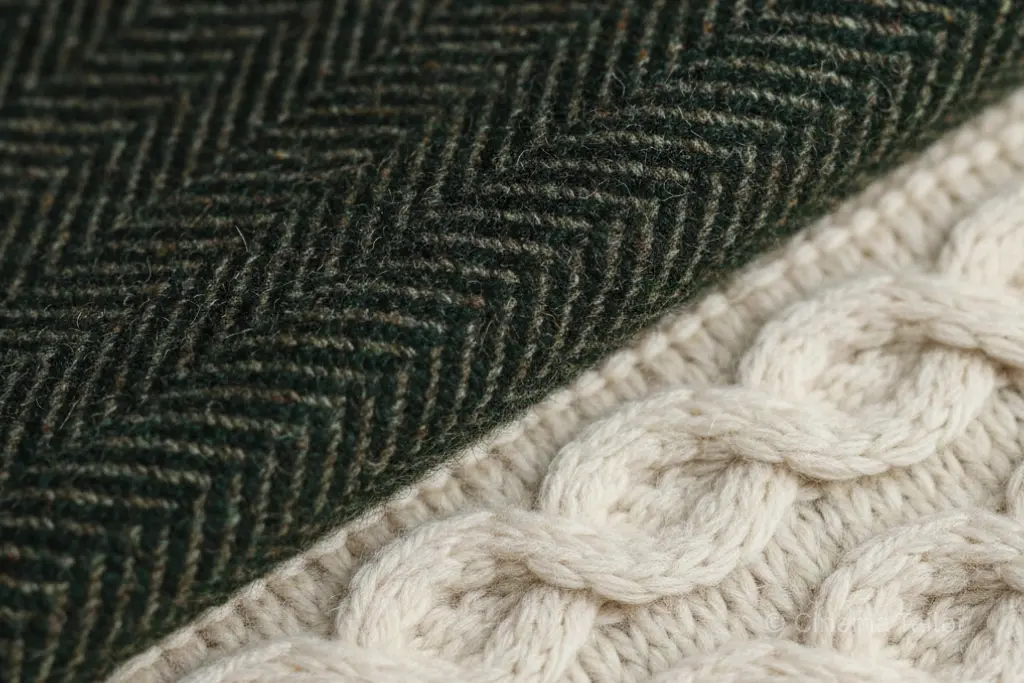
Tweed was the unofficial armor of the scholar. But at Oxford, it wasn’t just any tweed. The preference leaned toward Harris Tweed for its rugged durability or Donegal Tweed for its speckled, intellectual depth. The texture of tweed suggests a life spent in touch with the elements—a man who is equally comfortable in a library or on a country estate.
The Cricket Sweater: Framing the Intellect
The cable-knit V-neck, or the Cricket Sweater, is perhaps the most recognizable element. Originally functional gear for the pitch, it was adopted as leisurewear to signal a “sporting intellect.” The deep V-line is crucial; it frames the face and the collar of the shirt, drawing the observer’s eye toward the source of speech and thought. It is the ultimate framing device for the modern leader.
The ‘Vanity Fair’ Effect: Social Mobility through Style
Another cinematic touchstone is the various adaptations of <Vanity Fair>. While the story often centers on social climbing, the masculine style displayed reflects the aspiration of the era. The “Academic Old Money” look was a tool for transformation. A young man from a modest background could, through the right choice of a tailored blazer and a regimental tie, signal his belonging to the intellectual elite.
This brings us to a core tenet of Cinema Tailor: Style is not about what you are born with; it is about the legend you choose to curate.
2026 Mastery: Implementing the Ivory Tower Look
How does a man in 2026 wear the Oxford Prep Style without looking like he’s in a period drama? The secret lies in “Balanced Heritage.”
- The Proportions: Pair your voluminous Oxford Bags with a structured, modern overcoat. The contrast between the flowing bottom and the architectural top creates a powerful, noir-inspired silhouette.
- The Palette: Stick to “Scholarly Earth Tones.” Think forest greens, burnt umbers, and the deep charcoal of ink. These colors suggest a maturity and depth that bright, trendy colors cannot match.
- The Intellectual Detail: A vintage-inspired brass tie bar or a silk pocket square in a muted paisley print adds the final layer of “earned” sophistication. It signals to the world that you are a man of detail and history.

Conclusion: The Enduring Authority of the Scholar
The Oxford Prep Style is more than a historical curiosity or a nostalgic aesthetic; it is a philosophy of excellence shaped by rebellion, discipline, and intellectual ambition. It reminds us that authority is not inherited through noise, but constructed through knowledge and presence.
In my experience, the men who leave the deepest impression rarely dress to impress. They dress to think, to observe, and to endure. That is why the legacy of the Ivory Tower still matters in 2026—it offers a visual language for restraint in an age addicted to excess.
Whether you draw inspiration from the brooding poets of Kill Your Darlings or the defiant students of 1920s Oxford, remember this: your wardrobe is not an accessory to your life. It is the prologue. Write it with intention.

James is a UI software expert with over 20 years of experience in the IT industry.
He is the editor of Cinema Tailor, where he analyzes cinematic style and visual storytelling through a structured, system-level perspective.