

Surgeon’s Cuffs are often dismissed as a mere luxury detail in cinematic tailoring. I used to think the same—until I began closely analyzing action films frame by frame, not as entertainment, but as systems of movement, pressure, and control.
Among the most revealing discoveries was a recurring, deliberate gesture by the iconic protagonist of the John Wick franchise. Beyond the ballistic linings and monochromatic discipline of his wardrobe, there is one subtle, functional action that consistently precedes violence: John Wick unbuttons his sleeves before every lethal confrontation.
This isn’t a stylistic mistake or a sign of disarray. Instead, it is a masterful implementation of the Surgeon’s Cuffs—a functional suit detail that bridges the gap between 19th-century medicine and 21st-century tactical combat. At The Cinema Tailor, we believe that understanding these minute details is what separates a fan from a true connoisseur of functional elegance. In this comprehensive guide, we will explore the historical bloodlines, the mechanical physics, and the psychological warfare hidden behind an unfastened sleeve button.
The Bloodstained History of Surgeon’s Cuffs
To understand the “John Wick suit style,” one must first travel back to the gritty battlefields of the 19th century. Long before the advent of modern hospitals, military surgeons operated in makeshift tents under the most dire conditions. These men were expected to maintain the decorum of an officer while performing gruesome, life-saving tasks.
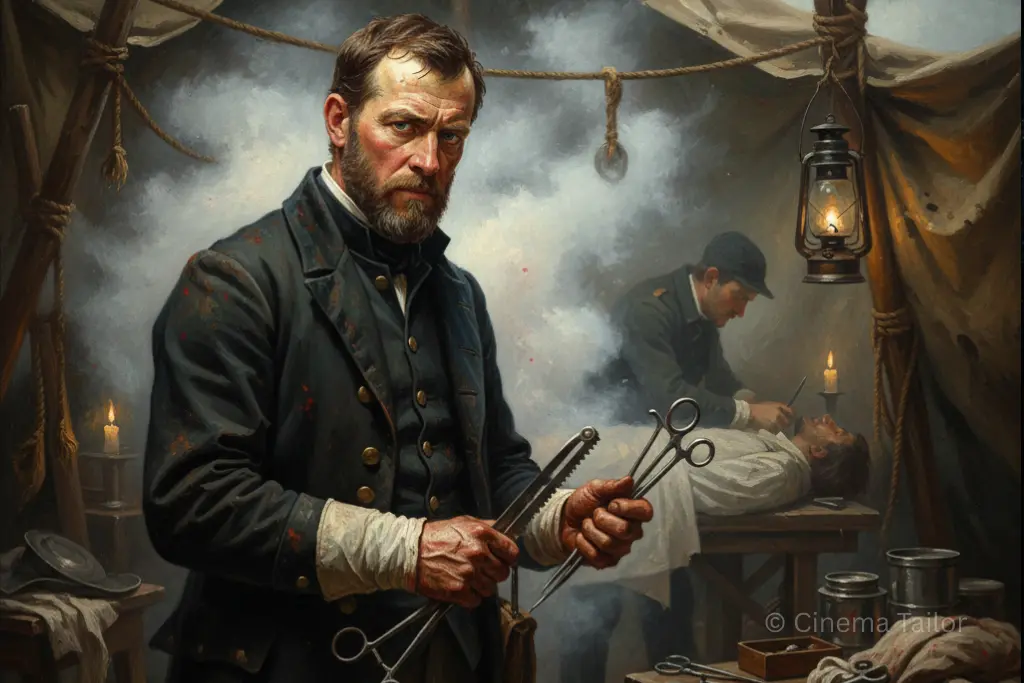
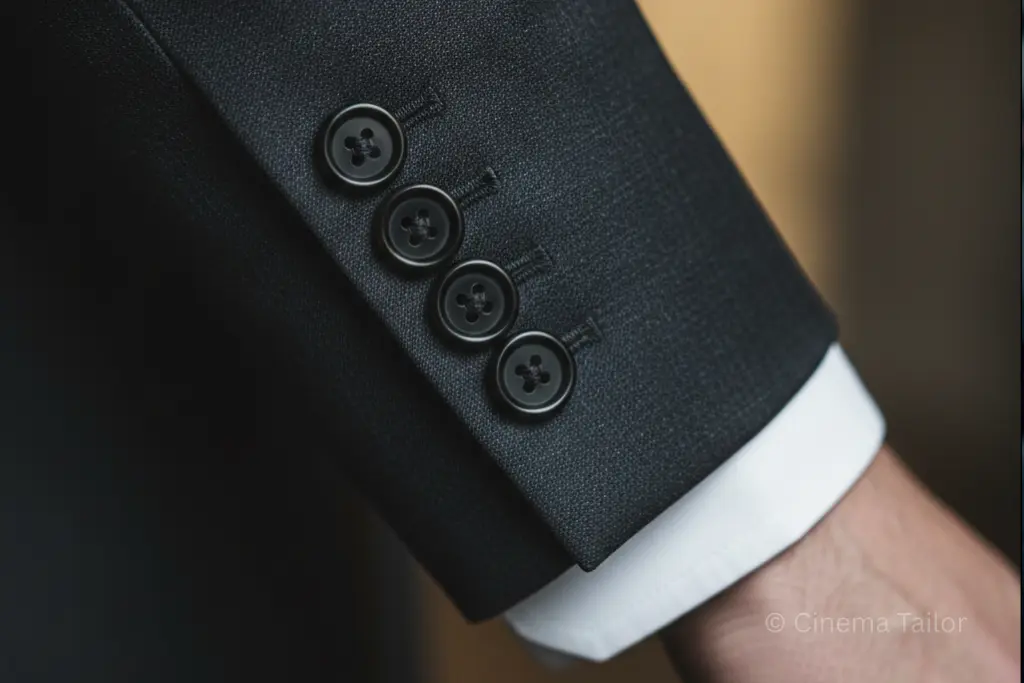
Standard suit jackets of the era had “blind” or “fake” buttons on the sleeves. For a surgeon, this was a disaster; blood and grime would ruin the expensive wool of their uniform if they couldn’t move the fabric out of the way. However, removing a jacket was often seen as improper or simply too time-consuming during the heat of battle. The solution was the Surgeon’s Cuff—a sleeve with working buttonholes that allowed the doctor to unbutton and roll back his sleeves in seconds.
By the time tailoring moved to Savile Row, the working cuff became a status symbol. It indicated that a suit was “Bespoke” (custom-made) rather than “Off-the-rack,” as mass-produced machines could not easily create functional buttonholes on a finished sleeve. For John Wick, this historical utility comes full circle. He is, in many ways, a modern surgeon of death, utilizing the same functional freedom that 19th-century doctors once relied on.
The Tactical Physics: Wrist Mobility and CQC
When we analyze why John Wick unbuttons his sleeves through the lens of physics, the decision becomes purely functional. In the realm of Close Quarters Combat (CQC) and high-speed tactical shooting, every millisecond and every millimeter of movement counts.

1. Eliminating Fabric Tension
A standard suit cuff is designed to sit snugly around the wrist to create a clean silhouette. However, when you grip a firearm (like the Taran Tactical STI 2011) or engage in grappling, the wrist expands and flexes. A fastened cuff creates tension across the forearm, which can subtly slow down a trigger pull or a knife draw. By unbuttoning the last one or two buttons of his Surgeon’s Cuffs, Wick removes this tension, allowing the fabric to flare and move with his body rather than against it.
2. The Mechanics of the Tactical Reload
Observe the famous “flick” reload in John Wick: Chapter 2. This motion requires extreme wrist suppleness. If the sleeve is too tight, the fabric can catch on the magazine or the wrist bone, causing a catastrophic failure in a life-or-death situation. The “Physics of Surgeon’s Cuffs” ensures that the sleeve remains out of the path of the mechanical operation of the weapon.
3. Emergency Access and Medical Utility
Just like the surgeons of old, Wick lives in a world where injury is inevitable. An unbuttoned sleeve allows for immediate access to the forearm for field dressings or to check a watch (often worn on the inside of the wrist for tactical reasons) without having to fight with the jacket’s structure.
James’s Perspective
Watching these scenes in high-resolution formats, what struck me most was how consistently this detail appeared under stress. It’s not a costume flourish—it’s a systems decision. Once you understand how fabric tension interferes with wrist mechanics, the unbuttoned cuff stops looking stylish and starts looking inevitable.
The Philosophy of Sprezzatura and Intimidation
Beyond the mechanics, there is a psychological layer to the John Wick suit style. In Italian tailoring, there is a term called Sprezzatura—the art of a certain nonchalance. Leaving a sleeve button undone is a classic “insider” move. It tells the observer, “I am wearing a bespoke suit, but I don’t care about the rules.”
For John Wick, this nonchalance is a weapon. It signals to his enemies that he is prepared, comfortable, and unimpressed by the danger. It is the sartorial equivalent of a predator showing its claws. The unbuttoned cuff is a warning: the suit is just a shell, and the man inside is ready to work.
Conclusion: Setting the Standard for the Cinema Tailor
The genius of the John Wick costume design lies in its uncompromising commitment to realism. By choosing Surgeon’s Cuffs, the filmmakers didn’t simply give Keanu Reeves a refined silhouette—they gave him a functional tool. Whether rooted in historical tradition, mechanical necessity, or psychological dominance, the unbuttoned sleeve remains one of the most telling details in modern action cinema.
Through years of studying cinematic movement—and applying similar principles in my own professional life—I’ve learned that true authority is rarely ornamental. It is built into systems that work under pressure. Clothing, at its best, should do the same.
As you refine your own wardrobe, consider the functional lineage behind what you wear. A suit should not restrict you; it should support you. It should move when you move, respond when you act, and disappear when the moment demands clarity.
That is the philosophy of the Cinema Tailor.
This article belongs to Cinema Tailor’s study of functional elegance in cinema. The broader philosophical framework is defined in A Man’s Suit Is His Armor: The Architecture of Authority.
For a deeper technical breakdown of suit mechanics in action cinema, see The Secret Physics of the John Wick Suit.

James is a UI software expert with over 20 years of experience in the IT industry.
He is the editor of Cinema Tailor, where he analyzes cinematic style and visual storytelling through a structured, system-level perspective.