Goodfellas Style: The Camel Coat, the Silk Shirt and Why They Still Work
The short answer: three pieces from Goodfellas survive outside the film — a camel polo coat, a dark silk shirt worn open at the collar, and slim leather loafers. Everything else in Henry Hill's wardrobe is costume. These three are cloth choices, and cloth is what still reads on a street today.
Martin Scorsese's 1990 film covers twenty-five years, and the costume designer Richard Bruno changes the silhouette every few scenes to mark the passing time. That is the craft. But the film is remembered for a specific look — the one from the middle stretch, when Henry has money and has not yet lost control. That look is worth pulling apart, because underneath the excess it is built on three quietly good decisions.
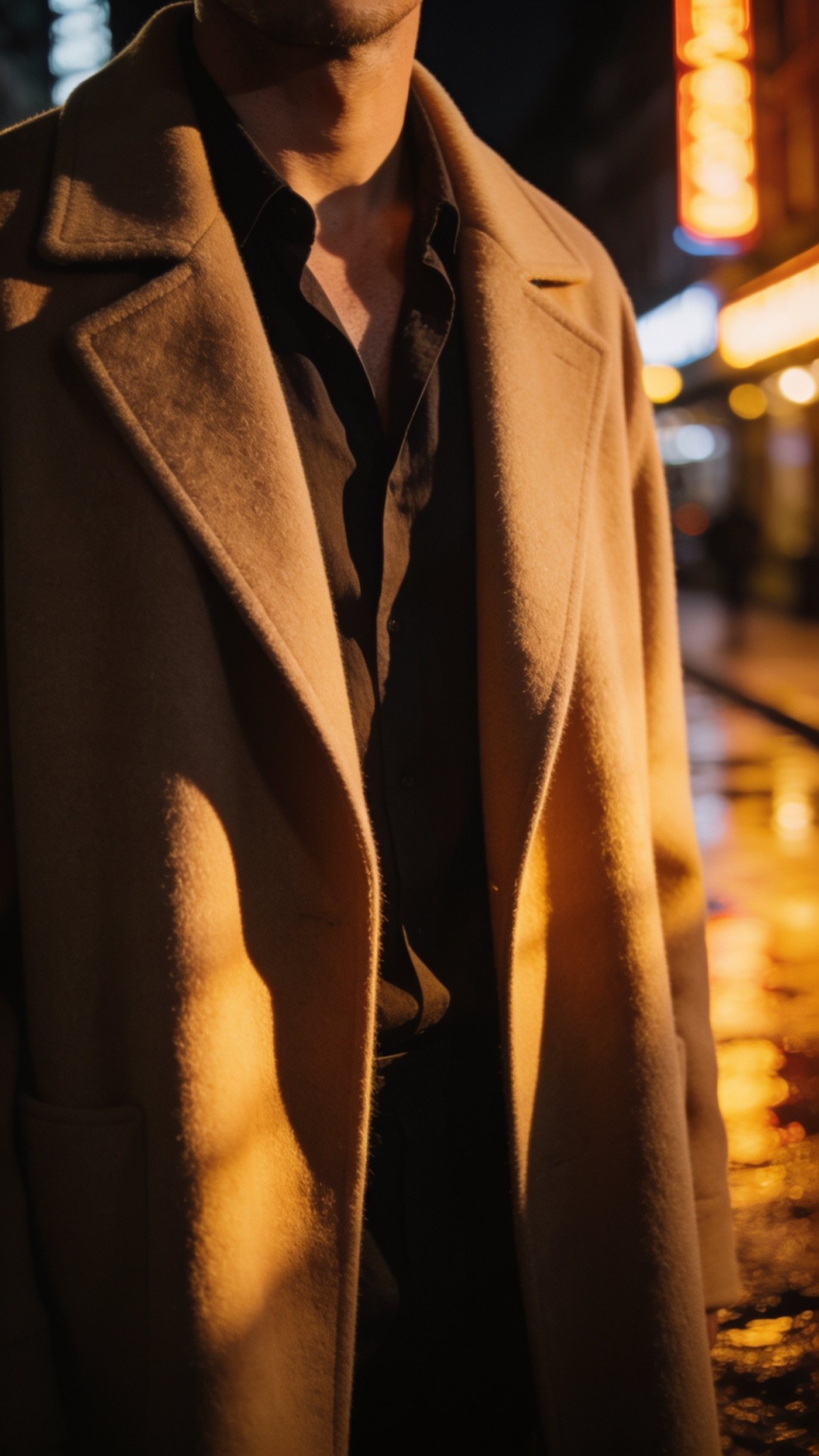
The camel coat does what a puffer cannot
Start with the outer layer, because it is the piece people see first and the one most men get wrong.
A heavy nylon puffer is warm and shapeless by design. It adds volume in every direction and hides whatever is underneath, which is why it flattens everyone who wears it. A camel hair polo coat does the opposite: it is heavy enough to hang straight, soft enough to move, and cut to follow the shoulder line rather than smother it. The colour helps too. Camel is the one warm neutral that reads as expensive in artificial light, which is where most of this film takes place.
Camel hair itself is the undercoat of the Bactrian camel — finer than most wool, warmer for its weight, and naturally that tan colour without dyeing. The pure article is expensive and sheds. A blend of camel and wool, usually somewhere around thirty-seventy, wears far better and costs a third as much.
What to look for:
- Mid-calf or just below the knee. Short camel coats lose the drape that makes them worth buying.
- A soft shoulder with no heavy padding. The cloth already has body; structure on top makes it a costume.
- Patch pockets and a belt if you want the polo coat proper. Welt pockets if you want something quieter.
- Camel, not tan or beige. Beige goes grey under street light.
Silk shirts are a texture decision
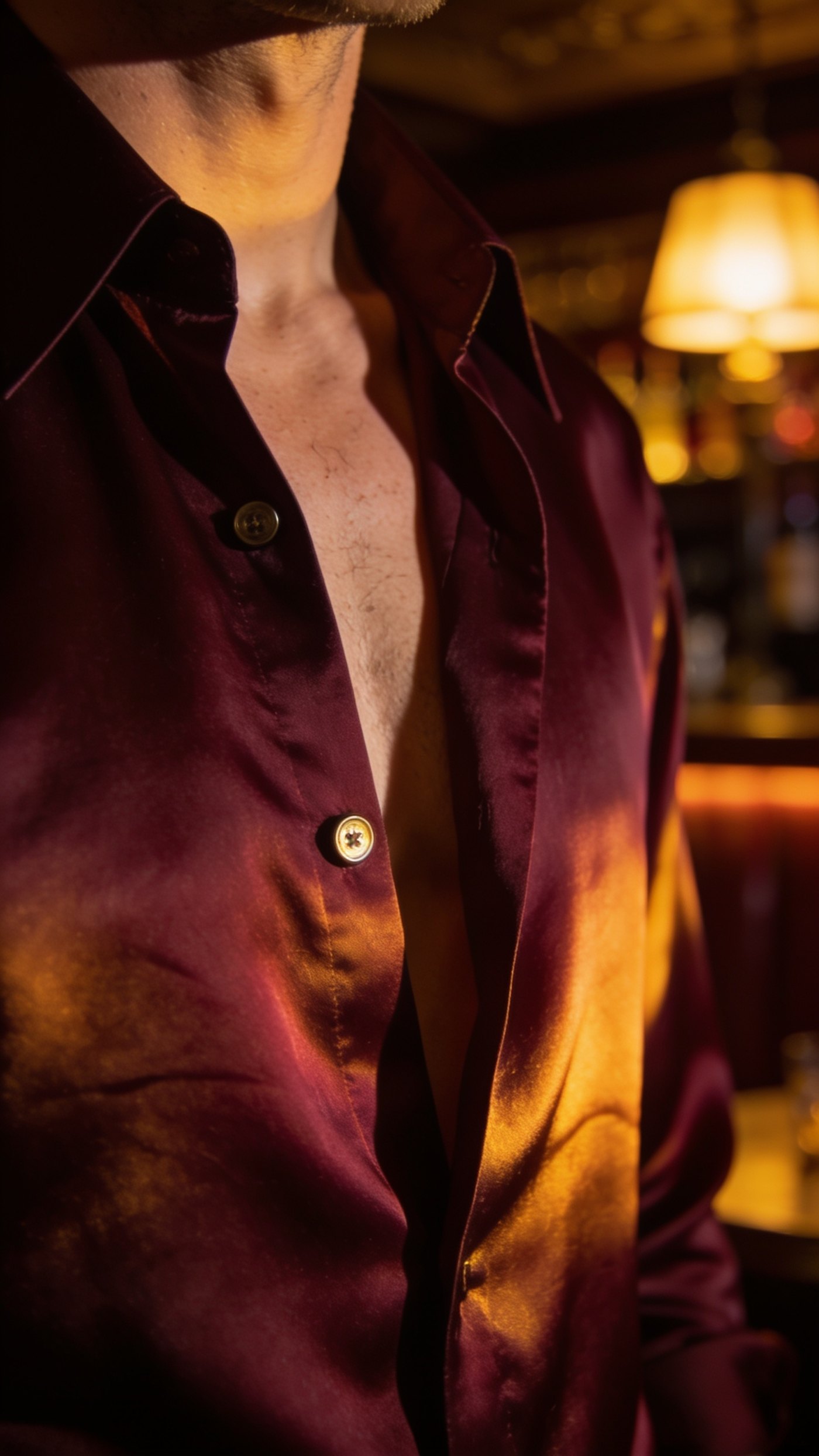
The open silk shirt is the part of this look people are most nervous about, and understandably — worn badly it is fancy dress. Worn well it solves a real problem, which is what to put under a coat when a tie is wrong and a t-shirt is too little.
The reason silk works at night is light. Cotton absorbs it and goes flat. Silk has a low, liquid sheen that moves as you move, so the shirt reads as fabric rather than as a coloured panel. That is the whole effect, and it disappears the moment the shirt is too shiny. Polyester satin is the failure mode here: it reflects hard, it does not breathe, and it announces itself from across the room.
How to wear one:
- Deep colours. Wine, bottle green, charcoal, ink. Bright silk is a different decade.
- Sand-washed or matte silk rather than charmeuse. You want sheen, not glare.
- Two buttons open at most, and only if the collar is long enough to sit flat when open.
- Under a coat or an unstructured jacket. A silk shirt alone in daylight has nowhere to hide.
Loafers are the difference between arriving and walking
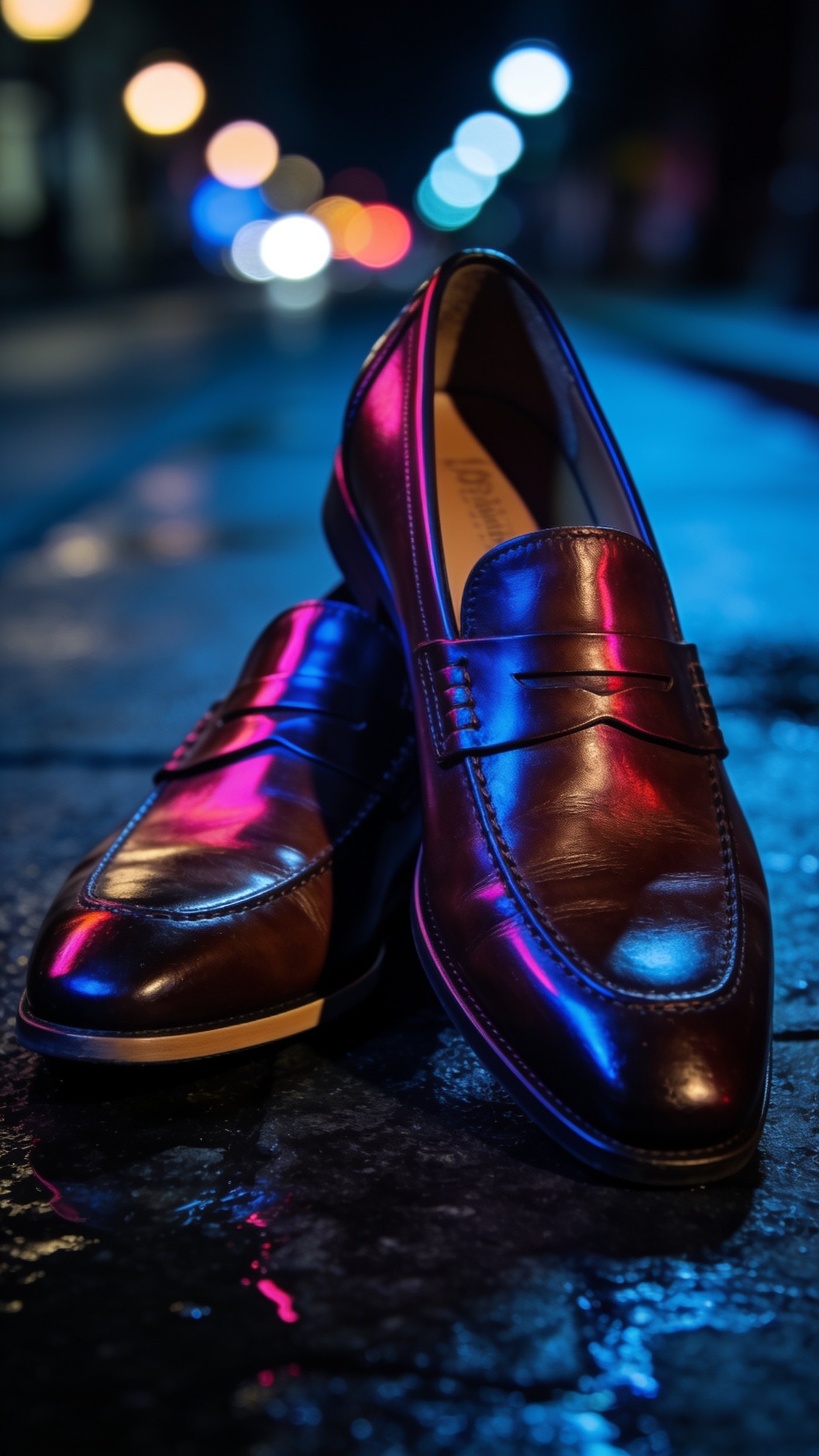
The last piece is the one that changes how you move. A rubber-soled sneaker is built to grip; a leather-soled loafer is built to glide. That sounds like a small thing until you watch anyone cross a room in each.
A penny loafer has no laces, a slim leather sole and a low profile, so it sits close to the trouser hem and lets the line of the leg run uninterrupted down to the floor. Sneakers break that line twice — once at the chunky sole, once at the bright colour. On a wet street at night the difference is even larger, because polished leather picks up the light and rubber does not.
Practical notes:
- Dark brown before black. Brown loafers work with camel, navy and grey; black narrows to formalwear.
- A leather sole for looks, a thin rubber topy glued on for rain. Every good cobbler does this in an hour.
- No socks only in summer, and only with a proper loafer sock that keeps the leather clean.
- Resole rather than replace. A welted loafer outlives three pairs of cemented ones.
What to take and what to leave
The film's wardrobe is deliberately too much — that is the point of the character, and the costume tells you he is overplaying his hand long before the plot does. The pieces above work today because each one is a material upgrade rather than a decorative one: warmer cloth, softer sheen, thinner sole.
Leave the rest. The wide lapels, the gold, the shirt-and-tie combinations in matching prints — those are period markers, and wearing them now is a costume decision, not a style one. Keep the three, put them over plain dark trousers and a crew neck, and the outfit reads as considered rather than nostalgic.
That is the general rule for dressing from film. Copy the material choices, not the silhouette. Silhouettes date; cloth does not.
Frequently asked
Is a camel coat impractical for daily wear?
Less than it looks. The colour hides rain better than black does, and a camel-wool blend brushes clean. Keep it off public transport seats in summer and it will last a decade.
Will a silk shirt look dated?
Only if it shines. Matte or sand-washed silk in a deep colour reads as texture, not as a period reference. The dated look comes from high-gloss satin and from patterns, not from silk itself.
Are loafers warm enough for winter?
Unlined loafers are not. Look for a lined loafer with a thicker leather sole, or keep a rubber-soled pair for the coldest weeks. The silhouette is identical; only the construction changes.
Can I wear a camel coat with jeans?
Yes, with dark indigo and no distressing. The coat is formal enough to carry the jeans up; light or ripped denim pulls the coat down instead.
What do I buy first on a limited budget?
The loafers. They change how every outfit you already own finishes, and a good pair costs less than a coat that will be wrong if you rush it.