
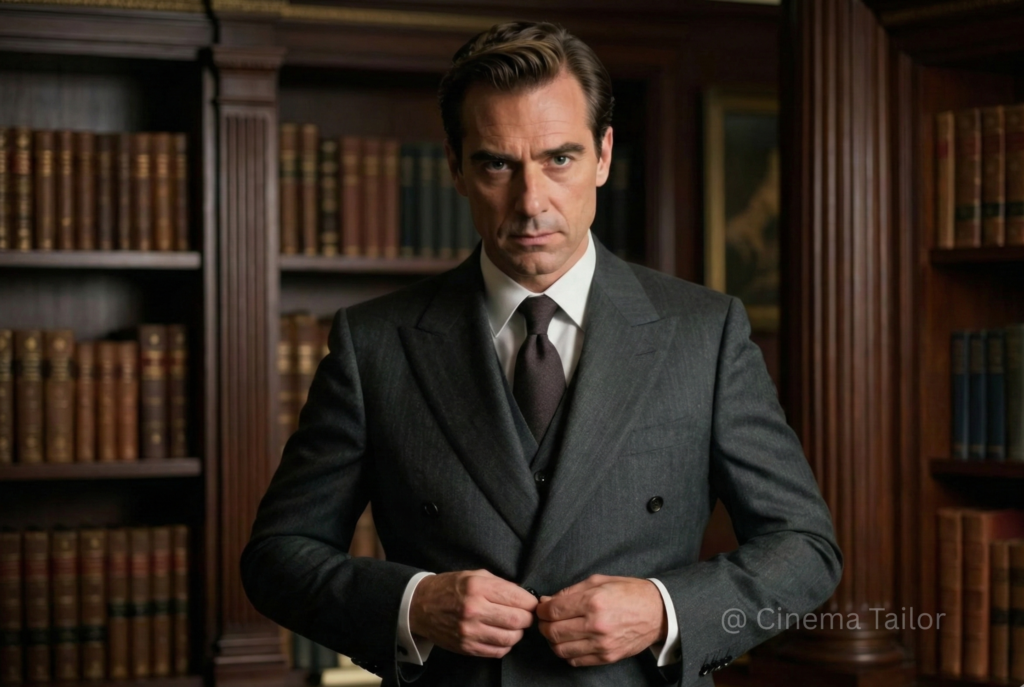
Introduction: When I Realized a Suit Is His Armor
There was a time when I believed confidence was purely internal.
That discipline, authority, and presence were matters of mindset alone. Then life happened—pressure accumulated, expectations multiplied, and somewhere along the way, posture softened. I didn’t notice it immediately. Most men don’t.
What finally forced my awareness was not a failure, but a mirror.
Standing there in casual clothes, shoulders rounded, expression dulled, I realized something uncomfortable: the world wasn’t underestimating me. I had quietly begun to underestimate myself. It was only later, slipping back into a properly structured suit, that the truth became impossible to ignore.
A suit is not decoration.
A suit is his armor.
At Cinema Tailor, we study clothing not as trend, but as structure—how fabric, cut, and weight rebuild the architecture of a man’s authority in an age determined to erode it.
In an Age of Softness, Suit Is His Armor
Modern life celebrates comfort. Elastic waistbands. Hoodies. The language of ease. While comfort has its place, prolonged softness does something dangerous: it dissolves tension. And without tension, structure collapses.
This is where the philosophy of suit is his armor becomes essential.
A well-constructed suit introduces resistance.
The canvas supports the chest.
The shoulder padding corrects posture.
The waist suppression demands awareness of the body.
The suit does not ask how you feel.
It tells you how to stand.
This is why men across history—from generals to statesmen—instinctively returned to tailored garments during moments of crisis. Armor is not meant to relax you. It is meant to prepare you.
The Psychology of Visual Authority
Authority is rarely declared. It is perceived.
When a man enters a room in a properly fitted suit, something immediate happens. Conversations adjust. Eye contact lingers. The atmosphere recalibrates. This is not arrogance; it is coherence.
Suit is his armor because it externalizes discipline.
Wrinkled clothing suggests a wrinkled mind. A sharp silhouette signals internal order. The world responds accordingly—not out of fear, but recognition.
This is visual authority: the silent negotiation that happens before words are exchanged.
Cinema Case Study — Michael Corleone and the Language of Armor
No film illustrates suit is his armor more precisely than The Godfather Part II.
Observe Michael Corleone’s evolution. As power consolidates, his wardrobe becomes colder, darker, more architectural. The soft fabrics of youth disappear. In their place: rigid shoulders, narrow lapels, suffocating restraint.
Michael does not wear a suit to impress.
He wears it to survive.
In moments of silence—seated, motionless, eyes calculating—the suit becomes his shell. His armor against betrayal, emotion, and vulnerability. The tailoring mirrors his psychological barricade.
Cinema understands what modern men often forget: clothing is narrative. And the suit tells the story of command.
The Architecture of Authority (How Armor Is Built)
Structure Over Decoration
True armor is internal. Lapels must hold shape. Jackets must resist collapse. Decoration without structure is costume.
Weight Creates Gravity
A suit with substance changes how you move. It slows gestures. It refines motion. Gravity follows.
Fit Is Non-Negotiable
An ill-fitting suit is broken armor. Precision is not vanity—it is function.
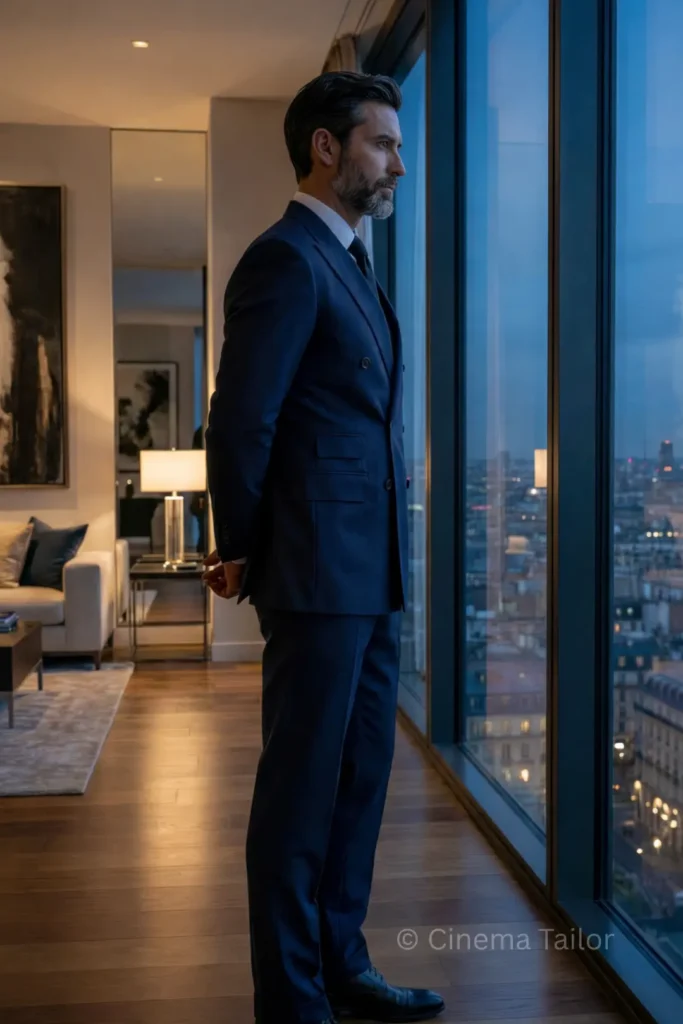
James’s Perspective
Over the years, I’ve noticed that the moments I felt most grounded weren’t when life became easier, but when my structure became stronger. Wearing a suit doesn’t make me powerful—it reminds me to act like someone who already is. That reminder, repeated daily, changes everything.
| Component (System) | Function (Logic) | Result (Output) |
| Bespoke Shoulders | Structural Integrity | Commands visual dominance and stability |
| V-Zone (Lapels) | Communication Protocol | Focuses attention and projects confidence |
| Internal Canvas | System Stability | Maintains shape under environmental pressure |
| Fabric Texture | Data Encryption | Conveys status through subtle visual depth |
| Perfect Fit | System Optimization | Eliminates “bugs” in visual presence |
Suit Is His Armor in Daily Life
Armor is useless if worn only on ceremonial occasions.
The man who understands suit is his armor does not reserve structure for weddings or negotiations alone. He integrates it into his rhythm. Not necessarily daily suits—but daily standards.
Pressed trousers. Structured jackets. Intentional silhouettes.
This consistency trains the mind. Discipline, once embodied, becomes habitual.
Why the World Treats You Differently
People respond to what you project.
A man wrapped in softness invites familiarity.
A man encased in structure commands distance.
Neither is morally superior—but only one grants authority.
This is why suit is his armor is not about dominance. It is about boundaries. Armor protects what matters inside.
| Feature | Standard Civilian Look | The ‘Monument’ Architecture |
| Primary Goal | Comfort & Conformity | Authority & Strategic Presence |
| Structural Logic | Soft, Unstructured (Casual) | Structured, Defined (Tailored) |
| Visual Firewall | Weak / Non-existent | Strong / Impenetrable |
| Durability | High maintenance / Disposable | Timeless / Built to endure |
| User Impact | Passively accepted | Actively commands respect |
FAQ: Building the Fortress of Authority
Q1. Why do you refer to a suit as “Armor”?
A: Just as a knight’s armor protected the physical body, a modern leader’s suit protects his social status and psychological stability. It is the first “firewall” that defends you against external disrespect or trivialization.
Q2. Isn’t a highly structured suit uncomfortable?
A: System stability requires a certain level of hardware structure. However, true bespoke tailoring provides “Freedom within Structure” through superior pattern engineering. Discomfort usually stems from a flawed architecture—poorly made off-the-rack suits.
Q3. What does it mean to “Be the Monument”?
A: It means reaching a state where you are no longer swayed by temporary “trend patches.” You have built a timeless, unshakeable personal style that proves your authority simply by existing.
Checklist: Auditing Your Personal Armor
- [ ] The Shoulder Line: Does the shoulder maintain a clean, sharp line without collapsing, signaling a leader’s decisiveness?
- [ ] Proportional Balance: Are the lapel width and collar angles optimized for your specific facial structure?
- [ ] The “V-Zone” Firewall: Do the tie and pocket square synchronize to provide an impenetrable “visual security”?
- [ ] Canvas Memory: Does the suit utilize a Full Canvas construction that evolves and “learns” your body over time?
- [ ] Sleeve Pitch: When your arms are at rest, do the sleeves maintain a perfect vertical state with zero torque?
Conclusion: Why I Continue to Wear My Armor
I no longer believe confidence begins internally.
It begins with alignment.
When my exterior reflects order, my interior follows. When my posture sharpens, my thinking does too. The suit does not change who I am—it restores who I forgot to be.
A man’s suit is not a costume.
It is not nostalgia.
It is not conformity.
A man’s suit is his armor.
And in a world that constantly pressures you to soften, dissolve, and disappear into comfort, choosing armor is an act of quiet rebellion.
Stand straight.
Suit up.
The structure is still there.
This philosophy is practically embodied in
The Double-Breasted Suit: Why the Kingsman’s ‘Modern Armor’ is Still Invincible,
where structure and discipline become visible authority.
For a cinematic example of how tailoring functions as real-world armor, see
Why John Wick Unbuttons His Sleeves (The Physics of Surgeon’s Cuffs).
James is a UI software expert with over 20 years of experience in the IT industry.
He is the editor of Cinema Tailor, where he analyzes cinematic style and visual storytelling through a structured, system-level perspective.